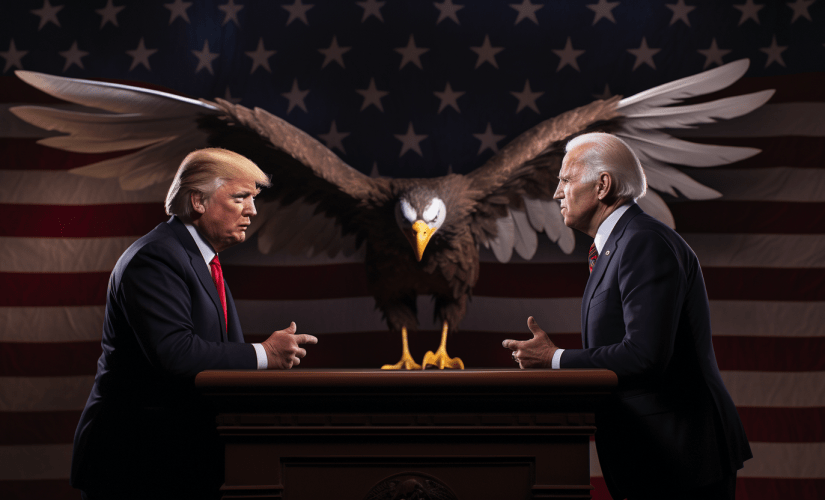
The Bernie Sanders effect comes to the UK

The reverberations of the crash of 2007/8 continue to be underestimated and the public is sick of austerity. Expectations for the Labour Party were so low that it has also been easy for them to outperform and Corbyn is quite the natural campaigner. Despite his largely inept front bench he has looked and sounded fine and he is now our own Bernie Sanders, stirring young voters in particular with a mixture of indignation and largesse. The response from the Conservative Party has been wooden and flat footed at best and that is being polite.

Why have the Conservatives been so hopeless? First, manifestos certainly matter when they are re-written mid-campaign….and it was also enormously complacent to assume that Theresa May on her own was enough to secure a substantial victory. Few leaders can withstand the scrutiny of an election campaign unscathed so to make the election about one person was high risk. Several members of the front bench have been scandalously under-used and that takes me back to that manifesto. It is under-pinned with sound principles and has been appallingly defended but why weren’t key cabinet ministers given a final say over the most controversial parts? The need for secrecy is obvious but unelected special advisers are not sufficient substitute for elected politicians who understand the ebb and flow of an increasingly fickle electorate. David Cameron had George Osborne. Theresa May has to enjoy her job more, trust her colleagues more and find an equivalent. She will not survive another five years being so isolated which is a shame when she comes from a reasonable place in terms of intentions.

This election has been dull in content and periodically interrupted by the tragic terrorist events in Manchester and London. We will all be glad when it is over. My feeling is that the Conservatives will win, probably even comfortably, but not as convincingly as they could have done. The UK’s version of Bernie Sanders has got away with far too much. Let’s hope the lessons of the election campaign already emerging are taken on board so that an amended style of Government allows Theresa May to enhance her effectiveness, particularly in the face of Brexit.

Snap UK election could mean a smoother Brexit

The Prime Minister, Theresa May, today called a General Election for 8 June. She will have to negotiate around the Fixed Term Parliaments Act which prohibits early General Elections without a two thirds majority.

However, as Jeremy Corbyn, the Labour Party Opposition Leader, has already welcomed the election, this shouldn’t be a problem.

So what are the implications of this Election? Obviously, short term uncertainty and a media agenda which will be further dominated by political concerns. Longer term, however, this is likely to strengthen the Prime Minister’s hand and ironically that of the soft Brexiteers which is good for the Financial Services sector generally.

If, as the current opinion polls suggest (Conservative lead of 9-23%, weak Labour leadership etc), the Conservatives win the election, Theresa May will have a stronger hand in confronting the Hard Brexiteers in her own party, negotiating terms much more amenable to a smoother exit.

The pro-European Liberal Democrats are also likely to gain seats and the weak Labour Leader will subsequently be replaced most likely by a stronger and more pro-European candidate offering stronger opposition. The Scottish National Party north of the Border may do well but so might the Conservatives too from a rock bottom base. The UK Independence Party are hugely diminished. So, all in all, on balance, good news for Remain/soft Brexit supporters.

Coming hot on the heels of the general election in the Netherlands and the first round of the French election due this coming weekend, clearly today’s decision simply adds another level of complexity to the European project.

From a communications perspective, it will be interesting to see the manifesto promises and debates from each party over the coming weeks, and whether this may present any challenges – or indeed opportunities – for investment firms.

Longer term analysis of what this all means for Britain and its future can only be seriously considered once the election has taken place but even in these turbulent times, this – at least for now – seems one of the more predictable elections in terms of the likely result.

Brutal Brexit Comes Out to Play

So it is happening. The Letter triggering Article 50 has been sent and the UK is on the path to leaving the EU. In the run up to this momentous week, the Hard Brexiteers have run an unintentionally brilliant strategy. In demanding that the UK has a complete break with Europe they may force the end of the Union. With the SNP voting for a second referendum and the Nationalists scoring victories in Northern Ireland, by the time we leave we may be so small that nobody notices our departure…. And that is before London declares UDI and the Welsh start stirring….

But seriously, never has UK politics been so challenging and for many so depressing and who would have Theresa May’s job? Trapped between the public’s antipathy to current immigration levels (the prime reason for Brexit whatever the ‘elite’ anti Europeans say) and the economic nihilism of the Hard Brexiteers, she has had no alternative but to pursue the current, and skilfully implemented parliamentary path to full Brexit.

But how do firms, particularly in the financial services sector, conduct their business against the backdrop of all this uncertainty. First, they must engage with their industry bodies to ensure their interests are protected in negotiations. They should be voluble in criticising any cavalier approaches to maintaining a comprehensive trading relationship with Europe, making politicians realise the full implications of a lack of agreement on such issues as regulatory regimes for example. At the same time, a careful balancing act is required to reassure customers of their commitment to the UK and ensuring as much as possible it is business as usual. Communication professionals should be at the top of their game as they have never been so important in delivering this careful balancing act.

The UK in recent months has often seemed a much more inward looking, crueller and consequently diminished place. Combined with longer term economic forecasts of weaker growth confirmed in the recent Budget, the last year may seem an unprecedented period of self-harm. Government will essentially be on hold for the next two years, with much needed reform of a range of services delayed. Political risk will dominate. Never has business, and the business of communications, been so important in cutting through the rhetoric, to protect the future economic welfare of this country.