Consensus is NOT a dirty word…

UK politics trundles on with the latest crisis facing Keir Starmer. What did he really know about Peter Mandelson’s past when he hired him as the UK’s US ambassador and are civil servants rightly or wrongly being blamed for the failure to raise vetting red flags?

Do you know what? I really don’t care and almost certainly neither do the British public who think very little of Starmer anyway. I am with Stephen Bush of the FT on this one. None of the scenarios of who knew what about Mandelson’s past reflect well on the Prime Minister. Where I might differ, certainly from many of the opposition politicians, is believing he should resign unless something new surfaces. Starmer may not be impressive, but I cannot think of another Labour politician who would do better. The increasingly unpleasant Tories under Badenoch do not impress. As for Reform, the LibDems and the Greens, the less said the better…

Which takes us to the issue of consensus in British politics generally. The international backdrop to the UK’s fortunes is dire. An erratic US President berates us on a weekly basis. The Middle East conflict is a disaster from a humanitarian perspective as well as economically. The NATO alliance looks shaky at best, all to the benefit of Russia and China. Starmer has been much better on foreign rather than domestic policy so why can’t leading politicians in other parties give him some credit and indeed support? Badenoch has been particularly weak in her analysis of the Iran conflict embracing the US and then tip toeing away and perhaps back again. Farage is confused on how to manage his relationship with Trump. The Greens are sounding more and more like anarchists under their new leader, Polanski, and the LibDems led by Ed Davey are, well, irrelevant. Whilst they rush to condemn Mandelson’s appointment, can’t these leaders find it within themselves to reach some consensus on international affairs for the sake of the country as a whole? Who knows, such an approach may even gain the respect of voters…

More handshakes and less posturing would lead to better government…

And warming to the theme of cross-party consensus, isn’t it time for a bi-partisan approach on how the country is run domestically; tax and spend, the NHS, social care, defence? Do we want a Scandinavian model of government at one end through to a more free-market US approach at the other? Can’t we have a genuine debate on how much we want to spend on public services and what level of tax is required, warning the electorate they cannot have their cake and eat it? Politicians see electoral advantage in rowing on all these issues for marginal short-term advantage, but the right solutions will inevitably be long-term.

Let’s aim for dialogue across parties, not simply within, which would provide for better government overall.

P.S. Great news came out of Hungary as the populist, Putin supporting Prime Minister, Viktor Orban, dangerous to Europe’s future, was ousted comprehensively by Peter Magyar, a centre-right moderate, who will steer the country away from Russia. A pretty pointless visit by JD Vance to support Orban then. It is too early to call the peak of the populist upsurge, but early indications are looking more optimistic.
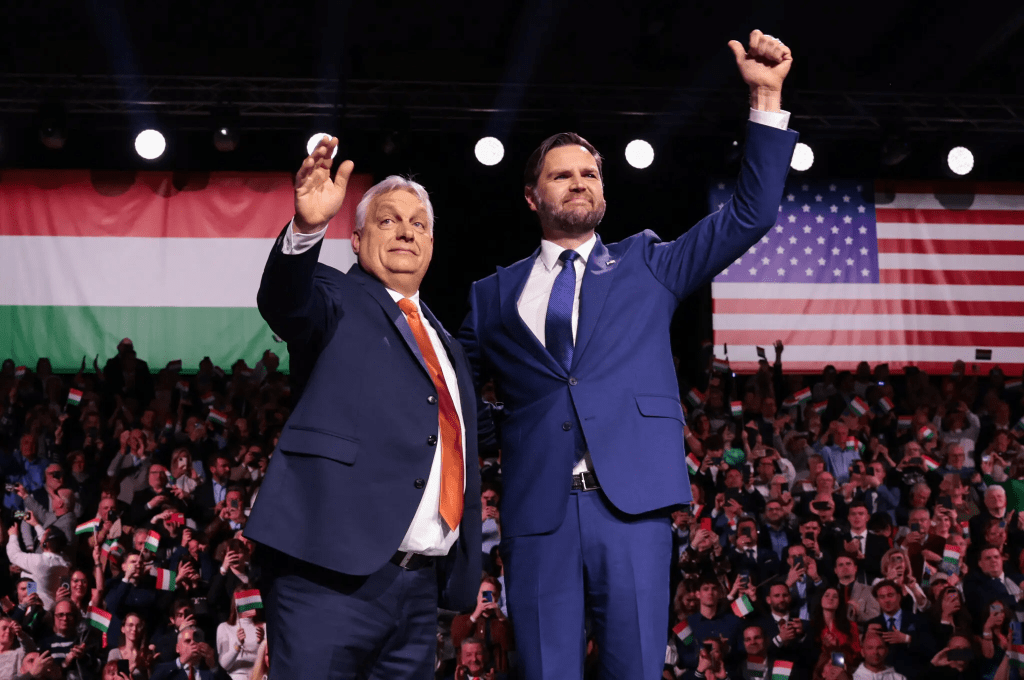
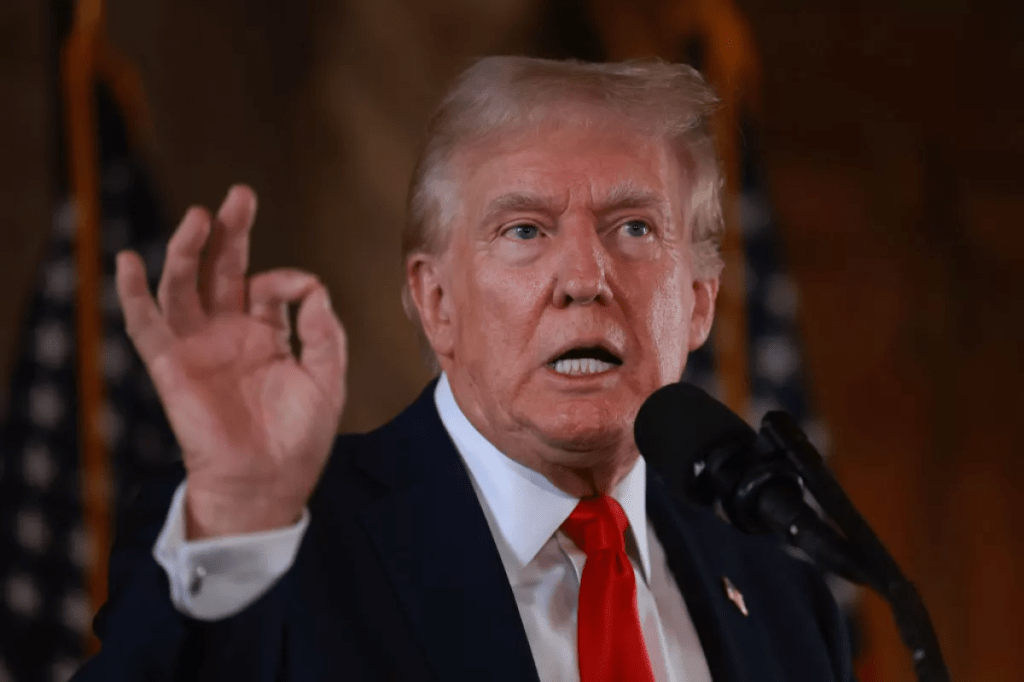
What the hell is JD Vance doing in Hungary?

Away from the chaos of the Middle East, a hugely consequential election is taking place in the seemingly inconsequential Hungary.

The populist, far-right, deeply corrupt, Putin loving Prime Minister, Viktor Orban, 16 years in power, is standing for re-election on 12th April. If he is defeated it would have huge consequences for his style of politics not only in Europe but globally.

Shouldn’t the Vice-President’s focus be on America?

Despite all the global mayhem, the US Vice-President has found the time to help him get re-elected. Why? Orban has a terrible record; embracing authoritarianism with relish, undermining institutions of state, increasing Hungary’s reliance on Russian energy and blocking EU aid to Ukraine when the US is demanding Europe steps up to the plate.

In more detail Orban has:

  • Essentially placed 85% of the media under his party’s control
  • Weakened judicial and institutional control by passing laws cramming them with his own people
  • Overhauled the constitution to make it harder for the opposition to take control
  • Shown his anti-Semitic roots with his hostile obsession with George Soros, even introducing ‘Stop Soros’ legislation in 2018
  • Whipped up hostility to the LGBTQ+ community and other minorities, restricting their rights
  • Rewarded supporters with slices of the State pie

In 2014, Orban prided himself in building ‘an illiberal state, a non-liberal state.’ To be fair, he has won six elections, three with a two-thirds majority but it seems his reign may finally be coming to an end.

One says ‘seems’ and ‘may’ as the ability of so called democratic regimes to challenge or gerrymander legitimate election results is becoming commonplace. Hungary, itself, in 2023 dropped from 31st to 67th in the Cato and Fraser institutes’ league of human freedom (thank you, Martin Wolf, for your excellent FT article on Hungary). All indicators of a thriving liberal democracy have headed south.

So back to JD Vance. Why is he interfering in another country’s election when he has no business to? A country which, under Orban, is a firm ally of Putin and the antithesis of US democracy.

Maybe, is it because Hungary represents a blueprint for where he and President Trump want to take America…?

We have to be lucky once – you have to be lucky always…

This chilling phrase came from the IRA in attempting to assassinate Margaret Thatcher in the 1984 Brighton hotel bombing.

It also applies to Iran and America today. The brutal regime in Iran seems to be able to absorb endless devastating attacks. Can America really withstand the one time lucky strike which results in a large number of American casualties?

It has been a tough time for the US president…

Trump has the potential to double down on his foray into the Middle East. The war will be over in weeks he says yet adds confusion to his war aims by planning further mass bombing raids with thousands of soldiers deployed for potential on the ground fighting. Whatever the cruelty of the Iranian regime and its ability to in flict harm on its own people, you can hardly blame it for being reluctant to negotiate with a president who walked away in the middle of talks on nuclear arms and now only proceeds through sticks and no carrots.

Meanwhile, Netanyahu is prepared for a long war believing Iran continues to pose an existential threat to Israel. Iran poses no such threat to America as Trump’s own military leadership confirmed to him. His approval ratings amongst voters for this self-inflicted war has dropped to 36%. The mid-terms are looking grim for Republicans. One lucky attack by Iran on American soldiers with multiple casualties will probably make Trump buckle. It would be game over for his presidency.

You can see why the Iranian regime, crushed militarily except for mysteriously hidden drones and missiles, currently seems confident in holding on…

So what are the consequences of all this for the UK? The only silver lining to this terrible conflict is Starmer standing up to Trump and proving the inevitable logic of the UK in some form embracing the European Union driven by Trump’s threat to leave NATO and the war in Ukraine. For Putin, Trump is a gift that keeps giving.

The long term consequences of this global mayhem is that the UK and continental Europe will never be fully able to rely on America again for its defence whoever is president. This war may be over in a few weeks but its fall-out will be long lasting whether it be in terms of the economy, military alliances or the balance of global power.

Against this backdrop, the UK has local and regional elections in May where the Labour Party is forecast to fare incredibly badly with some colleagues and the media whipping up a scenario of Starmer being replaced as leader. This is no time to change prime minister. It would seem parochial and self-indulgent at best with no electoral advantage for Labour. There should be more unity in British politics in these times of peril.

Finally, to finish on a positive note since it is Easter, how exhilarating to watch the launch of Nasa’s Artemis II mission towards the moon. It is this sort of event which makes America Great…