Badenoch takes the battle to Burnham

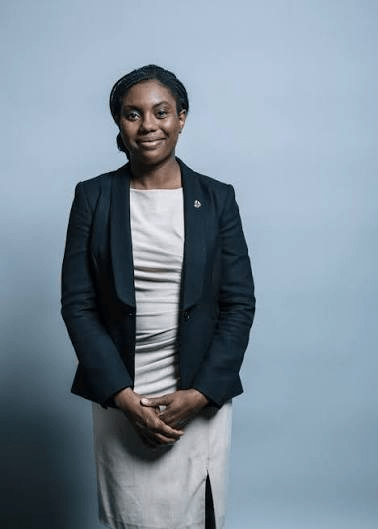
Thanks to Andy Burnham, the ideological divide in British politics is much clearer and Kemi Badenoch has added to that clarity. In an uncompromising Party Conference speech yesterday, she has placed the Tories firmly on the Right of the political spectrum. No shuffle towards the centre-ground under Badenoch’s leadership.
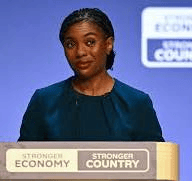
Punchy but is Badenoch winning over moderates?

She has united the Tory Party with welfare cuts, inheritance tax and stamp duty cuts, leaving the ECHR, hostility to the EU and pushing the green agenda to the fringes. Or rather she has united today’s Tory Party. Those who are more centrist no longer belong even if there is a huge consensus on cutting welfare and freeing up business from rising taxes and red tape. Moderates either have nowhere to go or have to embrace a hopelessly disappointing Liberal Democrat Party.

Badenoch now calls it her Tory Party. She vets prospective parliamentary candidates and has banned anyone who disagrees with her views and policies. So much for free speech on the Right…

To be fair, Badenoch has got it right on Reform UK. She has gone on the attack with her analysis of their lack of probity, sleaze, racism and hopelessly (even socialist) economic policies. She highlighted clear differences between the Conservative Party and Reform and pledged never to unite with them. Who can blame her when the likes of the awful Robert Jenrick, thrown out of the Tory Party ahead of his defection, slimes his way from studio to studio defending the indefensible.

Badenoch has also got it right in realising belatedly it is the economy stupid. Much more time now seems to be spent on this topic rather than emphasising culture wars. Good.

So there we have it. With the implosion of the Greens, the slow slide in the fortunes of Reform, and the clear divide between Labour and Conservatives on most major policy areas it seems we might be veering back towards two party politics. In our dreams. Never count on the demise of Reform and also, courtesy of Burnham, there is proportional representation to think about…
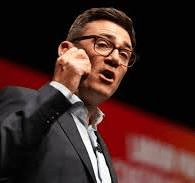
Badenoch falls into Burnham’s trap…

No more gloom and doom. No more kicking tricky issues into the long grass. No more wooden speeches.

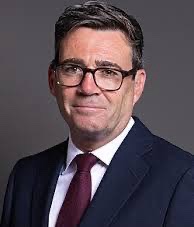
You have to give it to Andy Burnham. He continues to surprise on the upside.

Andy Burnham is on a bit of a roll…

His conference performance this week was a masterclass of optimism, emotion, personal stories but also hard policy. No notes either! I was surprised there was not more coverage of his commitment to proportional representation at the next election, a huge shift for the Labour Party, but abandoning the triple lock, options for rejoining the single market or even rejoining the EU was punchy stuff.

But it was his overall narrative that most impressed in terms of clarity. You don’t have to agree with it to appreciate it. Burnham is up for the fight of challenging the consensus of the last 40 years that the state is a dead hand that stifles innovation, freedom even, and needs to back out of our lives. A commitment to a national care service, rolling back privatisation, a far stronger embrace of the State as a force for good in removing inequality and improving society as a whole was his refrain. He essentially called time on Thatcherism that none of his elected Labour predecessors have had the guts to do. Positivity shone throughout about the potential of a collective approach to society’s challenges.

In doing this, cloaked in a ‘I’m the decent guy here’ style, he set the trap for his opponents, essentially Reform and probably now the biggest threat, the Tories, albeit severely weakened.

Badenoch walked straight into it. No praise for radical solutions that at least on paper might reverse the failures of the past, many of them under a Tory government, no positivity, no new refrain about costs and benefits. Just negativity, where is the money coming, a return to the 1970s etc. You can sum up Badenoch and her small crew of Tories in one word. Sour.

She cannot see that the public feels the consensus of the last four decades is no longer working for them. Local government hollowed out, insufficient public housing, failing utilities, major issues such as social care unresolved because of nervousness it will increase the role of the state. Add the failure of Brexit to this list and the anti-Tory case has been made. Badenoch is incapable of apologising for the mistakes of past Tory governments. Until that happens, her party cannot move on. Voters have not forgotten.

This blog has consistently made the case that populism thrives only because of the failures of over promising, indecisive moderate politicians who don’t tell it as it is. Whether it works or not, and there are legitimate doubts it may not, Burnham has made the case for a big bold government as a force for good that delivers radical solutions to seemingly intractable problems. If taxes have to rise so be it. The risk will be taken.

The choice at the next election has suddenly been made crystal clear. A sour refrain of rolling back the state versus hope that it can be made to work better. When the election comes, the electorate still sick of the Tories are probably more likely to choose the latter.

A few thoughts on UK politics…

Back from the Summer holidays. A time of at least attempted peace and quiet but not if you are a UK politician…

A good deal has changed in the last couple of months. A new PM in the shiny, positive form of Andy Burnham, continuing headwinds facing Reform UK and the Greens, mostly self-inflicted, and a spring in the step of Kemi Badenoch and her merry band of Tories. All against the backdrop of a challenging international environment.

Here are a few thoughts and predictions.

  • Andy Burnham is certainly a better communicator than Starmer and has made a better start to his premiership than many would have predicted. He mostly looked assured in his first PMQs last week and took three hours of questions from MPs the day before without putting much of a foot wrong. The result is that Labour are back at the top in opinion polls albeit by a whisker. However, Burnham is constrained from really making a difference by government finances and the Labour manifesto which stupidly prohibits major tax increases. The cost of government debt is soaring (interest costs of over 5%) as concerns mount about fiscal headroom against a deteriorating global backdrop. If opinion polls remain favourable expect a 2027 election. It is Burnham’s only option to deliver more radical solutions to the nation’s problems.
  • Reform UK will not go away. People are too disillusioned by mainstream politicians’ failure to deliver but they are certainly weakened. Most polls have them now in second or even third place behind the Tories and Farage continues to be the ‘nearly man’ of British politics electorally even when driving the agenda. Watch out for more scandals but no room for complacency for the major parties as many of these will cement the support of hard core Reformers just as with Trump and his MAGA crowd. Proportional representation must look an increasingly attractive proposition for Reform…
  • The Greens have imploded somewhat due to the extreme leadership of Zack Polanski and the rise of Andy Burnham. In a bid to regain momentum, Polanski is their candidate for the Holborn and St Pancras by-election as Starmer (and who can blame him) clears off out of UK politics. On balance, he will probably lose which will do for his leadership and make a 2027 general election more likely.
  • A false dawn awaits the Tories. Whilst Badenoch’s momentum continues, support for her party has flatlined. The public has not forgotten their often disastrous period in government and still doesn’t trust them. Badenoch’s move to the Right is simply wrong as is appointing a supporter of Liz Truss’s budget as Shadow Chancellor, although choosing the moderate Tom Tugendhat as Shadow Foreign Secretary is a shrewd move. She won’t apologise for the mistakes of her predecessors and any prospect of winning a general election is 5-10 years away at best, assuming proportional representation has not been introduced by then. The next election is now Labour’s to lose although it will be a tough battle.
  • The LibDems are nowhere. History will judge this period as a huge lost opportunity for them.

So there we are. For participants in the Westminster game, there is all to play for although the poor bloody electorate will see little, if any upside…

P.S. Trump’s presidency is an increasing disaster. Outside his international follies, look at the size of government debt and the rising cost of servicing it. At $40 trillion, how long can the protection of the dollar as the world’s reserve currency suffice? Fuelled by his policies, a huge financial crisis potentially beckons. More on that later alongside thoughts on the rise of the far-right in Germany after elections in Saxony-Anhalt… A lot to catch up on…

What do Trump and Reform UK have in common?

Answer: the depressing level of support they still receive from voters.

Donald Trump must surely be the worst president in US history. The list of his crimes against democracy and responsible governance is long; trying to gerrymander votes, inciting riots and then pardoning January 6th participants, tax cuts for the rich whilst cutting Medicare, grotesque state capture as he enriches himself, his family and his friends, the disaster of the wholly unnecessary Iran war which is fuelling inflation back home, tariffs often applied to allies which makes no impact on manufacturing in the US, constant lying, insulting world leaders… The list goes on. A lover of Putin, Trump has failed to make any headway on Ukraine and his actions in Venezuela and Iran only give a green light to Putin generally, and Xi in particular to invade Taiwan. US foreign policy under this president has become amoral at best.

Yet and yet, although Trump has record levels of unpopularity in opinion polls, a third of Americans still support him… What the hell?

Brothers in arms…

Then over to Reform UK and Farage. Not only is this party and this man whipping up racial tensions based on fictitious claims about immigrants, but the party’s finances seem wholly corrupt and Farage has still not explained his £5 million bung from a Thai based crypto billionaire. Throwing his toys out of the pram he has initiated a wholly unnecessary by-election to avoid scrutiny. It won’t work as a parliamentary standards enquiry will start the immediate moment he retakes his seat.

And yet, and yet, Reform UK, whilst losing its top spot in opinion polls, still commands c24 per cent support and opinion polls suggest Farage is garnering 70 per cent of the vote in his by-election next week. Admittedly this is against Count Binface with no mainstream parties participating… But… what the hell?

Populism is starting to peak everywhere; the US, UK, Hungary for example but it still commands far too much support not least in France ahead of presidential elections next year and in Germany through the AfD.

Why? It is due to over-promising, often patronising, mediocre mainstream politicians who fall well short of voters’ expectations. The Democrats in the US arguing with themselves and with no discernible plan to meet the concerns of voters are at record levels of unpopularity in spite of Trump. Starmer was ousted in the UK as he promised to improve public services with no major tax increases. An impossible feat. He had no plan for government and also being hopeless at communications his popularity plummeted. Reform UK and the Greens were the beneficiaries. We shall see about the new PM, Andy Burnham. He has made a reasonable start but crowd pleasing short-term gimmicks are appearing and core taxes won’t increase apparently despite brave statements of long-term change. Umm… hopes are not high.

The public needs to wake up to the corrupt incompetence of populists who care not a jot for those who vote for them. But moderates need to sharply raise their game too. They need to be open with the electorate about the trade-offs required to deliver meaningful solutions to seemingly intractable problems and the time it may take to achieve them across electoral cycles. If they fail this really quite simple test, support for populists from a still depressingly high base means they could easily be back winning elections.

Burnham: the jury has to be out for now…

This blog starts in a similar vein to the one about Starmer after his general election victory. I wish Burnham well for the sake of the country and as a bulwark against Reform UK’s populism.

A reasonable start as PM. Fingers crossed…

His start was generally fine with a good Cabinet reshuffle. It may have been pretty ruthless (no bad thing) in ousting Starmerites, but getting rid of the blowhard David Lammy, the underperforming chancellor, Rachel Reeves and pushing Ed Miliband out of harm’s way to the Foreign Office are sound moves. John Healey as Chancellor also seems inspired. At least he can keep an eye on defence expenditure from there…

But the inconsistencies appearing on the policy front are worrying. I get the message about cost of living and moving governance out of London but if Burnham sticks to Labour’s manifesto as he said he would do, there is no money for any of his initiatives and you can’t just keep taxing the rich who are already paying record amounts of tax. Burnham says there is room for manoeuvre but how honest will he be on this?

So far measures to ease people’s everyday costs are small but totemic. However, fiddling the figures to pay for the removal of VAT on fuel by saying it is offset by savings from scrapping ID cards when there was no budget allocated to them is disingenuous. It bodes ill for future policy transparency.

Burnham to be frank seems lightweight but it is early days. He almost certainly will be overwhelmed by events but he can never be replaced this side of an election so he should relax into the job. Being generous, his belief in devolution, proportional representation and closer ties with Europe are grounds for supporting him alone.

But if Burnham drifts dangerously to the left, his government continues the stance of misunderstanding business and what it takes to get growth into the economy, fails to tackle welfare dependency and social care, the gloves come off. He has the summer to plan his longer term strategy. Let’s hope he uses that time wisely.

Badenoch takes the Tories on a road to nowhere…

To be frank, Kemi Badenoch has had a good few months. She has got much better at PMQs, and Keir Starmer has provided an open goalmouth the size of well, England’s goalmouth in last night’s World Cup game against Argentina. She has been on a roll.

Strategic mistakes will undermine potential glimmers of Tory electoral recovery

She is also getting lucky with Reform. A rattled Farage has made a huge error in resigning his parliamentary seat and standing for re-election against Count Binface. He could lose although the backlash from the awful murder of Reform supporter Ann Widdecombe will resonate. The issue of the safety of MPs such as Farage which he has constantly raised has come to the fore tragically and may help him get through although with diminished authority.

So, what is Badenoch doing with these rare glimpses of sunlight. Squandering them. In a clumsy attempt to unite the Right back under the Tory Party, she announced through a rambling, badly written article, a decision to get tough with wannabe parliamentary candidates who disagree with her. Basically, any Tory who supports staying in a reformed ECHR or keeping to 2035 net zero targets is not welcome. That’s me out then!

Why the attack on freedom of thought? Why ignore the potential seven million voters who feel electorally homeless as the Tories have drifted to the Right and the LibDems miss an historic opportunity to fill the gap?

It is stupid politics to try and win over Reform voters in this way which is Badenoch’s obvious aim. Many of them will drift back to Labour if Andy Burnham is any good and Tory defectors to Reform, particularly prominent ones, are paying a heavy price anyway. Just ask Robert Jenrick…

Badenoch is turning her back on mainstream Tory voters just when she needs them. She is curtailing freedom of thought and speech within her party, narrowing its base in the process. The result? So far, for all her run of good luck and a little skill, the Tories have barely moved in the polls.

Perhaps it is time to call in Vice-President JD Vance to free the centre-right from Badenoch’s hard right-wing political correctness. Now, that would be a sight and sound to witness…

Qualities in a Prime Minister – they are PPLC of course…

I participated in a breakfast last week with those close to the ‘action’ in Westminster. A highly interesting conversation ensued about the immediate future of UK politics, against the backdrop of the Labour Party’s shenanigans. I thought it was diplomatically worth sharing.

There was a consensus that Burnham would win in Makerfield and that Starmer was toast regardless of his public determination to hang on. The feeling was Burnham should initiate a leadership contest on Friday morning. He would never be more powerful than at that moment and therefore what was the point in waiting. Timing is everything in politics. This was all before the resignation of the Defence Secretary, John Healey, which happened later in the day but I doubt it would have made a difference to anybody’s analysis.

We then moved onto the qualities required in a Prime Minister and how Burnham and Starmer fared on these criteria. Oh dear…

The four qualities identified by the lead speaker were ‘Politics, Policy, Leadership, Communications’. Whilst there was some sympathy for Starmer’s plight (nobody could quite undersand the depth of his personal unpopularity and put it down to the poison of social media), everyone agreed with the view that No. 10 was a shambles. Starmer was hopeless at the politics of his job, had no discernable policy agenda to reflect what he wanted to achieve in office, exhibited no leadership with his endless U-turns and was a poor communicator. No surprise there, then. Score: 0/4.

Overblown potential…

But, Burnham did little better. With his back history of vacillation (not a details person…), with endless U-turns in the past few weeks on WASPI women, bond markets, rejoining the EU and when he might call a General Election, he was perceived to be weak on politics, hopeless on policy and leadership (essentially blowing with the wind), but good on communications. Score: 1.5/4.

So, we are going through all this turmoil for a mediocre replacement for Starmer. You might ask is the hassle worth it…?

On other topics, there was a feeling the Tory frontbench was generally way below par and that with strong recent PMQ performances, Badenoch was safe for a good while. She has no opponents of any merit internally despite missing the open goal of focusing solely on the economy, the Tories best route to regaining power in the medium-term. We were also given a reminder that the Tories had more influence than their current opinion poll ratings suggest; largest party in the House of Lords and still a sizeable local government player. There is a platform to build on should we forget…

With regard to Reform, most thought it had peaked some while ago and that Farage might not be well. Without wishing ill will, this is the only hopeful strategy of the main parties… He has been rather absent recently which surely has nothing to do with him explaining his undisclosed £5 million gift from an offshore crypto billionaire…

On other parties in this new five party system, Polanski has partly blown it for the Greens and Ed Davey’s LibDems elicited almost no comment which says it all really.

So there you have it. The future success of political leadership in the UK is all about PPLC and, on this basis, voters have little to choose from.

Qualities in a Prime Minister – they are PPLC of course…

I participated in a breakfast last week with those close to the ‘action’ in Westminster. A highly interesting conversation ensued about the immediate future of UK politics, against the backdrop of the Labour Party’s shenanigans. I thought it was diplomatically worth sharing.

There was a consensus that Burnham would win in Makerfield and that Starmer was toast regardless of his public determination to hang on. The feeling was Burnham should initiate a leadership contest on Friday morning. He would never be more powerful than at that moment and therefore what was the point in waiting. Timing is everything in politics. This was all before the resignation of the Defence Secretary, John Healey, which happened later in the day but I doubt it would have made a difference to anybody’s analysis.

We then moved onto the qualities required in a Prime Minister and how Burnham and Starmer fared on these criteria. Oh dear…

The four qualities identified by the lead speaker were ‘Politics, Policy, Leadership, Communications’. Whilst there was some sympathy for Starmer’s plight (nobody could quite undersand the depth of his personal unpopularity and put it down to the poison of social media), everyone agreed with the view that No. 10 was a shambles. Starmer was hopeless at the politics of his job, had no discernable policy agenda to reflect what he wanted to achieve in office, exhibited no leadership with his endless U-turns and was a poor communicator. No surprise there, then. Score: 0/4.

Overblown potential…

But, Burnham did little better. With his back history of vacillation (not a details person…), with endless U-turns in the past few weeks on WASPI women, bond markets, rejoining the EU and when he might call a General Election, he was perceived to be weak on politics, hopeless on policy and leadership (essentially blowing with the wind), but good on communications. Score: 1.5/4.

So, we are going through all this turmoil for a mediocre replacement for Starmer. You might ask is the hassle worth it…?

On other topics, there was a feeling the Tory frontbench was generally way below par and that with strong recent PMQ performances, Badenoch was safe for a good while. She has no opponents of any merit internally despite missing the open goal of focusing solely on the economy, the Tories best route to regaining power in the medium-term. We were also given a reminder that the Tories had more influence than their current opinion poll ratings suggest; largest party in the House of Lords and still a sizeable local government player. There is a platform to build on should we forget…

With regard to Reform, most thought it had peaked some while ago and that Farage might not be well. Without wishing ill will, this is the only hopeful strategy of the main parties… He has been rather absent recently which surely has nothing to do with him explaining his undisclosed £5 million gift from an offshore crypto billionaire…

On other parties in this new five party system, Polanski has partly blown it for the Greens and Ed Davey’s LibDems elicited almost no comment which says it all really.

So there you have it. The future success of political leadership in the UK is all about PPLC and, on this basis, voters have little to choose from.

Why today’s moderates and independents cannot vote Labour…

It is one of the most damning quotes in recent UK politics. It will do for Labour in the end.

Pat McFadden, the calm, ‘safe pair of hands’ minister was caught saying in a WhatsApp conversation (about his backbenchers) with Mandelson, ‘every meeting I have is ‘who can we tax in order to pay benefits to others’.

This could be the largest fallout from the Mandelson fiasco after the defenestration of Keir Starmer.

It goes to the heart of the stupidity and fecklessness of Labour. It shows a complete misunderstanding of the priorities of the public, of the need for lower taxes on business to create wealth, of the need to get more people into work for their own good and the health of the economy, of what we can afford as a nation. In short, it is infuriating. All is forgiven. Bring back Tony Blair… except he is about as Labour nowadays as Kemi Badenoch.

Labour ministers go on about the need for growth. Either they or their backbenchers or both have no idea what growth means, why it is important, and how to achieve it. Incredibly this was inferred by leaked WhatsApp messages from Darren Jones, Rachel Reeves’ No. 2 at the Treasury, also to Mandelson which surfaced yesterday.

Burnham is no long-term solution to the country’s challenges…

If Burnham becomes the next PM (increasingly likely), the bad traits of a Labour government will get worse. Like the rest of his colleagues he will bang on about ‘working people’ (don’t we all work in any type of job) and be less disciplined on welfare and public expenditure generally. He has already shown irresponsibility towards bond markets. He won’t get the unsustainably of the welfare budget. He is a weak populist and like the worst of his party, almost certainly in hock to the trade unions.

Burnham might justifiably call an election as soon as he moves into No. 10 but he probably shouldn’t. The choice would be too awful for moderates and independents to contemplate, reflecting the current mess called UK politics.

The natural ally of the Tories is now Tony Blair…

There is only one political organisation occupying the centre ground in UK politics. It is not the LibDems who vacated it years ago. It is Tony Blair and his Institute for Global Change. It is time the Tories embraced its commonsense centre-ground analysis of the world’s problems. You don’t have to agree with Blair’s choice of clients or his slavish obeisance to America to agree with much of the Institute’s output.

Worth listening to…

But Blair has particularly come to the fore this week with his take down of today’s Labour Party. Here is, I confess, a partly AI generated summary of his critique edited by my good self ( I don’t need to read through all the 5600 words…):

  • The “Radical Centre” Blair argues is Labour’s only viable path warning that shifting left to appease internal critics is a perennial, dangerous delusion
  • Governments which succeed don’t start with a personality contest, or a political question, as in: how do we ‘save the country’ from Reform?” Blair writes. “They start with an idea, a project, a governing purpose, an analysis of what is wrong and a plan to put it right.”
  • Labour doesn’t have a coherent, worked-out overall plan for running the country in a fast changing world
  • The government has been tone-deaf to the business community in its initial policies—such as expanding workers’ rights, above-inflation minimum wage hikes, and net-zero carbon pledges. Such initiatives stifle economic growth by failing to make the private sector feel supported
  • Welfare reform is crucial. The rising bill for incapacity and disability benefits is unsustainable, and the triple lock should be the first to go
  • The AI revolution needs to be applied to the whole of government and not be treated as a ‘niche industrial sector’
  • The government needs to keep a grip of immigration to head off the far-right
  • There needs to be a reset on ‘net zero’ policies to tackle the expense of the UK’s energy supply
  • Rejoining the EU is no more a solution than leaving it. A wholesale recalibration of our relationship with the EU is needed, however.

So here we go. What sensible moderate Conservative supporter would disagree with this analysis even with regard to the Labour Party. Of course, Labour’s leadership contenders reply with barbs about inequality showing they don’t have the backbone to take the necessary measures to reduce inequality. The country needs to be better governed with a firm, long-term plan to turn the country around (from not as bad a position as many people believe!). It starts with patient forward thinking policy development focused specifically on the economy.

Today’s Tories seem incapable of the hard work required in Opposition to present a viable case for governing three years from now. It takes time which Thatcher and Blair used effectively. Perhaps they should team up with the Institute for Global Change for a bit of grown-up politics free from worrying about month-to-month opinion polls…