Updated: Cabinet revolt signals the end for Johnson

It has been a long time coming, but finally Cabinet ministers have walked. They simply cannot continue defending the lies, yes lies, coming out of Downing Street. The consequences of Johnson’s amorality are laid bare.

Gaps appearing around the Cabinet table…

The contents of the resignation letters from Sajid Javid, Health Secretary, and Rishi Sunak, Chancellor, are extraordinary, even by the standards of this government:

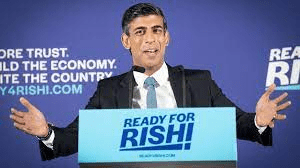
Rishi Sunak: ‘…the public rightly expect government to be conducted properly, competently and seriously… that is why I am resigning’

Sajid Javid: ‘The vote of confidence was a moment for humility, grip and new direction… this situation will not change under your leadership and you have therefore lost my confidence too.’

Further junior ministerial resignations were happening as this commentary was being written this morning. In fact they have turned into such a torrent the blog is being updated for unfolding events. Extraordinary. This government is imploding before our eyes whilst the country faces an economic crisis and a war in Ukraine. It can’t carry on like this and the public will rightly conclude Johnson’s time is up.

So, what happens next? Remaining Cabinet members, many second-rate, will hold on, increasingly discredited but knowing they have their job only due to Johnson. It will not be enough. Johnson will never resign willingly but the Party is rapidly moving collectively to oust him. Rumours abound that delegations of ‘men in grey suits’ are seeing Johnson this afternoon. No longer a resignation by the Autumn but a likelihood of one this week, perhaps today. Johnson may not even last to attend the Liaison Committee scheduled for 3pm. Has ever a premiership collapsed so quickly? Elections to the 1922 Committee this month which sets the Tories’ leadership rules will be organising a leadership election, not changing the rules for another confidence vote. The findings of the Privileges Committee opining on whether Johnson misled Parliament, a resigning offence, will now seem somewhat ‘after the event’ by the Autumn.

It is easy to say ‘I told you so’ but many people, often good, moderate Tories, consistently warned of the dangers of a Johnson premiership, and their predictions have comprehensively come true.

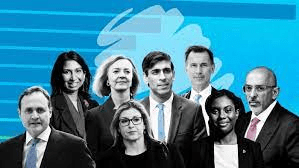
As for the future of the Tory Party, likely leadership candidates are Tom Tugendhat, Liz Truss, Nadim Zahawi, Jeremy Hunt, Sajid Javid, Penny Mordant and possibly Ben Wallace and Rishi Sunak, although the latter may well choose to leave politics. Incredibly, the Brexit obsessed Tory Party is unlikely to elect a Remainer so that possibly rules out Tom Tugendhat and Jeremy Hunt on this issue alone. Liz Truss is hugely unpopular with her colleagues and Sajid Javid doesn’t set hearts racing. The momentum is currently with Ben Wallace and particularly Nadim Zahawi but many things can change and change quickly over the coming days and weeks.

Only Keir Starmer’s mediocrity stands between the Tories and electoral annihilation. What a fall from grace for a Party that won an 80 seat majority just three years ago. It is down to one man’s well trailed flaws which have been brutally exposed once in office.

Tories pay price for inaction over Johnson

The by-election defeats were ‘priced-in’ we were told. Almost everything seems to be nowadays. The resignation of the Tory Party Chairman, Oliver Dowden, this morning was not. And this latter event is the most dangerous for Johnson, even as the scale of defeats in Wakefield and Tiverton and Honiton sink in.

Even more dangerous than the by-election results for Johnson is the resignation of the Tory Party Chairman

The Tories should have moved earlier on Johnson and are now paying the price for their inaction. When 41% of Tory MPs voted against Johnson’s leadership a couple of weeks ago, senior figures should have told him to go. The problem is ‘the men in grey suits’ don’t really exist anymore. Sometimes mediocre, sycophantic cabinet ministers who rely solely on Johnson’s patronage, haven’t got the guts. Self-interest has always been a key driver of senior politicians but not the only one as it seems to be now. Perhaps Oliver Dowden has broken that spell.

Voters’ views of Johnson are now baked in after a catalogue of misjudgments, and the Tories cannot win with him as leader. They recognised his talents but also knew his flaws and that these would do for him in the end. That point was reached some while a go. The problem is that Johnson’s leadership is infecting the Tories as a whole and opinions about them and their failure to remove him are also becoming baked in. A pincer movement is underway; Labour in the North, LibDems in the South. Things look bleak for the government today.

Still fighting Brexit, chaos over the cost-of-living crisis with incoherent, often regressive tax policies worthy of a blog on their own and U-turns galore, this Johnson led government is in a mess. Add in the ugly policy of expelling illegal immigrants to Rwanda, threatening to break international law over the Northern Ireland Protocol and the resignation of the Prime Minister’s ethics advisers and the scene has been set to upset different groups of voters everywhere.

There is a battle needed for the soul of the Tory Party and this can probably only be undertaken in opposition. In the meantime, there are plenty of successors to the current incumbent. How much is left for them to take over and any chance of rebuilding the Tory Party to minimise its shrinkage at the next General Election is all about acting now. It all feels a bit like Groundhog Day.

Shining a light on the state of our prisons

It was a pleasure attending a reception this week celebrating the Prison Reform Trust’s 40th anniversary. For those who don’t know about this organisation, it was set up in 1981 to inform and influence public debate on prison conditions and the treatment of prisoners, amidst concerns about a projected prison population of 48,000 by 1984.

A cause worth supporting

It was apparently only meant to be a temporary enterprise to stop the growth in prison numbers and improve prison conditions. Incredibly, with the prison population in England and Wales now exceeding 82,000 and projected to rise to 86,400 by 2023, the charity remains as important to civic society today as it was then.

It has three clear objectives:

  • reducing unnecessary imprisonment and promoting community solutions to crime;
  • improving treatment and conditions for prisoners and their families;
  • and promoting equality and human rights in the justice system.

There are no votes in prisons and most of the public underestimate the severity of sentencing practices. We have the highest imprisonment rate in Europe and yet there is no link between the prison population and levels of crime according to the National Audit Office. Sentences of over 10 years have increased by 250% since 2008. Over 28,000 people alone are held in custody before a trial.

Other statistics are also depressing; over 60% of offenders are sent to prison at great cost for non-violent offences, 40% for less than 6 months despite the fact that such sentences (rather than community sentences) are particularly ineffective for persistent offenders and people with mental health problems. This touches on who we jail. Three in ten offenders have learning disabilities, one in three have serious drug addiction issues. 52% of people surveyed by inspectors in 2020/21 reported mental health problems but only 22% said it was easy to see a mental health worker.

Finally, the state of prisons; 29% of prisons were rated of concern or serious concern by HM Prisons and Probation Service. Two-thirds of prisons are over-crowded and there are 10% fewer prison staff than there were in 2010. More than 20% of prison deaths were due to self-inflicted injuries, six times higher than in the general population. There were 55,000 reported incidents of self-harm in 2020 alone.

Interestingly, the Prison Reform Trust is not only supported by so-called liberals but also by many moderate Tories such as Douglas Hurd, Edward Garnier and David Gauke. And its Chair is James Timpson, brother of a Tory MP, Edward Timpson, who employs many ex-offenders across his family-owned retail chain of 1500 shops. He has rightly earned his OBE!

It is an invaluable organisation, shining a light on an area of society easy to ignore. Our civilisation should be partly judged by how we treat offenders for this reason alone. And it is common sense to focus on solutions to crime which are cost effective both in terms of avoiding incarceration in the first place and reducing re-offending.

Public discourse on our justice system needs to improve because the system is in a mess. Fat chance with populism in vogue in so many aspects of public life. That is why it is so easy to support this charity which shines a light on hidden areas of concern such as the state and use of our prisons.

Time is up for Johnson

It is not operation ‘Save Big Dog’, it is operation ‘Save the Tory Party’. Johnson survived yesterday’s vote but only just and the damage has been done as it was for Thatcher, Major and May before him. He should go and go quickly so the Tory Party can rebuild itself free from the drama, chaos and partisanship of his premiership although it may be too late for the next election.

Johnson’s luck has run out…

What has struck this blog about support for Johnson amongst his fellow MPs was how transactional it always was, even in Johnson’s heyday. Few actually liked or trusted him but if he could see off Labour and get Brexit done, that was enough. The depressing aspect of this view was how much it underestimated the damage Johnson could do whilst being PM and, actually, how inaccurate this analysis was in the first place.

With confidence, almost any Tory leader could have seen off Corbyn second time around, perhaps with a smaller majority, and getting Brexit done by breezily incorporating the Northern Ireland Protocol regardless of previous commitments not to and then attempting to renege on it has been a disaster.

There is also Johnson’s broader legacy. Pushing ‘partygate’ partly to one side, Johnson has never considered the consequences of his actions because it has always been about Johnson, not the Tory Party or, more importantly, the country. Jesse Norman MP, in yesterday’s letter to his constituents, withdrawing his support for Johnson’s leadership, gave his reasons brutally; a ‘culture of casual law-breaking’, ‘putting the Union gravely at risk’, keep changing the subject ‘to create political and cultural dividing lines mainly for your advantage, at a time when the economy is struggling, inflation is soaring, and growth is anaemic at best’. Finally, a Rwanda policy ‘ugly, likely to be counterproductive and of doubtful legality’.

This deeply ‘unTory’ of Prime Ministers has waged wars against the establishment, crossed lines on matters of fundamental morality and sought cultural splits, aided by some distinctly dubious No.10 advisers, that are pointlessly divisive and wholly unacceptable to moderate voters. Combine these with basic incompetence in day to day governing with no guiding philosophy and it has all become a toxic mix.

It is time for the Tory Party to reinvent itself with a new leader and, in doing so, free itself from the obsession with Brexit, that one doubts Johnson ever really believed in. It is time for a more coherent economic policy, it is time to think longer-term and more strategically and raise the basic standards of government.

One reads that any future leadership battle will be a re-run of Brexit. Why is this? If it about this one issue, then the Tory Party should step aside not just Johnson. A new Tory leader should form a government based on core Tory values discussed in earlier blogs, seeking a level of consensus which has led to it being the most successful political party in democratic history. There would be nothing wrong with a Remain voting new leader (remember Major, Cameron, May?) who knowing Brexit was done sought to build bridges with Europe, helping deal with issues such as illegal immigration for example, without picking populist fights for short-term tactical advantage.

There is a war in Ukraine, a cost-of-living crisis, a broad-based threat to the Union and some real long-term, deep seated economic concerns. Many in the Tory Party could manage these challenges shrewdly and, crucially, with more integrity than the current incumbent.

Johnson’s authority has been shredded by this far worse than expected vote. It is a lame duck administration at the mercy of its backbenchers and providing an open goal for the opposition benches. It is time for a change of leader and quickly if the Tories are even to begin to recover in time for the next General Election.

Tory distaste with Johnson grows

The famous epithet for Johnson proved true. The ‘greased piglet’ escaped the immediate fall-out from the Sue Gray report last week and appeared to be relatively home and dry, his premiership bolstered, some would say, with a cynically timed £15 billion hand-out to deal with the impact of soaring energy prices.

Things are just not getting easier for Johnson…

And yet, this week, it doesn’t feel like that. Without raking over the gory details of the Gray report, the sheer scale of rule breaking and ‘frat-boy’ culture in No.10 continues to reverberate and that is before rumours of more parties, yet to be investigated. Added to this is Johnson’s hubris. Very few believe he is genuinely sorry for what happened on his watch and news that Johnson has watered down the ministerial code including its introductory wording, possibly in case he is found guilty of breaking it is hardly reassuring.

27 Tory MPs have now called publicly for Johnson’s resignation with this list growing over the weekend but, more importantly, there are many others who express deep discomfort about his behaviour privately. This blog is aware of a number of MPs who don’t appear anywhere near the media’s radar wanting Johnson to go, appalled by the Gray report’s findings. As they return to their constituencies this week for a Jubilee break, they are unlikely to be reassured by what they hear from activists and voters more generally. A snap opinion poll showed 59% of the electorate want Johnson to go including 27% of Tory voters. Three quarters of voters think Johnson knowingly lied to parliament. Johnson and his supporters’ defence has also hardly helped matters in emphasising the importance of ‘morale boosting’ leaving drinks as a justification for parties. Alicia Kearns, Tory MP for Rutland and Melton, summed up a common private refrain commenting about ‘the shameful lengths some will pursue to preserve this premiership’.

Then there is the general positioning of the Tory Party. There is an increasing chorus, even from sympathetic commentators, that no-one knows what it stands for under Johnson’s leadership. Certainly not competence; certainly not lower taxes and preservation of the institutions of state; certainly not abiding by international agreements and attempting to strengthen the economy by building a positive post-Brexit relationship with Europe. And even the most die-hard of Tories are uneasy about populist measures such as deporting illegal immigrants to Rwanda, a state with a distinctly dubious human rights record. This blog was recently told a deal with France was certainly in the offing to help solve the immigration crisis until deteriorating relationships with the EU and France in particular, fuelled by rows over the Northern Ireland Protocol, put an end to discussions. How frustrating that politics in the UK has reached this point.

Although it has to be said that a General Election defeat is by no means a certainty, the future does not look rosy for the Tories under Johnson. An increasing proportion of voters seem to have made up their mind about the Prime Minister and not in a favourable way. Any benefit from the recent largesse to mitigate the cost-of-living crisis is likely to be short-lived and has confused core Tories who were told just weeks ago that it was ‘unTory’ to levy a windfall tax on energy companies.

Then there are two uncomfortable by-elections to navigate and an enquiry by the Commons Privileges Committee into Johnson’s statements to parliament on parties in Downing Street.

The heat on No. 10 may intensify over the Summer and not in a good way. For Johnson, the damage has probably been done. For the Tory Party as a whole, the next few months may prove that the fall-out from its leader’s character and actions has swept it up too.

Tories misreading voters

Sometimes you think the Tories have it all; a Prime Minister with more than nine lives, an electorate distracted by the tragic Ukraine war, a divided opposition and a mediocre leader of the Labour Party. It is almost too much to bear for anyone unsympathetic to their cause.

All this came together in the local elections. Despite losing a bucket full of council seats, a poor showing from Labour in the North, success for the LibDems in the South being warily written off as the usual Tory protest vote, ‘beergate’ for Starmer taking attention off ‘partygate’ for Johnson, all led to a sigh of relief from the Tories and Johnson keeping his job.

And yet…. this Government is set on making things worse for itself.

A tough summer ahead for the Government…

The cost-of-living crisis is a real disaster for many economically challenged voters. Inflation to hit 10% with unavoidable energy prices skyrocketing is causing much pain. A combination of Brexit, Covid generally but particularly in China, and war in Ukraine, is causing mayhem. But the government seems strangely becalmed. Delaying further financial relief for the hard pressed, probably until the Autumn, only now dusting off a potential windfall tax on the obscenely profitable major energy companies but blocking it in parliament on Tuesday, will lead to weeks of bad headlines. Current inaction will hit the Tories’ support particularly in the North and promised minor tax cuts won’t as they say, ‘cut it’. There is plenty of material for a divided opposition and a pedestrian Starmer to work with and one senses a real chance that the Red Wall will rise again.

Then, let’s move to the South. The Tories are also set on making the Tory protest vote for LibDems last until the next General Election. The fallout from Brexit continues and an aggressive approach to unwinding the Northern Ireland Protocol this Government negotiated certainly treads on the sensitivities of moderate Tory voters. A populist stance generally from Johnson et al as they seek out culture wars to fight is also a major source of irritation. The LibDems are second to the Tories in 91 seats and up to 30 of them mainly in the South look highly winnable. If the LibDems win the Tiverton & Honiton by-election in June, admittedly, even for this run of Tory scandals, in odd circumstances, then all bets are off.

Finally, there is Johnson. Just because he has escaped from ‘partygate’ doesn’t mean he is any longer an asset. He simply cannot govern competently, displays massive hubris in private and is an accident waiting to happen. A weak Cabinet, divided backbenches and side-lined talent such as Jeremy Hunt contribute to a sense of arrogance but also drift in a Party which has been too long in government.

Who knows? The Tories still look a reasonable bet to win the next General Election. Misreading voters, both North and South, however, means the odds gradually keep getting longer.

There have been several requests from readers about how they can access this blog directly. Please go to http://www.insiderightpolitics.com and sign up. It only takes a few seconds to ensure content is delivered to you in an instant! You can also follow me on Twitter: @insiderightblog.

Johnson leaves the Tories anchorless

What to do, what to do? Tolerated in the North and fairly loathed in the South, today’s local election results are confusing for the Tories.

Johnson has torn up the anchor of ‘yesterday’s’ Tories

It is not hard to see why. Nationally, and it is national issues which mostly motivate local election voters, the Tories used to stand for a sort of morality in government, moderation in most things, conservativism with a small ‘c’ as they sought to protect the institutions of state and perhaps, most importantly for many of their core supporters, lower taxes. Of course, all these principles were applied with enough ideological flexibility to win elections.

Not anymore. A government trying to illegally prorogue parliament and regularly challenging the judiciary, a misleading Prime Minister constantly accused of being loose with the truth, bringing amorality to its heart, a party ideologically fixated by Brexit and, finally, applying record tax hikes, is not the party of old. It is a strange picture. Beyond this mix of activity being (in part) a winning combination in 2019, what do the anchorless Tories now stand for?

The answer is not a great deal outside Johnson’s ‘shopping trolley’ populism but, of course, the new Tories in the North don’t care about the Party’s past or, to be honest, its future. Many of the current Tory policies tactically appeal or at least fill the vacuum of a mediocre Labour Party which is perceived not to have delivered historically and does not convince about how it will deliver in the future. Northern/Midlands votes are on loan to today’s government. Brexit has been delivered; all politicians are amorally the same so who can bother about such things as ‘Partygate’. Just get on with the job of ‘meaningfully levelling up’ whatever that means in practice and prove you can alleviate the pressures of a soaring cost of living. The loan of votes to the Tories could be permanent if there is no alternative.

But in the South, many voters were committed to the principles of a pre-Johnson Tory Party and are pretty revolted by what they now see. Often anti-Brexit, pro lower taxes, supporters of the status quo and a certain level of probity in government they thoroughly dislike Johnson’s populist regime. Lucky for Johnson et al that Starmer doesn’t quite convince the South like Blair did in ’97, so the LibDems are key beneficiaries of such disillusionment. Congratulations to them. They have had a strong election but in the medium term the ‘post Nick Clegg’ LibDems must hold the centre-ground to build on this success and one doesn’t sense they really understand this. Today, they still seem only a temporary repository for disillusioned Tory votes but that is a subject for another blog.

And Starmer needs to up his game. He needs to stand more clearly for something. Anything. Piling up votes in the cities, notably London, modest gains elsewhere with a bounce back in Scotland is not enough. A brilliant analysis of what he needs to do has been outlined in Robert Shrimsley’s FT column this week. Required reading for any ambitious Labour supporters.

So, there you have it. Not all the local election results are in as this blog is being written but it seems a partly discredited Johnson has upended traditional support in the South for greater loyalty in the North. Net, net, overall, he has done badly but not badly enough to go. His premiership has torn up the anchor of the ‘old Tory Party’ and leaves its long-term future uncertain, not that he cares. It is a problem for his successor.

Johnson is the beneficiary of only modest gains by Starmer’s Labour Party in the North. Starmer is the beneficiary of disillusioned Tories often in the cities. The LibDems are beneficiaries of Johnson’s more widely disliked populism in the South.

On this basis, Johnson needs Starmer and Starmer needs Johnson. Perhaps LibDem leader, Ed Davey, needs them both. What a choice!

Sigh of relief at Macron’s victory but the long-term fall-out from Western crises remains

Phew! Macron has won re-election and the sigh of relief from liberal democrats generally and the EU in particular is palpable. It was a sound victory but incomplete. The revamped Marine Le Pen came too close for comfort against an incumbent centrist known for his arrogance.

A welcome victory is not enough…

The lesson? No room for complacency. Liberal democracy constantly underestimates the tsunami effect of global crises where the ripple effects grow into a destructive force which has untold consequences such as potential or actual victories for the populist far-right.

Here are three examples:

The crash of 2008 was, with the benefit of hindsight, managed disastrously for the future of democracy. Grotesque capitalism runs rampant, unchecked, courted indeed by the likes of Blair’s government. It leads to a meltdown of the financial system as we know it. Huge government bailouts follow (understandable at the time, the current system being all we have) with no business leaders held to criminal account for their greed and recklessness. Then quantitative easing which fuelled asset price inflation making the rich richer and the poor poorer. The picture is complete for the rise of right-wing populism as the less well-off pay the price of severe cuts in public expenditure to try and balance the books.

The impact of 2008 led to Brexit, Trump, Johnson et al and the rise of Le Pen who, let’s not forget, got at least 40% of the vote yesterday. The resentment of the less well off who are told what’s good for them by an established elite and then things fail to improve or deteriorate is manifest.

So, to Brexit. The detrimental ripple effects, sadly washing over the very people who voted for it, are now increasingly visible. Disrupted trade, an economy growing more slowly contributing partially to the cost-of-living crisis, is painful to see. It is not a coincidence that a weakened EU was applauded by all the wrong leaders. Which takes us to Putin’s invasion of Ukraine…

In a way, this third crisis was of the West’s own making. Obsessed with itself, underestimating the evilness of Putin, failing to adjust energy and security policies even after his actions in Syria and the invasion of Crimea, a quick chaotic withdrawal from Afghanistan were all building blocks for the latest threat to Western democracy. Today, despite the brave resistance of the Ukrainians and a better initial response from the West than anticipated, the threat of Putin has never been greater. A victory in the East followed by a renewed onslaught on the rest of the country, perhaps followed by Moldova, is scary. The slow burn fall-out is huge. Success for thuggery, a new cold war, mass emigration, a questioning of the benefits of democracy, support of which is already in decline all provide an opportunity for the West to display its divisive self-interest.

So, yesterday, Macron won but this provides a short-lived respite. After all, who spotted or will spot the crisis of liberal capitalism in the solutions to the 2008 crash, the long-term consequences of Brexit for all of Europe and what may be the West’s patchy response to the long-term fallout of a Russian victory in Ukraine if it occurs?

The West and liberal democracy in general have to restate the principles for their existence and do this constantly. There has to be an understanding of the longer-term reverberations from Western inspired crises on society as a whole and act accordingly otherwise there will be more Trumps, Orbans, Marine Le Pens and, in a more diluted form, Johnsons. Some of them, as we know, get elected and that is never a good thing.

The time for Johnson to go is now

A better title for this blog would be ‘Spot the difference: ‘law makers, law breakers’ but sadly it is already being used and used everywhere.

The position of Johnson and, sadly perhaps, potentially the impressive Chancellor, is untenable. You cannot impose laws on the rest of us and be found breaking them yourselves. How can the integrity of parliament making any laws now remain intact after this if at least Johnson remains in office? There would be no moral authority to pass them and have us obey.

They were the future once…

The next few days and weeks are very dangerous for the Tories. If their leaders can be fined for breaking lockdown laws with the PM presiding over Downing Street staff sharing at least 50 fines across 12 parties, what will voters deduce? And that is before potentially further fines and the likely gruesome full report from Sue Gray into these parties is published.

Many will say Johnson is unfit for office, but they will also conclude so are the Tories as a whole if they can’t act to remove him quickly. Tainted by association will be the obvious narrative. The Opposition must be licking their lips and Starmer may actually want Johnson to stay in office in private whatever he calls for publicly. Johnson provides a ripe target. Surely, the Tories realise this?

And what nonsense it is to excuse Johnson because of the war with Ukraine. Domestic morality cannot be turned on and off for international events. Our response to supporting Ukraine is a government one not the personal fiefdom of the Prime Minister. Any successor would undoubtedly maintain our current stance. Probity in a healthy democracy contrasts sharply with Putin’s brutal, corrupt regime.

So, the scene is set for the Tories to redeem themselves by changing their leader or the scene is set for much more certain defeat, but indications suggest they will not. Whilst Johnson may well be ousted if May’s local elections prove disastrous, it may be too late by then. The damage will have been done.

Think about the narrative. The first serving Prime Minister to break the law amidst heart-breaking lockdown restrictions. A Chancellor appearing to dodge taxes. One law for us, no laws for them. A cost-of-living crisis as the backdrop. A tired Party in office for too long, stripped of its moral authority. It all feels, for those that can remember, very 1992-1997 except the Major versus Johnson comparison would not be fair on Major.

The current best leader of the Tories they never had, the former Scottish Tory leader, Ruth Davidson, put it succinctly:

‘Met confirms what we already knew: the PM introduced liberty-curtailing rules for public health reasons. This caused huge hardship for those separated from ill or dying loved ones. He then broke the rules he imposed on the country and lost the moral authority to lead. He should go.’

It is that simple and good Tories know this. Johnson’s time is up, and they should remove him now before it is too late for them all.

Populism akin to inflation; it sometimes sleeps but never dies…

In the face of Putin’s onslaught on Ukraine you would have thought populism would be killed off once and for all, at least in Europe. This man had the sympathy of anti-Europeans everywhere, the far-right and where in existence the far-left in Europe generally, let alone populists more globally. Populists’ previous support for Putin and tepid condemnation of his actions now would surely be the final nail in their coffin.

But no. At the start of April, a government in Hungary sympathetic to Putin pre the invasion wins an overwhelming re-election victory. The Prime Minister, Viktor Orban, busily undermining the judiciary and independent media, who called the EU and President Zelenskyy ‘his opponents’ is triumphant.

Then we have the first-round of French Presidential elections, where the far-right Marine Le Pen is within 4% of President Macron and will face him in the second-round runoff on 24th April. She could win.

Populists are alive and kicking…

A little bit of a background to this election. President Macron, infuriatingly arrogant, chose to focus on Ukraine rather than bother campaigning in earnest on domestic issues believing he was home and dry. He forgot the elephant in the room, the cost-of-living crisis, and is rightly taking a kicking. He should still win but might not. The French electorate are angry, and Europe has a history of electing far-right leaders by accident…

For all Macron’s mistakes, how has a ‘previous racist’ who wanted to withdraw from the Euro and EU got this far? Her Party took a generous Russian loan, and she was an admirer of Putin, with Putin appearing in early election literature. To paraphrase a well know saying, you can put lipstick on an animal, but it is still the same animal…

The answer of course is complacent out of touch politicians failing to address the concerns of core voters. When voters feel, however unfairly, that you hear more debate about culture wars, for example, than solutions to the severe economic pain they are experiencing you despair…

Which takes us to the UK. The modestly populist Tory government is in trouble for exactly the same reasons centrist moderates are. It seems to have forgotten the core concerns of voters. With the PM still embroiled in ‘partygate’ and his now formerly admired Chancellor and his wife engulfed in allegations of tax dodging, it appears it is one law on Covid and tax for governing elites whilst the less well-off struggle financially. The massive hike in energy prices is crippling for many. Help so far has come in the form of loans or a relaxation of the impact of the National Insurance increase which only benefits those in work. Against this backdrop, wine in offices during lockdown as laws forced us to self-isolate and non-dom status for fabulously rich partners as taxes for everyone else rise demonstrates an increasingly political tin ear to say the least. Incredibly, bland, second-rate Labour may still lose the next election but, my, the Tories are making it difficult for themselves. They should be thankful there is no credible far-right alternative to vote for.

So, there you are. The forces of populism are alive and well and still the driving force in many democratic countries. And you have resurgent inflation too. A depressing double whammy you might say.