At one time, you could have despaired about the absence of a written constitution in the UK. It felt like amateur hour in governance terms. Powers set by vague precedent rather than codified in a single written document allow for all sorts of abuses. Blair’s kitchen cabinet agreeing to go to war in Iraq without proper constitutional oversight is one example. It also allows governments to potentially, almost unnoticed (since the general public are normally bored by such things), change crucial democratic relationships. Relatively recently, we have had Cameron’s casual, tactical agreement to referenda on voting and House of Lords reform to secure a coalition with the Liberal Democrats, admittedly rejected by voters. Then we have subsequently had Johnson’s attack on parliament and the judiciary.
It all seems worrying until we set the absence of a written constitution in the context of the gladiatorial nature of British politics. The PM, despite the power afforded by an overall majority, rarely has it easy in the House of Commons chamber. MPs are increasingly independent, and the public generally gives little credence to government authority. Cock ups are rarely forgotten, and, with a few exceptions, a tough independent media and judiciary mostly keep things in check.
An unwritten constitution also more easily allows for much needed reform to be undertaken where there is at least some consensus, such as the formation of a UK Supreme Court, strengthening of parliamentary Select Committees to hold ministers to account or more controversially, perhaps, fixed term parliaments.
But there is a more important reason why a written constitution is unwise. A codified document would act as a form of higher law and undermine the UK’s representative democracy. Agreement to amend and update such a formal constitution set in stone would be nigh on impossible. It could have the unintended consequences of pushing key, legitimate decisions away from elected politicians. For definitive proof of this, one need look no further than the United States of America.
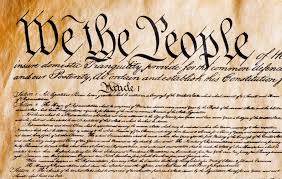
Oh dear. What was once its shining beacon is now a millstone around its democratic neck and elected representatives end up being by-standers in the face of it, not all of which can be explained by congressional gridlock.
A powerful, written constitution sucks the oxygen out of legitimate democratic debate and decision-making. Healthcare, abortion, the right to bear arms in the face of automatic weapons and mental health criteria, the grotesque abuses of political funding all seem outsourced by the US constitution to a judicial process which is now, with some irony, becoming a substitute for an accountable political process.
So revered is this document, there seems no flexibility to update key parts of it governing elections which is crucial for modern day America. The constitution continues to allow presidents to be chosen by an unrepresentative electoral college rather than the popular vote; for a powerful Senate, unlike the more accountable House of Representatives, to be elected based on all states having two senators regardless of size; for Supreme Court justices to be appointed for life by just the Senate; for an increasingly politicised Supreme Court to wield enormous and growing unaccountable power over crucial areas of public life.
Recent events have brought this home. A Trump presidency, having lost the popular vote in 2016 by three million, and a Republican Senate majority, pushed a highly conservative Supreme Court nominee into place days before a presidential election whilst Obama was denied the same opportunity nine months before the end of his presidency. There is a slew of crucial Supreme Court cases on key areas of policy that will by-pass Congress in the coming months. Then, a currently untroubled constitution allows Biden, with a lead in the popular vote heading towards six million, to be prevented from preparing for his presidency by Trump who refuses to acknowledge the election result. This would be bad at any time but disastrous mid-pandemic.
A written constitution needs reviewing, updating and improving to avoid sclerosis or worse in public life. If its dominance as a single, codified document means it is almost untouchable, particularly in an era of political polarisation, ominous pressures can build with potentially calamitous effects. On balance, in a reasonably well functioning democracy, if you don’t happen to have one, keep it that way.


Thanks Julian…hadnt thought about it that way…. particularly with Boris behaving so badly last year…… though we did have a Supreme Court head we could rely on!
LikeLike