The Madness of Brexit

And now the end is near; And so I face the final curtain; My friend, I’ll say it clear; I’ll state my case, of which I’m certain…As we leave the EU, nobody can put it better than Frank Sinatra! It is madness.

Image result for pictures of EU/UK flags

So, in what may be the last Brexit blog of 2020…umm…what is the state of play as Britain departs the EU on Friday. Well, it all seems a little grim.

Let’s start with our overall relationship with the US. Our special relationship status generally, and Johnson’s unique bond with Trump in particular, was going to ensure the UK blossoms into a global trading power-house with a rapid UK/US trade deal. But, over Huawei, there are already severe disagreements as we plan to take, at least in part, their 5G technology. Both Republicans and Democrats are threatening to retaliate by stalling on any trading agreement. Then we have a row over the UK taxing US tech giants, with the US in return threatening tariffs on UK cars. And that is before we face pressure to accept US chlorinated chicken (banning it in Europe has led to vastly improved farming practices to reduce infection). An imminent trade deal, particularly one that has to be approved by Congress, is highly unlikely. Not a great start.

Elsewhere Australia has stated there will be no rapid trading agreement. Japan says it is happy to move fast but the deal will be worse than that negotiated with the EU because Japan feels it gave too much away!

On foreign policy, our reliance on Europe is evident. We were not informed in advance by the US of the assassination of the Iranian general, Soleimani, and sided with France and Germany in fearing its impact of creating further Middle East mayhem. On the Iranian nuclear deal, when Trump pulled out because it was negotiated by Obama (!), we again sided with Europe in keeping it alive. Only now are we weakly siding with Trump on a new deal he can support because ‘one won’t work without him’. We are nowhere on Syria, Libya and couldn’t even send ministerial representation to the 75th anniversary of the liberation of Auschwitz. A small player on the world stage getting smaller partly as a result of leaving the EU.

Then I read that in the North of England, even Sunderland’s car workers are now getting nervous about the implications of leaving the EU from a car manufacturing perspective. Tough. They were told. With harsh negotiations to start and end with the EU within 11 months there will be brutal clashes on fish and financial services as the FT outlined this week. But with the government not seeking alignment with Brussels in reaching trade agreements, manufacturing looks particularly vulnerable and it could all get very messy indeed. The EU are experts at running things to the wire and last-minute concessions on both sides may well lead to at least a phased UK/EU trade deal but it will be tight and a further drag on growth.

I get the source of populism; the overlooking of the North; the required investment there; frustration at the somewhat patronising metropolitan elites; the sense of being left behind by both globalisation and immigration, but populist solutions are no answer. Overseas, do Trump, Orban, Bolsonaro, Salvini, to name but a few, really care about the ordinary working person? No. Do their solutions spread wealth? No. Time will tell whether the anti-elitist Eton, Oxford educated Johnson, architect, or at least the face of Brexit, fits a different bracket. But leaving the EU means solutions to equality are harder to achieve, the UK becomes a less influential presence in the global community and true control over our own destiny is weakened. Like a boiling frog, by the time we realise its disastrous long-term consequences it will be too late.
The media’s increasing failure to hold politicians to account

The media is struggling against a largely disinterested public partly due to the pressures of the modern age. With a 24-hour news cycle and social media breathing down the necks of thoughtful journalism, political coverage has become increasingly short-term and, in some cases, hysterical, in a drive to attract attention.

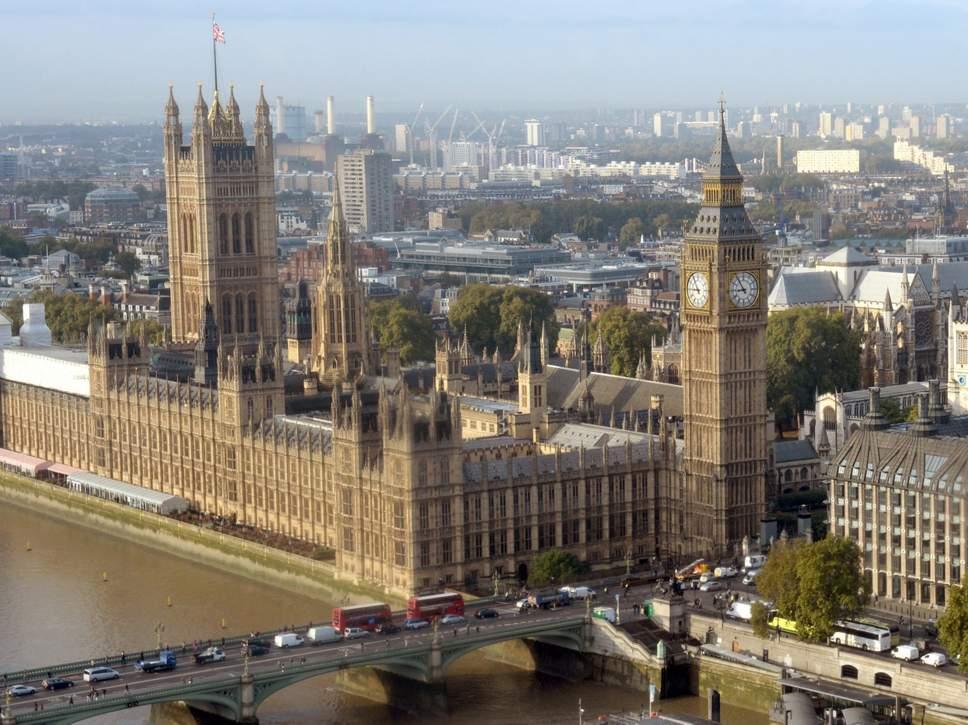
Parliament

You look at the political news output of organisations like the BBC and Sky News and the headlines are almost identical, fed by the formal output of political parties, government announcements and placed gossip. News gets posted for speed purposes and then the interpretation follows, with a desperate attempt at differentiation.

Differentiation comes in several forms. In General Elections, initiating coverage through televised debates, one on one interviews and regional roadshows; on an ongoing basis, more generally, it is through outlets such as Question Time, the Today programme and Sky News’ All Out Politics.

This is where the mistakes get made. First, the media assumes the public are interested in, and can be attracted by, political minutiae in much the same way journalists are. The public are not remotely as engaged. It does not imply ignorance but a focus on what ultimately matters as generalists. The media doesn’t often get this. It is the epitome of the ‘Westminster bubble’ and most minor politicians (and some senior ones), desperate for attention, are happy to play ball. In combination, when the public, on air, are door-stepped, particularly in the drive for ‘balance’, it is understandably not insightful viewing.

To create attention, set piece interviews with leading politicians are harsh and audience participation in live events, comprising members of the public often from a small minority of activists, are hostile. Some of the televised General Election debates were shockingly managed, for example, and changed nothing. The 2019 election was hardly a vintage year from a media perspective. Then we have celebrity panellists dragooned in to make on-going events more entertaining. It doesn’t work. Their contributions are often tedious and light weight.

This drive for differentiation goes on at the ultimate cost of tearing down the institutions of governance and the often well-meaning people who inhabit them. Only the really sophisticated, manipulative (or manipulated) politicians can successfully navigate this dubious approach to political coverage, breeding cynicism. Then we head full circle again. Media reporting of politics often feels like Ground Hog Day.

The end result is that political coverage is losing respect and senior politicians play on this to avoid scrutiny. And scrutiny has never been more important, with an unscrupulous Prime Minister sat on an enormous overall majority, facing no effective Opposition. The Government needs to be held to account on crucial issues such as how we leave the EU and constitutional reform in the coming year. But the Today programme is avoided, Question Time mostly ignored by senior politicians, the BBC intimidated and set piece interviews across channels reserved for soft touch moments. Eat your heart out Andrew Neil!

What can be done? There should be a better balance between short term coverage and that which is more thoughtful and analytical, free from the pressures of immediate, often pointless online content. Interviews should focus more on longer term issues rather than a gut reaction to the latest rumour or the need for a vacuous response to an unfolding incident, however much social media airwaves are buzzing. Politicians should be treated with more respect, and lured, rather than berated, into a studio. And journalists need to remember they are not the news themselves and be held to greater account. When newspapers are reviewed on 24-hour news channels, try analysing media coverage using non-journalists for example!

A fresh approach would gain traction over time and, in an age of populism, nothing can be more important. The media has a responsibility to question the impact of its political coverage, how it does it and what it says. Perhaps a good guide to improvement would be a growing measure of trust in the profession of journalism. Otherwise the media will be increasingly ignored by both politicians and the public, as is currently happening, and democracy will be much the poorer.

Predictions for 2020: Tory hegemony and Trump triumphs

For those unsympathetic to the Alt. Right and supporting centre ground politics it won’t be a vintage year, but it will be a calmer one, at least from a UK perspective…

politics-2361943_1920

But first, how did this blog’s predictions for 2019 pan out. Well, not brilliant but not too bad either with more predictions right than wrong.

On British politics, the prediction was that Theresa May would just squeak her Withdrawal Agreement through parliament (not first-time round) but, as Leader, she would go earlier than expected as the Tories ran out of patience with her inability to communicate. There would be no GE until 2020. Oops. Mostly wrong by a few months but in a way her Withdrawal Agreement did pass but under Johnson.

Looking at the British Opposition, the next prediction was that Corbyn’s Labour Party would go nowhere, the LibDems would not succeed and, in an environment of such polarised politics, any new centre ground party would also fail. Correct.

Overseas, Trump probably wouldn’t get impeached, but even if he did, the process would make him stronger. A score draw.

In Europe, Merkel’s influence will wane, and Macron would regain his poise. Correct.

On economics, a steady year for global growth regardless of trade wars as China stabilises without any recessionary crisis. Correct.

So, six predictions right, three wrong and one score draw. To be honest, I would have taken those odds at the start of such a chaotic year!

So, to 2020. Here we go…

The Tories have no Opposition and will dominate British politics all year. Johnson is there for 10 years unless scandal or boredom get the better of him. The Tories will pursue a Northern, English nationalist agenda, moving to the Right. Labour’s best bet is Keir Starmer but that will not be enough, even if they are sensible enough to elect him. The LibDems will not recover and are politically dead. They had their chance and blew it. A new centrist Party will be planned but won’t be launched this year. It needs detailed planning and mass defections from Labour. There will be no second Scottish referendum. The SNP have peaked.

On Brexit, it will of course happen, but Johnson will partly sell out the Right of his Party to get a final trade deal. The only time he will appear to moderate his somewhat gung-ho political stance.

Overseas, Trump will survive the Senate, keep his job and win a second term. If the Democrats can’t find a credible enough candidate by now…they probably never will. I really, really hope I am wrong.

Elsewhere, the Cities across the Western world will continue to diverge politically, pursuing liberal policies versus conservative rural areas, who will still manage to pick their national leaders in most countries. A major crisis of democracy rooted in culture wars awaits us but not in 2020.

Economically, Europe will struggle but generally economic growth will tick along globally with no crises, even with more mayhem in the Middle East than usual. Certainly not from destabilising trade wars in a US election year. A bit dull really.

2020 will be unsurprising but generally bad for political moderates. Their fightback, postponed in 2019 through, at best, ineffectual strategy and tactics, better start this year.

Three cheers for Christmas Office Parties!

If there is one institution more maligned than parliament and our political system generally, it is the Christmas Office Party.

In a sea of political correctness they have been dissected and found wanting. Warnings about drunkenness, inappropriate behaviour, confessionals, misuse of social media etc, have dominated the airwaves giving opportunities for even clinical psychologists to warn about the damage done by these events. Apparently some firms are even introducing ‘sober chaperones’ to prevent the need for the morning after the night before showdowns, which can be folklore in some offices.

Well, what a lot of nonsense. The mostly good, fun office parties are rarely covered by the media or widely gossiped about. And when they are successful, that doesn’t necessarily mean people don’t get drunk or wish they had phrased conversations in different ways…

Christmas parties are a way to celebrate a year of hard work. They provide a chance to chat with colleagues at length, which there never seems the time or occasion to do in the office. The firm, if it is doing well, has a chance to spoil its employees a little.

So take little ole’ JPES Partners, my specialist communications company. Fourteen of us headed off to a reasonably glam private room in a Soho restaurant. Cheeky Secret Santa presents were wrapped creatively and swapped with wide grins. The drink flowed from 12.00, with our clients knowing we are all strangely unavailable on the last Friday afternoon but one before Christmas, unless it is an emergency. We are a relatively diverse firm and like each other. Conversation never stopped and lunch was followed by more drinks as we headed to a reserved bar area. Many, many hours later…we were somewhat merry, better friends and ready for Christmas. Conversations from the night before stayed just there. What can be better than all this? So, three cheers for Office Parties.

Except one word of advice. The Boss should never be the last to leave and any photos taken should be at the start of proceedings, never the end. There you go…free communications advice…And looking at the undoctored photo above…you would never have guessed what happened next…

Merry Christmas!

Weary voters were sick of Brexit but it was Corbyn that allowed the Tories to triumph

This victory is not a personal mandate for Johnson. His reputation as an untrustworthy rascal remains intact despite his handsome majority. But the Tories were always favourites to win comfortably as they successfully united the Brexit vote.

Labour’s equivocal approach to this issue, threatening to vote against their own deal in a second referendum, brought confusion and frustration in equal measures. The LibDem’s revoke article 50 approach was simply too harsh in the end. ‘Get Brexit Done’ was a simplistic and effective message. There will be a time when voters realise leaving the EU is not that simple and all their ills are not down to EU membership but that is for another time.

But actually, this wasn’t the Brexit election but the Corbyn election. What really did for Labour was Corbyn’s extremism; his voting record, his stubborn support of hopeless left-wing causes and hopeless left-wing colleagues. The electorate are not stupid and, across the North in particular, they rejected his Islington world view of life. And John McDonnell is almost equally to blame. The rash of spending promises, with the possibility of an inept Government taking control of the heights of the economy, was simply too much even for struggling voters. They knew its effect would be to create greater poverty down the line. Most defeated Labour candidates seem to confirm that ultimately it was Corbyn not Brexit which defeated them.

And what of the LibDems? The scale of their failure confirmed it wasn’t a Brexit election. Why they ever agreed to a December election nobody knows. Pure hubris. Johnson was always going to win against Corbyn simply because Corbyn was Corbyn. Watching Nicola Sturgeon celebrate Swinson’s defeat must be gut wrenching since the SNP lured the LibDems into joining them for a Christmas run at the polls. 12th December was certainly festive for the SNP.

So, what now? Almost certainly 10 years of Tory government. There is simply nobody else. The centre/centre left will need to start again. Tweaking the Labour Party a little via a new mediocre leader (incredibly Corbyn wants to hang on to next April to help the hard Left’s leadership candidate get elected) or the LibDems treating their self-inflicted wounds with sticking plaster is not enough. These two parties are dead in the water. A new Party free of its own history is the answer. That will take more self-awareness than shown to date and a lot more time.

Johnson will genuinely try and repay his northern voters. Austerity is over and he will be fairly radical in moving the focus of his administration. He will be very tough on the EU until he realises ultimately, they won’t budge and it will damage the economy significantly. At least he is free of the ERG. He will run an economically liberal, US centric government but it will also be socially conservative. There are no votes to be had in the new Tory constituencies for a soft approach to immigration and law and order issues, for example, whatever Johnson’s instincts.

The UK will be a harsher country as the tone of politics moves to the Right along with some of the Government’s actions. The Union is under threat with nationalists now in a majority in Northern Ireland and totally dominant in Scotland. The relief of getting Brexit done will soon be tempered by economic realities.

Yet it will be a generation before Remainers have another say on the EU and their focus now needs to be on rebuilding the centre ground of politics. A genuinely new Opposition party must be the focus of next year. It will be worth the effort. The electorate will tire of the Tories in the end.

And, finally… promises, promises… the last blog of the year will be relentlessly upbeat and possibly Christmassy…

A plague on both their houses; vote tactically

Neither the Tories nor Labour deserve to win this General Election. They have dissembled and over-promised throughout their campaigns leaving a sorry choice for the electorate.

Image result for free party leader images of johnson and corbyn together

Let’s start with the Tories. The likely and even comfortable winners of this election. The campaign has gone according to plan, with one exception. Personally, Johnson is a weakened figure. His popularity as Mayor of London is long gone. In focus groups he is closely associated with the word ‘liar’. He has bumbled his way through the last few weeks; but his charm has evaporated. Whether it is avoiding Andrew Neil, ignoring a picture of a young boy on a hospital floor, inventing 50,000 new nurses when 19,000 are existing ones, claiming there will be no trade barrier between Northern Ireland and the mainland when leaked documents show otherwise, or promising to ‘Get Brexit Done’ when it simply isn’t that easy, he has faced incredulous hostility throughout. At the end of the campaign he still compares favourably with the dire Jeremy Corbyn; but is less popular than Theresa May.

Specifically, on Brexit, his claim is a shocking untruth. His Withdrawal Agreement hands the initiative to the EU, since he has promised (umm…) not to extend the deadline beyond the end of 2020. The EU will run negotiations down to the wire and we will be faced with a no-deal Brexit, huge compromises, or an extension by then. All this will be followed by years of further negotiations. If Johnson gets a huge majority he can, I guess, shaft the right-wing ERG and/or the DUP (twice over…). If it is a small majority who knows. And will Johnson, with a bruised ego and a (temporarily suspended) reputation for lack of focus, soldier on?

What is certain is that if there is no Tory majority, what little love there is among Tory MPs for Johnson, will disappear very quickly.

And then to Labour…Marxist, hopeless, anti-Semitic even. Their extremism has thrown this election away. Corbyn looks and sounds tired; but it is the sheer extravagance of their manifesto which destroys any semblance of consensus capitalism. This will do for them in the end. It should be their 1997; a tired Tory Party, riven by Europe, swept away by a rejuvenated Labour Party, 20% ahead in the polls. But it won’t be. With the LibDem collapse hardening Labour’s vote, and after a decade of austerity and a struggling NHS, they may do better than expected but not well enough. They should have walked it.

Finally, the LibDems. Mistakes have been made but they have also been unlucky. It is the old ‘standing in the middle of the road…run over from both directions’ analogy. The UK really does need to find a route back to centre-ground politics.

So how is this done? By voting tactically in every constituency since neither Labour or the Tories are fit to govern on their own. They have moved too far to the extremes. A hung parliament would force the Tories to move to the centre, assuming they can overcome UKIP infiltration. Labour will stay hard Left for a while since Momentum’s Corbynistas hold most internal levers of power. But this can’t last forever and Labour moderates will this time have to act. Which takes us to the LibDems. They will do badly in this election but a few more seats than expected and a rise to second place in many constituencies will set them up to help a centrist resurgence.

And the benefits? Johnson and Corbyn go. Brexit is re-visited fairly with a second referendum, which is couched in terms that will heal at least some of the country’s divisions. The Union has a better chance of holding together and parties advocating compassionate, centre ground politics can prove their worth.

‘Get Brexit Done’ is a Tory myth. Corbyn’s Labour Party are extremists. The LibDems deserve to strengthen their position, even if just a little. Tactical voting is everything to get British politics back to a position of commonsense. Go forth and multiply… as they say…those constituency results which will do just that.

Opposition own goals give Johnson a clear home run

We are in a General Election, but you would not guess it from the actions of the Opposition.

Image result for UK vote 2019 logo's

The terrible tragedy of the terrorist attack in London had Johnson tub thumping about jailing terrorists for whole terms. Past errors, despite his Party being in government for nearly 10 years, were swept aside by the fact he is ‘ a new Prime Minister’. Where is the liberal Johnson now as he seeks political advantage on law and order issues with the dire Priti Patel as a support act? Sadly, good politics though…

Johnson’s team has also played clever by refusing an interview with Andrew Neil on BBC, not taking part in a climate change debate on Channel 4 and not publishing a report on Russian influence in UK elections. Why would you when none of these actions are remotely helpful to you as the front-runner? They rightly guess the electorate don’t care or won’t do by 12th December, despite the hand wringing of liberal commentators.

Meanwhile, Corbyn’s nuanced response of treating terrorists on a case by case basis is sensible stuff except he has alleged form on sympathising with certain types of terrorists… It doesn’t appeal to socially illiberal ‘right wing’ Labour voters and, oh dear, we are in the middle of a General Election campaign if he hadn’t forgotten. He has handed more votes to the Tories. Sadly, bad politics…

Then, Labour are just waking up to the confusion of a myriad of spending promises which they are now trying to simplify. Whilst they have been successful on pushing the NHS, the sheer scale of initiatives and the cost of them is spooking floating voters. Ironically, their one area of success has been winning back Remain voters from the LibDems despite a somewhat neutral message. Why is this? Because for moderates, there is a growing panic about a Tory landslide, and they see Labour as the best block to this. How depressing.

And, as the election proceeds, where is Farage? A busted flush as his core message and even some of his candidates get absorbed by the Tories. Watch very carefully what he receives as his reward after this election for walking away from Tory held seats. A peerage is too obvious but something sexy on the global stage via Trump’s friends is a real possibility.

And, lastly, Jo Swinson? Another busted flush but she and her strategy have been treated far too harshly. She has performed solidly in her first election, even in front of Andrew Neil. (take note, Johnson). I rarely criticise the media, but they have done her and the LibDems generally a disservice. Treating parties by their share of MPs rather their share of polls in key televised debates needs reviewing as it simply perpetuates and exaggerates the deeply unfair consequences of a first past the post electoral system. But the real failure of the LibDems is unfortunately their fault.

Their mistake has not really been the harsh message of revoking Brexit but building a long term case for why you should vote for the LibDems outside this issue. This is the real problem and, with no joy, one identified by this blog earlier this year. Incredibly, they are the most fiscally conservative of the three major parties and should take credit among a sea of ridiculous, almost corrupt spending promises from Labour and the Conservatives. But they have not defined themselves clearly enough, for long enough, on broader issues. In this vacuum, it allows their history in alliance with the Tories to be used effectively against them.

Johnson looks on a roll and only two things are left to derail him now Trump’s NATO visit has ended. A last televised debate tonight and a sudden horrible realisation of what handing him a landslide victory means for a surge in the populist Right and bare faced English nationalism. I fear, as in many other countries, it will not be enough.

An election update: same old, same old, but…

The election campaign grinds on with no major change in the opinion polls. You hope this is because voters have not yet ‘engaged’ but it could be because they have mostly already made up their minds. Who knows, but you want as many people to vote as possible with today being the last day to register.

Image result for UK vote 2019 logo's

Despite these fairly static opinion polls, there are trends emerging amid quite a lot of activity, which are worth taking a look at:

The Tories with a relatively smooth campaign have strengthened their position a little to c41% at the expense of the Brexit Party. Did Farage guess how damaging his half concession to the Tories would be to his credibility? Tory confidence is reflected in a fairly modest manifesto, new promise-wise, although their startling 50,000 more NHS nurses comprises 19,000 who would be persuaded not to leave in the first place. Umm…I suspect the Tories think they have it in the bag barring last minute disasters. Farage has delivered enough for them.

The Labour Party is in a hole and just keeps on digging. £83 billion of extra expenditure a year is too much for all but the most die-hard of Corbynites and then, incredibly, on Sunday they pledged another £50 billion ‘off-balance sheet’ to deal with ‘Waspi’ women over 60 caught in a pensions reform trap. They have flat-lined at c30% in the opinion polls and that is before the Chief Rabbi urges voters not to support them on the back of anti-Semitism. This is certainly Corbyn and McDonnell’s last stand and, to coin a phrase, it is ‘do or die’. Likely the latter.

The LibDems have perhaps had the hardest time. After much promise, they are flailing on c15% as they struggle to justify Revoking Article 50 (perfectly plausible initially to create distance from Labour), still seem to be getting the blame for the Tories’ austerity policies when they were in coalition with them and are struggling for airtime having been shut out of key TV debates. To cap it all, Jo Swinson, their leader, is also not the vote winning personality they thought. Unfair on her first General Election outing but who says politics is fair? They just have to hope they benefit from some smart tactical voting and at least the former Tory Deputy Prime Minister, Michael Heseltine, urged people to vote for them today.

So, as we enter the home straight, with a shockingly poor choice in front of us, we seem to be heading towards a world of Trump-ite Tory hegemony. ‘Get Brexit Done’ is the refrain even though there will be no trade deal by the end of 2020, more culture wars and a potentially disastrous no-deal Brexit.

The best all the major parties deserve is a hung parliament, allowing time for Labour and the Conservatives to head back to the centre-ground and the country to re-assess Brexit and all its implications carefully. Hopefully, the electorate will engage before it is too late.

Johnson cruises to victory on a sea of indifference

Most people would agree that this is the most important General Election in a generation. At stake is the UK’s place in the world, our future specifically within Europe, and possibly the break-up of the union.

And yet to quote Nick Watt, Political Editor of Newsnight, who is speaking at my company’s investment seminar next week: ‘…this is the dullest election ever. I am just waiting for something to happen that will make it take off’.

Why is this the case? It is because the esteem in which politicians are held has plummeted to new lows. Last night there was the first of the one to one debates between Johnson and Corbyn. This was not the moment the election took off. The standard of debate was terrible with the audience openly laughing at some of their responses. Two things struck me; Johnson’s popularity has all but vanished. He is seen as a serial liar, not to be trusted personally or politically. Corbyn, likewise, but he was never rated outside his core base in the first place.

However, the debate was a victory for Johnson. As the front runner, all he needed to do was not to screw up and as the debate was a non-score draw (nil-nil…), that was sufficient.

It was also disappointing that other parties were not included in this debate. Opinion polls suggest support for the two major parties has fallen below 70% and yet in national party terms, where were the Liberal Democrats, polling c15%? They are the only party with a definitive Remain stance on the EU and have most to lose by being starved of the oxygen of publicity.

So, let’s just summarise where we are in this election. We have had £800 billion of extra expenditure promised across the three major national parties and we haven’t even seen their manifestos yet! The Tories are losing their reputation for financial rectitude with a splurge of spending promises on the NHS, law and order and education to buy off Labour voters in Leave areas.

But it is Labour whose promises are truly eye watering. £400 billion promised on everything from re-nationalisation to more money on the NHS, free broadband and ultimately a 4 day working week. They are essentially reversing the base of mixed economy capitalism as defined by Margaret Thatcher onwards and therein lies their problem. They are seen as too extreme, too unaffordable, too incompetent. Add to that their ill-defined stance on Brexit and Brexit fatigue, and the Tories are on a home run.

The Tories, helped by the Brexit Party standing down in their currently held seats, are on c40%, Labour c29% and LibDems c15% according to the latest opinion polls. It is early days, but it is difficult to see these figures moving significantly unless there is a break-through moment and the Tories, in particular, have learnt from their catastrophic mistakes in 2017. This election, on a seat by seat basis, will be hugely unpredictable and exciting on the night but it is difficult to see the Tories not winning comfortably in the face of Corbyn’s Labour.

Yet it is worth reminding ourselves that a Tory victory will be no mandate for their brand of right-wing English nationalism and a no-deal Brexit at the end of 2020. It is simply the least bad choice. More Brexit battles have yet to come and things will be just as bad as a hung parliament and further referendums. Can we all really bear to be indifferent??

Farage hands the General Election to the Tories

It seemed an act of hubris when the LibDems and SNP handed Johnson a December election date. Drunk on their immediate ability to win more seats, they forgot that once he had his new withdrawal deal, December suited Johnson more than anybody. As long as he ran to the voters before Corbyn stood down as Labour leader, he was always in with a good chance of election victory.

There were three pieces of the jig-saw puzzle which needed to be put in place for the Tories to win. A new withdrawal deal (tick), a December election preferably on the 12th when students had headed home for Christmas (tick), and then, finally, a deal with the Brexit Party. This is now firmly a tick. I wonder what they offered Farage and his hugely controversial backer, Aaron Banks….time will tell…

The naivety and stupidity of the Opposition is now laid out for all to see. A deal between Plaid Cymru, the Greens and the LibDems won’t save them or the Remain cause. Possibly only a pact between Labour and the LibDems would but that is never going to happen. And Labour is also damaged in those marginal seats the Tories hope to win off them even though the Brexit Party is still standing. Why would any Leave voter support the Brexit Party when the latter has just signalled that the best way to achieve Brexit, at least in Tory held seats, is to support the Tories!

The Tories are now the Brexit Party in all but name and Remainers are distinctly unwelcome throughout today’s Conservative Party. Labour is firmly in the hands of Marxists. The centre ground, as represented by the LibDems, will splutter into life but nowhere near strongly enough to make a difference.

A comfortable Tory election victory may lead to the break-up of the Union both from a Scottish and Northern Irish perspective. It will mean a sharp tilt to the right in domestic and foreign policy. Johnson’s Withdrawal Agreement marks only the start of how our future relationship with the EU will unfold. There are now no plans to make the UK and EU a level playing field in many areas of regulation and the way this new deal is constructed could mean a very hard Brexit indeed by end 2020.

The forces shaping British politics and indeed politics elsewhere are ones that would have been considered wholly unacceptable just a few years ago. I hope I am wrong in my immediate analysis of GE2019. It would be a small price to pay! But we seem to live in an age of extremes and this is unlikely to change anytime soon.