Time to modernise Parliament

What a farce. Parliament opened to normal voting procedures this week without a single nod to 21st Century technology. The Government, despite a rebellion of some 30 Tories, used its majority to scrap the UK’s virtual parliament, forcing MPs to only vote in person, socially distanced of course.

UK Parliament suspension 'improper and unlawful' | UK News | Al ...

This could lead to queues of up to a kilometre for every vote, each one taking up to an hour. Johnson’s excuse for this in PMQs yesterday (another strong performance by the Opposition Leader, Starmer, by the way which is apparently infuriating Johnson) was that MPs should make the same sacrifices as the public during this pandemic but this is a lot of nonsense. Many MPs are vulnerable just like the public and should not be expected to put themselves at risk by voting in person, any more than vulnerable members of the public should be expected to give up their shielding to continue to work.

Then, to top it all, the Business Secretary, Alok Sharma, after PMQs, displayed what seemed to be Covid symptoms whilst making a statement in Parliament. If positive, how many MPs will now have to go into self-isolation, possibly bringing part of the parliamentary process to a halt anyway? The Johnson Government seems increasingly to be either unlucky or stupid, probably a bit of both, but more on that another time.

The innocent explanation for the Government’s stance in now forcing MPs to vote in person during the pandemic is stubbornness and a desire to reassure the public of a return to normal. A darker note is that it reduces the accountability of Government when it is most needed as MPs stay away or votes become increasingly chaotic.

Parliament is already a joke in the minds of many voters. Few understand its arcane procedures. The braying of MPs at a fully attended PMQs is embarrassing and, more than most things, has contributed to the low esteem in which politicians are held. It is time for it to be reformed. Less confrontation, electronic voting and simplifying parliamentary procedures are long overdue to re-establish confidence in voters’ minds. Holding on to increasingly meaningless traditions is, well, traditional and old-fashioned.

And there is an opportunity. The Houses of Parliament are falling down and require extensive building works, possibly with politicians having to vacate the premises. The House of Lords is mooted to be moving to York. In addition to reforming the Lords, how about building on changes made when Parliament was ‘virtual’, starting with the continuing use of electronic voting, considering eradicating procedures that make no sense to the public in a modern world and thinking of redesigns where possible (rightly, impossible to argue for a new parliamentary building in the current climate) so that the ‘English Parliament’ reflects the more discursive ‘horse shoe’ style of the Scottish and Welsh debating chambers. Certainly, the recent polite exchanges between leading politicians as they make greater efforts to search for consensus in the face of this pandemic has been a refreshing change.

Just a thought. It would be a small, but positive legacy as we start to emerge from this crisis.
The moral vacuum at the heart of this government

Many politicians pursue a career based on sound, honestly-held views, and should be accepted as fundamentally good people, even if you don’t always agree with them. But politics can be a dirty business… A successful career often involves extensive, sometimes hypocritical compromises to obtain and maintain power, and progress up the ‘greasy pole’ is driven by deeply competitive instincts. Power can also corrupt.

So, what keeps governments and individual politicians on the straight and narrow and why is this current administration failing the test?

It is the checks and balances of colleagues, the Opposition, the media, voters, and the principles of individual politicians involved which hold governments and the overall political process to account. What happens if some of these influences are missing?

Boris Johnson has been caught telling blatant untruths throughout his career either as a journalist or as an MP, particularly when leading the Brexit campaign. To date, as Prime Minister, Johnson has continued to avoid the checks and balances applied to other politicians, which has led to this vacuum at the heart of his government.

British sovereignty post-Brexit: Why the Great 'Repeal' Act will ...

In the face of the hopeless Opposition leader, Corbyn, voters, devoid of a competitive choice, forgave his untruths and gave him a free hand to ‘get Brexit done’ even though the courts and the rights of parliament had been undermined in the process. The size of his majority led him to hand pick mostly weak and dependent cabinet ministers with their advisers, in turn, overseen by his senior special adviser, Cummings. It has been excruciating listening to them defend the PM and Cummings’ alleged breaking of lockdown rules in the past few days, repeatedly reading out identical messages like a widely distributed bot.

Then there is the media. Johnson is undoubtedly a polarising figure and some media are short on objectivity, but their role as scrutineers has been ignored and even denigrated, with the BBC publicly threatened. Johnson and his ministers boycott programmes they dislike and view many journalists simply as ‘enemies’.

Lastly, Johnson, himself, has very few personal, well documented principles to hold him back. Strong Prime Ministers and senior ministers in the past had some sort of moral compass and knew there was a line not to cross; had powerful colleagues, viewed the Opposition warily, feared the press (sometimes too obsessively), and, heaven forbid, even resigned on matters of principle. Not now.

A Johnson premiership was always going to be a high wire act and the Cummings affair has uncovered its weaknesses. Johnson appears to have little understanding of why he is in politics, except as a competition to reach the top, which is why he is so reliant on his bullying key adviser to give him his lines and framework for policy priorities. Huge amounts of political capital have been expended simply to save Cummings’ skin in recent days. Crucially, the whole affair risks undermining social distancing and maintaining control over the future trajectory of this damn virus and it is scandalous that announcements of measures to ease the lockdown are partly timed to drown out condemnation of the government’s response to the ‘architect of lockdown’ breaking his own rules.

But things will, and are, changing. Voters are waking up to the seemingly unacceptable levels of hypocrisy and incompetence in managing this pandemic to date. Cabinet Ministers will be more emboldened to challenge Johnson after this recent debacle. We finally have a decent Opposition leader beginning to offer a genuine, alternative choice and even normally sympathetic journalists are angry and determined to hold this government to account.

The last blog called for more humility from the government. Clearly wishful thinking. Democratic processes, however, have a way of correcting imbalances of power and, if you believe the polls, this appears to be underway quicker than Johnson would have expected. What is also certain is that vacuums get filled, even moral ones…

Time for the Government to show humility

This has been an incredibly difficult time for the UK Government, indeed any government, as the scale of the pandemic has stretched health, economic and political resources to the limit.

Coronavirus: Boris Johnson still in ICU but condition now 'improving'
Courtesy of cnbc.com

But in the UK, as the incidence of Covid-19 begins to recede, things seem to be getting tougher for those in control, despite palpable success to date in managing the NHS through the crisis. Evidence of errors made as the pandemic emerged is starting to mount. A complacent initial response to the crisis, a brief dalliance with herd immunity, insufficient supplies of PPE and poor testing capabilities have all been well-documented. But as the UK registers the highest death toll in Europe, the scale of errors made in social care, which now account for almost half the recorded deaths make gruesome reading. It seems care homes may have been sacrificed to protect the NHS. The Government is on the back foot and Labour leader, Keir Starmer, is ruthlessly quoting back to ministers their initial, misguided, advice.

There are other errors too. The Johnson broadcast on 10th May was unnecessary and caused confusion. It should have been made after a detailed parliamentary statement on the gradual easing of lockdown. Then there are the devolved regions. The lack of consultation with them, and the breakdown in consensus of how to manage this next phase of the lockdown, was careless in the extreme. You can understand that there are issues of trust when the devolved regions are run by other parties than the Westminster government, but a less arrogant, less careless Prime Minister, could easily have avoided the pitfalls. And what is it about the patronising secrecy of keeping SAGE membership and key advice to ministers away from the public?

In addition, there are questions about the readiness of the test, track and trace strategy and quarantining visitors flying into the UK. The latter seems odd to say the least when there has been no quarantining before! Today, the government mean-spiritedly also refused to back down on charging the highly praised overseas health workers for their use of the NHS.

The whole premise of this UK government, post Brexit, was to lead the country to a glorious and superior future compared to that of our continental European neighbours; but it seems that we have managed to significantly under-perform most of Europe in our response to this pandemic, uncovering all sorts of relative institutional weaknesses. The government refuses to admit errors to date, hiding behind propaganda based on phraseology such as ‘ramping up’. It shamefully denigrates parts of the media (albeit some of the questioning has been poorly targeted) when they are critical, believing good relations are not needed with an 80 seat overall parliamentary majority. It is now starting to move the blame of errors made in managing the pandemic to the scientific advice received. And to cap it all, it arrogantly pursues Brexit negotiations apparently without fear of a No Deal, when a longer transition period would help crippled businesses.

There is much for the Government to learn from the past few months and indeed in the months ahead. You can understand that being in office currently is a brutal experience and there will be the added unpleasantness of facing accusations that ministerial decisions aided a higher death toll than there could have been. But admitting to mistakes, publicly learning the lessons from them, rebuilding consensus with the devolved regions and preparing to extend the transition period for leaving the EU, would all help dispel the lingering unpleasant taste left in the mouth by those in charge.

There is one solution for Johnson and his government to rescue at least some, indeed perhaps a good deal, of its reputation in the coming months. Show humility.

Britain’s Official Opposition is back!

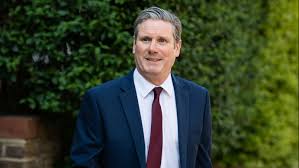
With a sigh of relief, we can say Britain’s Official Opposition is back. After 5 years of Marxist mediocrity and chaos, the arrival of Keir Starmer as leader of the Labour Party is hugely welcome. A grown up with the appropriate intellect is in charge.

Keir Starmer's first PMQs: 'the opposition is back' | The Week UK
Labour’s new leader: Keir Starmer
theweek.co.uk

And my, is it needed. We are mid-pandemic so an in-depth assessment of the government’s performance and lessons to be learnt is not yet appropriate, but the indicators do not look good. And Keir Starmer, whilst scrupulously polite, is starting to apply the proverbial scalpel to Johnson’s bluster.

A chaotic announcement outlining the start of the end of the lockdown made by Johnson on Sunday (Why do this in advance of a detailed parliamentary statement?) quickly unravelled. Starmer had 6 minutes in the Commons to question the Prime Minister on Monday. He skewered him. A late start to managing the pandemic based on sympathy for the concept of herd immunity and an overall laissez faire philosophy, a general lack of preparedness which encompassed a failure of testing capacity and the initial abandonment of care homes is all forming part of what may be a merciless narrative. And that is before the break in communications with the devolved governments in coordinating the coming out of lockdown.

Having watched Prime Minister’s Question Time today, Starmer was point perfect in his analysis although both leaders to be fair struck the right tone. He took apart the government’s approach to statistics, both in terms of international comparisons and in particular, how they related to care homes. Johnson won’t be able to rabble rouse himself through PMQ’s when attendance is back to normal like he did with Corbyn.

A bright note for this Government is Rishi Sunak who is impressive as Chancellor and surely a potentially worthy successor to Johnson at some point. The rest of the Cabinet is somewhat patchy, but it is perhaps difficult to make any positive impact mid-crisis. What is noticeable, however, is Labour’s improving front bench with Anneliese Dodds as Shadow Chancellor and Lia Nandy as Shadow Foreign Secretary to name but a few stepping up. People with good intellect are appearing/returning and politics will become more competitive as a consequence.

At a leadership level, comparing Johnson to Starmer certainly feels like comparing equals on intellect but perhaps not charisma. Charisma, however, has a certain shelf life and this is shortened if plagued with incompetence. Voters may want a very different style in due course…In the meantime, a stronger Official Opposition creates better government all round. With this in mind, welcome back!

The tyranny of Zoom et al…

Zoom, BlueJeans, Houseparty…to name but a few…are all wonderful video conferencing facilities. They make lockdown work life just about practical. On average I have half a dozen meetings a week using such facilities including Friday drinks with my distanced team. Conference calls on top keep us all busy.

Credit: Unsplash

Such facilities connect friends and family across the globe whilst this terrible pandemic runs its course, bringing much needed relief from isolation. Individuals appear on your screen from just down the road to far flung places such as San Francisco and New York. It is a joy. And yet…and yet…

Last weekend five zoom calls appeared in my diary mostly arranged by my better half, speaking to over 20 people. That was on top of several other social ones during the week. I was told not to be late for any of them whether that was due to work commitments or coming back from my limited (but essential for my sanity) exercise regime. I sensed my narrow window of freedom narrowing further.

Contact lists are compiled and for fear of missing anybody out, video chats are arranged with all and sundry. I have ended up speaking regularly to people I usually do not see for several months on end. Obviously, I am fond of them all, but it always involves talking intently into the screen to those whose company is normally combined with the atmosphere and people watching of a bar, restaurant, or dinner party.

Two back-to-back video conferencing calls can last for well over an hour. It can be exhausting. Thank goodness Zoom limits free group video conferencing to 40 minutes. But for some contacts, we recently agreed to just dial out and dial back in again. And, recently, old school friends also decided a ‘pub quiz’ should form the basis of the next conversation. I hate pub quizzes but find I cannot escape…

Such a medium of communication is stressful. Even with friends and family, you are staring closely at the screen to check jokes and opinions make the desired impact. With work (actually, socially too) you are checking your dress sense looks fine on screen, that the bookshelves behind you are sufficiently stuffed with mind improving tomes and that your glasses are on straight. I realised I went through an entire consultant call last week with wonky specs, so fixed was I on the conversation and everybody talking over each other.

I have become an ‘expert’ in interpreting body language from afar without any idea whether I am right or not. And what really grates is that any bad news is still never delivered face to face but via email.

Oh, the joy of all these multiple channels of video conferencing which allow you from home to visually and conversationally embrace colleagues, clients, family and friends at the click of a mouse. All undiluted. The end of lockdown cannot come soon enough!

Emerging insights into a post coronavirus world

Randomly, I have learnt two quite different things during the current lock down.

First, courtesy of the Netflix documentary ‘Tiger King’ featuring a character called Joe ‘Exotic’, there are apparently a greater number of Big Cats in captivity as pets, or held in private zoos in the US, than exist globally in the wild. More of that later.

Second, more relevantly, courtesy of Gillian Tett in the FT, Donald Trump tried to cut the budget of his own Centers for Disease Control (including the department that studies how infections jump from animals to humans) and disbanded the White House team that was created by President Obama to fight pandemics after the Ebola epidemic in 2014. Incredible.

It got me thinking, as Trump blusters and boasts his way through his daily coronavirus updates, surely things have got to change.

Let’s start with Trump. As he seeks to end the lock down, has he finally overstepped the mark with his aggressively, partisan daily coronavirus press briefings? Watching him boast about his brilliance whilst thousands of Americans die, and attacking the World Health Organisation mid-pandemic, is surely too much to stomach for all but the most die-hard Republicans. Biden’s re-emergence and subsequent clinching of the Democratic presidential nomination was certainly a surprise, but it is worth remembering that he unsettles Trump the most. Bland but empathetic with support across the South as well as the rust-belt states, Biden might just do it. Trump will not go into November with stock markets and employment on his side. And economic resources for a more centralised healthcare system will be a key issue, and not in a good way for Trump. A Trump defeat looks more likely than at any time since the start of his tenure.

Second, the EU has been overwhelmed by nationalism, as it has stood impotently on the sidelines watching the coronavirus rage. Each EU country has managed the pandemic in its own way and only national governments have had the legitimacy to marshal their health care systems through this crisis and lock down their own people. The EU has had to apologise to Italy for its slow initial response and cross border cooperation is only now starting to emerge. Individual aid packages have barely paid any lip service to EU economic strictures and dwarfed the reach of any EU initiatives. The EU may emerge as pointless and irrelevant, which is highly dangerous for its future. Macron highlighted this in an interview with the FT last week. Certainly, the threat to national sovereignty from its existence is now over. No more Brexit style debates anywhere for some time. Did I really write this?!

Third, economic efficiency based on global, ‘just in time’ supply chains will be distinctly out of favour. The inability to predict crises and how to manage them, so manifestly on show during this pandemic, will curtail globalisation in a way nationalist political leadership never could. There is some thoughtful commentary about how the nature of economic and business efficiency will change after this crisis is over and the responsible investment scrutiny companies will come under (reference Jericho Chambers’ excellent webinars: #jerichoconversations). Broader stakeholder-led capitalism and nationally resilient supply chains will come to the fore and traditional economic measures of efficiency will change. Preparedness for a future event, whether the stockpiling of supplies and/or in key sectors, maintaining excess capacity, will dominate economic planning.

Lastly, working practices from an employee perspective will change but not as much as forecast. Global travel will be viewed cautiously in the future and home working will become much more of the norm. The ease of electronic communication will transform business, healthcare delivery and also have a major impact on public transport infrastructure. But all this will be tempered by the desire to interact in person and the curiosity to explore cross-border cultures.

Lastly, back to Tiger King and Joe ‘Exotic’. If we all learn a little from a Netflix documentary and, indeed, from the dangers of ‘wet’ animal markets in China, that a laissez-faire approach to our relationship with wildlife and the threat it poses to the environment and our own survival is not a good thing, then it will be a highly welcome outcome. Several silver linings are appearing from this terrible crisis. We just need time and space to understand their longer-term consequences.

Running a business; some silver linings in grim times

I run a modest sized, but successful marketing and media relations business employing c20 people working for demanding financial services clients.

I like to think my employees are bright, motivated and team centric. I like to think they are committed to going the extra mile for clients and, in turn, committed to the success of the company they work for. The management team’s role is to ensure they benefit from this success.

We have formal and informal processes to ensure the quality of the work we deliver is as high as possible. We also have processes in place to ensure our employees develop through structured and on-the job training and that they are as positive as they can be about their working environment.

But how do we always know this is the case? For all the internal and external reporting, and feedback from clients, we are, like any other people-business, sometimes fallible.

And yet, in these grim coronavirus times, relying wholly on home working, there is constant evidence that we have mostly got it right.

Before the shut-down all employees worked hard to ensure that we and, where we could help, our clients would be as ready as we could be about what was to come. There was banter; but there was also immense caring about the pressures faced by individuals with vulnerable friends, relatives and partners based here or overseas at this time.

The remote working practices put in place are humming with activity and have ironically brought the team even closer together as they coordinate activities. And the work undertaken for clients, who rightly remain busy and demanding in these challenging times, is more visible as all sorts of remote working channels and, of course, emails, fill up with action points.

There are two slightly surprising, amusing sides to all this. Firstly, commentators say that when this is all over, working practices will never be the same again. I am not so sure. The stress of ensuring the backdrop to any video conferencing from home is sufficiently flattering is taking its toll… And secondly, as one colleagues opined; ‘what my partner says to me to make me laugh at 8pm at night is less funny at 11 in the morning’…Office working beckons and, on current evidence, will be embraced enthusiastically, when this period is over.

Like many other businesses, we have to, and are, working as a single team for each other and our clients. Humour still prevails and that keeps us sane. We are still having our end of month office drinks ‘virtually’ this afternoon…The work is going well and everybody visibly cares about getting our Company and our clients through these grim times.

So, whilst the news and our personal experiences will no doubt threaten our well-being, spare a thought for some positive consequences coming out of adversity; those silver linings. And keep as safe and well as you can be.

Coronavirus and the rise of the nation state

We live in strange and alarming times. The uncontrolled spread of a deadly virus has often been mooted but mostly via Hollywood. What feels like a terrible film script is now a reality.

We will, one hopes, overcome this virus; but not without distressing casualties. What strikes me, however, is the way governments have responded to contain it. Gone is a good deal of formal cross-border cooperation along with the authority of the UN and EU. In such an emergency, it is individual nation states who have acted first to protect their people.

The timing and severity of measures taken by countries to minimise the impact of the virus has differed widely at least until now. But what is striking, is that there has been no nod at cross-border political institutions, only the World Health Organisation. The EU, for example, has been powerless and almost silent on virus containment. It is individual governments that have led initiatives and are accountable for keeping their people safe. Whilst slow initially to react, Italy has now implemented extreme lock-down measures in the face of a surge of coronavirus casualties. France and Spain have now followed suit, with France even fining people if out on the streets. In the UK more widely, compulsory lock down has yet to come. People are only advised not to frequent bars, restaurants etc with schools and universities currently mostly open until Friday. Germany has largely closed its land borders. The EU has finally banned all non-essential travel in the Schengen free travel zone.

The list of individual actions goes on from Singapore to Canada. Trump has managed things in the US with his usual chaotic style. A virus, initially branded as a bit of fake news and recently ‘Chinese’, is now consuming US government actions. Only time will tell if this ends his presidency, assuming elections are held at all in November.

On the economy, there has been some coordinated central bank intervention to protect finances but, to be frank, when interest rates are already at rock bottom it won’t make much of a difference. Only now has the ECB responded after internal divisions. It is the scale of individual economic rescue packages introduced by individual governments which have led the way. They are truly breath-taking in their scale. Sadly, they will have to be.

All actions will look very similar in due course as the relentless spread of the virus takes hold; but the frailties of globalisation and supra-national institutions have been uncovered. It is national governments across all continents who have full control. Only they are able to garner the required consensus to move quickly and access extraordinary powers, unprecedented in peacetime.

Incredibly, from only a few months ago in the UK, those all-consuming Brexit versus Remain arguments have been swept aside. You now wonder what all the fuss was about. Sovereign countries rule the roost with ease, and it will be them, not the EU or any other international body, who will face the consequences of their actions when this crisis is all over.

Political debate has changed in a wholly unexpected way. After this crisis, nobody will analyse or worry about the balance of power between cross-border institutions and nation states in quite the same way again.

But that is for the future. In the meantime, please keep safe.

Botswana and South Africa: A Tale of Two Countries

Back from a trip to Botswana and South Africa, with a quick step into Zimbabwe (clearly struggling…) and Zambia to see the Victoria Falls. Lucky to be able to do this.

But with an eye to local politics, it was the opposing trajectories of two very different countries, Botswana and South Africa, which caught my attention, second (obviously!) to the amazing scenery and wildlife.

Starting from almost opposite ends of the spectrum economically, Botswana has, and is, going places with key benefits for southern Africa’s wildlife. More of which below. South Africa, from a hugely higher economic base, is not.

Botswana has developed some of the most innovative policies for conservation and tourism anywhere in the world, with huge benefits for its future success.

In broad terms, learning from the mistakes of other southern African countries, it has introduced ‘medium density, high value’ tourism policies that recognise the value and quality of its wilderness. Therefore, large areas of Botswana’s land is under some form of conservation. 40% of its land is conserved in its natural state whilst 17% of its land is officially under National Park, game reserve or other forms of conservation management.

The private sector plays a major role in helping the country, albeit under the strict eye of the government. Under detailed regulations, vast 15-year land concessions are sold to responsible businesses running safaris. The density and quality of lodges is ruthlessly monitored. Poaching is obviously illegal but hunting of an extended list of protected wild animals by locals is now prohibited and the practices of villages and their relationship with the land is being dramatically changed.

But there is a quid pro quo. The game reserves provide untold local employment opportunities. Schools and clinics are being built in even the remotest villages and land is given by the government for new incomers to build houses. From being one of the poorest African countries on the granting of independence in 1966, it is now becoming one of the most prosperous (also helped by diamond mining, again strictly regulated). It has its problems and no doubt corruption, but Botswana is largely one of Africa’s success stories.

The winner, besides people, is the wildlife. Threatened species from elephants, giraffes, lions, hippos, leopards and cheetahs, to name but a few, can find a relatively safe haven in Botswana and are growing in numbers. Protecting rhinos is still a problem (when will China get its relationship with animals right…). I was particularly struck by the concept of animals such as elephants coming over the border from the chaos of places like Zimbabwe, because they have remembered and learnt to find where the safe havens are. Amazing.

Now to South Africa. A very special country but in danger of giving up much of its economic and geographical advantages in the face of relentless corruption. Speaking to several local workers from a variety of backgrounds, few are optimistic about the future, feeling government incompetence and the growing gap between rich and poor is not sustainable. Most damningly, on the Robben Island tour one of the guides, a former inmate, was asked could he forgive. His reply was yes to his captors but no to what is happening to his country today.

The ANC is riddled with corrupt practices yet entirely dominant as the opposition implodes in infighting. The common refrain is that Zuma has set the country back nine years with his policies of state capture. Claiming ill health, he is currently holed up in Cuba and may not return to face justice. There is a State Capture enquiry going on and the detailed allegations are too lengthy and gruesome to cover here.

Cyril Ramaphosa, the current president, is struggling to exert control. There are rolling power cuts, train services are deteriorating (last Thursday the national power company, Eskom, cut the power to Cape Town’s entire Metrorail system for non payment of bills…!), the national airline is in receivership, water resources are poorly managed and the townships continue to grow as people from the East head for the Western Cape in search of work. Yet unemployment is c30% with youth unemployment over 50%. Crime is rife; one of my taxi drivers carried a knife on him…naturally…

There is a window of opportunity to put things right but it is narrowing rapidly. It should not be like this.

So, two countries heading in opposite directions. Africa is a dynamic and vibrant continent clearly on the rise. It would progress so much faster without the shackles of corruption. Leaders and governments who manifestly put the advancement of their country at the forefront of their actions, rather than gain for themselves and their allies, deserve to be recognised and applauded both at home and internationally. That legacy is worth a fortune and they need to know the effort is worth it.

US Democrats tread the Corbyn path

A right-wing populist Government led by a tub thumper with a racy past who, in office, undermines democratic institutions and the media. He reaches out to those left behind by globalisation, often in crude terms, and wins a fabulous election victory. Why? Because his Opposition is led by an extreme left-winger, who tears up economic norms and scares moderates into voting for anybody but him. Sounds familiar? Johnson v Corbyn and the same act seems likely to be played out in the United States.

Image result for pictures of bernie sanders
Alex Brandon/AP

What a sorry mess the Democrats are in. They have learnt nothing from Trump’s victory and seem destined to hand him a second term.

Trump is tearing up any consensus in the US as he pursues economic policies which often benefit the rich, fuelling growth at the expense of an expanding deficit and, relatively, those on lower incomes. He has just proposed a budget that removes more safety nets for the poor whilst increasing defence expenditure. He implements an isolationist foreign policy which rewards dictators, trashes democratic allies and shrinks his country’s global influence. He denies global warming and undermines democratic institutions at home. His lawyers’ defence in the recent impeachment trial was that the President is justified in doing anything that enables his re-election, if he believes that his re-election is in the national interest. Scary. But Trump’s Republican senators complied and he got off untouched, with an approval rating heading to a record (for him) of 50%. Only Mitt Romney stood his ground and is now facing physical threats and expulsion from the Republican Party. At least Johnson had 21 turncoats opposing him!

Trump’s approval ratings until very recently have permanently been in the low 40s and he received three million less votes than Clinton in 2016. With a strong candidate, the Democrats should walk into the White House in November. This is where the problem starts.

First, the Democrats pursue causes, sometimes hypocritically, which continue to push the fly-over states into the arms of Trump, driven in particular by left-wing members of the House of Representatives. Then we turn to their candidates for President… Of the nine still left, four are over 70 and the three ‘leading’ contenders, Sanders, Biden and Bloomberg, are 78, 77 and 77 respectively. What is it about aging politicians in the US?

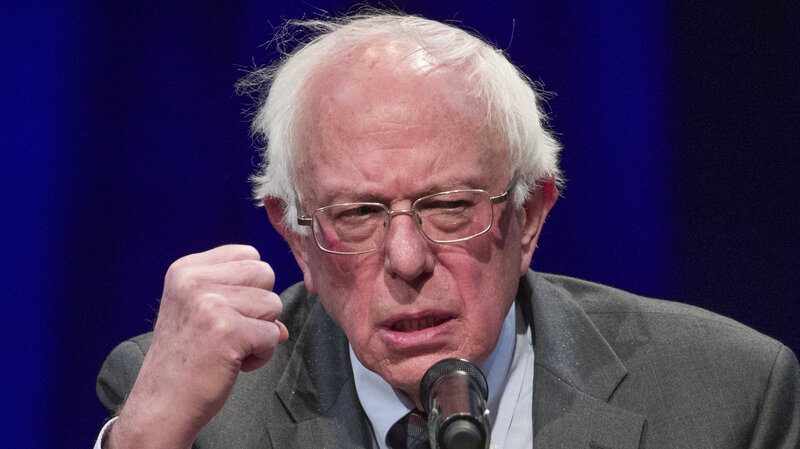
Sanders, fresh from his New Hampshire primary win, is the lead contender and is the Corbyn equivalent. Oh dear. All the mistaken Corbyn errors being repeated on the other side of the pond. He is supported by effusive young voters in his support for free college tuition, a $15 minimum hourly wage and universal healthcare. These are admirable aims but the cost and required tax increases would be huge. You can just imagine the Trump narrative driving moderates into voting for anybody but ‘the socialist’ Sanders.

Pete Buttigeig is really impressive but being gay will probably hold him back in the South. Biden and Warren are dead in the water. The dark horses are Amy Klobuchar and Mike Bloomberg; but the former is still unknown and the latter is surely going to be brought down by his unconventional approach to gaining the nomination. Whilst the same age as Biden he looks healthier and his billions may count, but it is a long shot.

Sadly, the betting in Europe is on a Trump victory with all the consequences which come from an eight-year term. Trump would be so much easier to beat if the Democrats learnt from the Johnson v Corbyn tussle in December. There is no evidence of this to date and they don’t seem to have a viable candidate, even if they did.