The question is…1992 or 1997?

A long, long time ago, the 1992 General Election actually, I was a young Conservative Parliamentary Candidate standing in a slightly marginal Labour held seat in SE London. I didn’t actually want to be an MP, just putting a marker down for the future. It seemed a fairly safe bet I wouldn’t be elected. Thatcher had been defenestrated, Major was untested and after 13 years of divisive Tory rule, Labour were riding high.

Well, the Conservative Party against all expectations, won. I lost but not, gulp, by much. Tories, in focusing on the economy and voter concerns about the quality of the Labour leader, Neil Kinnock, were given another turbulent five years.

Fast forward to 1997, and a hopelessly divided Conservative Party, practically ungovernable, was wiped out by the charismatic Tony Blair.

Changing fortunes in the 1990s…

On this spectrum, where are we today? Well, the Tories are ungovernable, divided on everything from Europe (again!) to immigration and house building targets to name but a few issues. If it wasn’t so serious, with almost comic timing, they are on their fifth leader in six years. Sunak is the new competent, technocratic PM, but has little authority over a party riven by factions.

Labour are 25% ahead in the polls and have just walked the Chester by-election. It looks game over for the Tories. Tory MPs have to confirm whether they are standing again by fifth December, and several are voting with their feet and going including some in their 30s and 40s.

And yet, and yet…the Tories have drawn level again on the economy in some polls despite the disaster of Truss’s short reign and doubts still remain about what Keir Starmer stands for.

On balance, it feels more like 1997 than 1992 simply because the Tories have made such a mess of things. Sunak has come along too late to be their saviour and the Conservative Party internally is in a terrible state. The wider front bench of the Labour Party appears competent and Starmer has more gravitas than Kinnock could ever muster.

But doubts still persist about the outcome of the General Election likely to be in 2024. Labour have to win an incredible 124 seats to gain an overall majority. It may come as a surprise to many, but it is not quite game over for the Tories.

Shadow Chancellor skewers the Tories

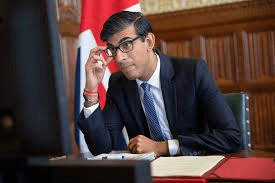
Rishi Sunak has brought sanity back to the Tory Party. Confident, competent, technocratic even, he believes in sound money and, internationally, strong relationships with allies including the EU. He has had his hands tied with some of his Cabinet choices, but this will not last for long. His problem, however, is that his premiership has come too late.

Much ammunition to use against the Government

After 12 years of Tory government including five years of severe austerity, this clever, but thoroughly miserable Autumn statement ushers in a ‘back to the future’ moment. More austerity as the economy heads into recession, inflation north of 10% and plenty of cuts. Rightly, the Government cannot give in to excessive public sector pay claims but there will be months of public sector strife with strikes and periods of working to rule. Despite generous uplifts in the minimum wage, pensions and benefits, there will be little to gain politically as voters feel quality of life experiences deteriorating. Living standards are expected to fall by a record 7%.

Admittedly, many of the forces creating economic mayhem are global, notably the legacy of Covid and the impact of the Ukraine war, but that is not sufficient cover.

Starkly, the US economy is 4.2% larger than pre-Covid, the EU zone 2.1% larger, the UK 0.7% smaller. A devastating article in the FT today highlights that the NHS spends a fifth less per capita than similar European countries. Then there is Brexit which has hit trade hard. This week, former Environment Secretary, George Eustace, describes a post-Brexit trade treaty with Australia, for example, as ‘not a very good deal’ despite praising it at the time. According to the Office of Budget Responsibility, trade as a share of GDP has fallen 12 per cent since 2019, two and a half times more than in any other G7 country and it expects the longer-term impact of Brexit to affect trade intensity by some 15%. Only a third of voters now believe Brexit was a good idea.

Finally, an interest rate premium from the fallout of Trussonomics with rising interest rates wiping out many of the gains from subsidising energy bills for those on flexible rate mortgages.

There does not seem much to show from a Tory government in power since 2010 with five different Prime Ministers. A good one at the end is unlikely to erase voters’ memories.

And then to Labour. So much to attack but what is different now is that despite the blandness of Keir Starmer, they have an impressive front bench. First amongst equals is Rachel Reeves, Shadow Chancellor, and she laid into the Government with forensic detail today whether it be weaknesses in energy policy, stealth taxes or the failure of windfall taxes on energy companies due to offset allowances. At the say time, Labour are carefully laying the ground to ensnare Sunak in all the policy choices (mistakes) of the last few years.

It is said Oppositions rarely win General Elections; it is Governments that lose them. It is hard to disagree.

Right-wing populism; an ever present danger…

First, the good news. The choice of candidates was not great but at least former President Luiz Inacio Lula da Silva beat incumbent Jair Bolsonaro, in last week’s Brazilian presidential elections. That is a victory of one candidate who had his corruption sentence annulled against another who has his own corruption investigations, as yet untested in court.

However, more importantly, Bolsonaro took a ‘Trumpite’ approach to managing the Covid pandemic with all the terrible consequences that followed; 700,000 Brazilian deaths. Then there is the destruction of the Amazon rainforest. The now former Brazilian President was a pro-development, far-right nationalist who sided with criminal syndicates of illegal ranchers and loggers resulting in record levels of deforestation. An area of rainforest the size of Greater London was cleared in September alone ahead of the elections.

Bolsonaro has questioned the role of democracy and threatened, again like Trump, not to recognise the election result if he lost. Without conceding, he is surely gone and good riddance. But despite his appalling record, Bolsonaro nearly got re-elected with 49% of the vote. Almost a triumph for far-right populism. At Congress level his supporters performed strongly.

‘People over populism’ is not necessarily a winning formula…

In Italy, despairing voters have elected a far-right coalition government led by the Brothers of Italy party with deep roots in a fascist past.

And, adding insult to injury, Netanyahu, another populist right-winger facing corruption charges has made a comeback as Israel ‘s likely next Prime Minister. The price he has paid is an alliance with ultra-nationalist and ultra-Orthodox Jewish allies which is a further challenge to Israel’s delicate democracy and internal stability. Netanyahu’s supporters talk of amending the judicial system to ensure corruption charges are dropped. Shameless and depressing.

Finally, we turn to this week’s mid-term elections in the US. America is more polarised than ever. Despite Biden passing legislation on climate change, gun-control, infrastructure investment and child poverty in the face of narrow majorities in Congress, that is not enough. The Democrats face defeat even as Republicans push to make abortion illegal, give local officials the power to overturn election results at a State level and continue to support Trump in the face of clear evidence he was complicit in supporting an attempted coup on 6th January last year.

The very fabric of democracy in under threat in the US but that doesn’t rank as a priority in comparison to inflation, crime and illegal immigration. Add to this toxic mix the crazy ‘wokeness’ of left-wing Democrats with policies such as defunding the police, and there are grounds for real despair at the future of the US as a stable democracy.

We await the results with trepidation and what it means for the possible return of Trump which seemed relatively unlikely for all his blustering… until now.

Right-wing populism is the Japanese knotweed of politics; deeply embedded with roots that are seemingly impossible to destroy. Despite the public being mostly centrist, if moderates don’t govern competently from a centrist position and deliver, the lurch to the undemocratic Right is always at hand.

As we will probably find out on Tuesday with our most important ally…

Sunak’s Tory compromises work for now

For more moderate Tories, the last few days have been the best politically since 2015. Despite being a Brexiteer who has planted himself on the Party’s Right on issues such as immigration, Sunak is about as good as it gets!

Grounds for optimism...?

Truss’s ‘libertarian’ premiership hit a brick wall with significant collateral damage whilst the unedifying attempted return of Johnson ended in humiliation. His cringe worthy statement saying he could have been PM again but, for unity reasons in parliament decided to pull back, was breath taking in its hubris. This really should be it for him.

Never mind. Sunak is PM now and not a moment too soon. To be certain of closing the deal he has had to compromise on ministerial appointments, and it will work for now but probably not for long.

The most notable appointment was Suella Braverman as Home Secretary. Having just resigned a few days ago for sending confidential material from a personal email address, she is back in the same post. The price for her support in the leadership race. Understandable but the cost may be too great in the medium-term. The only saving grace is that if she storms off to the back benches again that will be it for her too!

Otherwise, a more continuity Cabinet than one might have guessed. Hunt is probably not Sunak’s choice for Chancellor. He is his own man and notably, for example, only gave Braverman’s appointment tepid support but ‘he will do for now’ in the midst of an economic crisis. They are sufficiently agreed on what needs to be done and should, will have to work closely together. Maintaining the likes of Cleverly, Coffey and Wallace as Truss/Johnson supporters is just good politics, whilst the return of loyalists such as Raab and Gove makes sense too.

The danger for Sunak is that continuity today may not impress the electorate tomorrow. Same old, same old Tories voters might think. In fact, there is some evidence to suggest they have now tuned out like they did in 1992/93 and nothing can rescue the Tories’ electoral prospects from here.

What is certain is that Sunak will have to stamp his authority on the Cabinet with another reshuffle closer to the General Election. Tensions are running high and if Sunak actually governs as a moderate, that reshuffle may be sooner than expected.

Sunak’s compromises work for now, but the Tories’ addiction to further political drama may be hard to cure…

Tories teeter on the brink…

At the start of the week, it was an easy prediction to make. Liz Truss would be gone in weeks, possibly days. After the chaos of the vote on fracking on Wednesday, it was the latter. A wholly self-inflicted disaster, it is difficult to feel much sympathy for Truss or indeed the Tories as a whole for putting her in the position of PM in the first place.

And now, incredibly, we have a strong possibility of the resurrection of Boris Johnson. Political soap opera at its worst.

Tory Party continues to shrink in esteem…

Let’s just remind ourselves of Johnson’s past reign and why he had to resign. Caught regularly lying on a range of issues, covid parties, taking ‘corrupt’ money for decorating his Downing Street flat, losing ethics advisers, 60 ministers resigning at his behaviour forcing Johnson to quit. The list is endless and that is before his fundamental administrative chaos.

And think what happens if he wins the leadership a second time around? Does Hunt stay around as Chancellor? There is no love lost between them, and Johnson is a profligate spender who privately backed Truss. The talented Sunak will probably leave politics. The Right will remain in the ascendant. Relations with our largest trading partner, Europe, will continue to deteriorate. Several Tory MPs are threatening to quit forcing by-elections.

More chaos as the electorate recoil at another, this time discredited former PM, foisted on the country a second time by a tiny minority of Tory members. Johnson’s one saving grace is that he did have an original mandate from the 2019 GE but when he left office, 69% of the public and a majority of Tory voters wanted him gone.

Of course, Johnson is not Truss and that in itself might lead to a slight recovery in the polls. However, the longer-term answer is some thing like Sunak for PM, Hunt staying on in his role as Chancellor and Penny Mordaunt being made Foreign Secretary. It is not whether but only the scale of Tory electoral defeat being debated at the next GE and Johnson is no solution versus more talented colleagues who can rebuild the Party afterwards.

Common sense should prevail, and Johnson left on the backbenches to rack up millions in speaker fees. Meanwhile Prime Minister Sunak and Chancellor Hunt claw some reputation back for the Tories on the economy.

The problem is what do the Tories most lack collectively? Common sense. It could be a very depressing time for moderate voters as today’s Tory Party is lost to them.

Tory moderates take back control…

To the almost certain horror of the hard-right, libertarian wing of the Conservative Party, moderates have taken back control. The grown-ups are back in charge for now and the sense of relief is palpable.

Liz Truss’s 38 day experiment comprising unfunded tax cuts and libertarian factionalism prolonged only by the death of the Queen, is over. Truss is a busted flush. Her agenda has gone. This morning, incredibly, Jeremy Hunt reversed nearly all aspects of the mini budget. She now offers nothing, not even able communication skills, and will be gone within weeks, possibly even days.

Jeremy Hunt takes charge…

The beneficiaries? Jeremy Hunt, Rishi Sunak, Penny Mordaunt. Putting Brexit to one side, they are moderates, representing the centre/centre-left of the Party. Believers in sound finances, social liberalism, competent government, any one of them would govern by making appointments from all sides of the Party based on merit.

It is time for the Conservative Party to stop divisively thinking of politics in terms of North versus South, blue versus red walls, establishment versus radicals, experts versus who? It is time for competence over ideology and country before Party.

So far, so good but there are still two very large threats facing the Tories. One potentially self-inflicted, one outside their control.

Taking the first, it is still the same underlying Party as it was, with much of its membership very right-wing, and unpleasant ideologues lurking in the wings. Members were seemingly happy with the chaos which came before Truss under Johnson. And they voted in Truss despite all the warning signs. If, in an inevitable change of leader, another election contest is held (that in itself would finish the Tories) with the drift to the Right reconfirmed or heaven forbid, there is a re-coronation of Johnson, then it is game over. No moderate will want anything to do with them. The Party would finally split and lose the next General Election very, very heavily indeed.

Second, it is probably too late for the Tories, anyway. The public is heartedly sick of their pantomime approach to government. Their arrogance, sense of entitlement, treating government as one big experiment. It has caused real damage to the fabric of society, the institutions they are meant to revere, to international relations.

However dull Starmer is and to whatever extent some extremes still lurk in corners of the Labour Party, it is time for a change. For the health of democracy. For the health of the Tory Party.

It’s not all about Growth, Growth, Growth…

Activities in the main hall of the annual Conservative Party conference are the least interesting part. Set speeches from ministers to an often sleepy audience which appreciates slogans rather than anything more in-depth, are best avoided. Outside the weird bubble of such gatherings, they barely register with the public.

Not to everyone’s taste…

Which takes this blog to Liz Truss’s speech in Birmingham last week… The Prime Minister is a weak communicator at the best of times which is a real problem in the worst of times. To be fair, in the face of a disastrous conference, Wednesday’s speech was relatively well delivered but it wouldn’t be to a thinking person’s taste. Best ignored.

Why the obsession with growth? Simple in concept, it is not an end in itself. Politicians who do not (or pretend to not) understand economics see it as nirvana. Nonsense.

It avoids the more subtle concept of low productivity, the curse of the UK’s economy. It ignores a green agenda and immediate quality of life issues. It ignores how wealth is distributed except for the weak tinkling from trickle down economics. It ignores how to achieve it with sound public finances.

And then we turn to the ‘anti-growth coalition’. All the Tory Party’s prejudices inaccurately grouped under one slogan. Even for a party conference, Truss should be ashamed of herself for such cheap jibes.

This week we have had more U-turns. After reversing the abolition of the 45% tax band mid-conference, the date for outlining the government’s financial plans has been brought forward by nearly a month; despite denigrating such expertise we have the appointment of an experienced treasury hand as Permanent Secretary and almost certainly welfare benefits will be indexed to inflation rather than earnings despite initial briefings otherwise. Meanwhile, gilt yields tick up reflecting a continuing lack of confidence in the government’s stewardship of the economy.

If you play strong, you had better be strong. Increasingly, the public’s view of the Truss government is they don’t like its priorities or now its weaknesses and, specifically, if you can’t trust the Conservatives with the economy, what’s the point?

The Labour opinion poll lead is massive and few Tory MPs believe it will be reversed. Truss’s legacy after just a few weeks in power. Quite a feat.

It looks really bad from a US perspective…

I’m currently on a business trip to the United States expecting to write about US politics. But, relatively speaking, little is happening here compared to the chaos unfolding in the UK. Biden’s stock is slowly rising, albeit from a very low base, and Trump is increasingly discredited. All but his most loyal fanatics are tiring of the Trump drama. Politics is no less polarised and the lead players may well change but, except for hurricanes of the weather sort, the news agenda is fairly quiet.

Meanwhile, from here, the UK looks like a horror show and in meetings with US asset managers, there is real puzzlement with the actions of the Truss government. It seems in freefall as the consequences of reckless tax cuts come home to roost through violent market reactions.

They discuss whether politics over the pond are those of an Emerging Market which is where the UK is going to end up if we carry on like this. In an investment category with the likes of South America, Eastern Europe et al…

Mainstream views from investment professionals are that our economic woes are entirely self-inflicted, starting with Brexit and now multiplying through the actions of an increasingly ideological, some might say out of control Tory administration. Regardless of this blog’s well documented views on unTory behaviour, I am simply relating what I am hearing.

Here in the US, they don’t know Starmer but they do know Johnson and now Truss. Oh dear…they are not impressed.

And when you hear Truss might be replaced by Johnson or the recently defeated, but seemingly very wise Rishi Sunak, the sense of chaos grows. We should be ashamed at the current state of UK politics which is getting too much attention even by this famously inward-looking ally.

The best comment I have recently read on Twitter came from a parent who said whilst it was impressive Queen Elizabeth had overseen 15 PMs, his six year old daughter had seen four. Incredibly, that may rise to five before his daughter makes seven…

Meanwhile, my US trip is now increasingly and achingly expensive…

Liz Truss going for broke

You have to give it to the new PM. She has flown out of the traps with a massive intervention in energy markets and huge tax cuts.

Moving fast…

The ideological divide has never been clearer. Tories cut taxes to drive growth, aiming to shrink the State. Labour raise taxes selectively to sort the cost of living crisis with no desire to shrink anything. The ‘shopping trolley’ days of the Johnson regime are over.

The challenge for Truss is twofold. First, the Tories have been in power for 12 years and there must be a limit to how often they can reinvent themselves. Second, it is a massive £105 billion gamble with the public finances.

And the verdict from objective markets? Interest rate and inflation expectations have been revised upwards, stocks have fallen, and Sterling is at a 40 year low, heading to parity against the US dollar.

Johnson was unTory in all sorts of ways as this blog has written about many times, but this mini (more like max!) budget is, if anything, more unTory. Debt will soar and the cost of servicing it in the face of rising interest rates will soar faster. Sound finances were always at the heart of Tory administrations but not now with these unfunded tax cuts. Rishi Sunak must be turning in his political grave…

The hope is that the stimulus will rejuvenate the economy in time for the next election and any negative consequences from these new policies can be parked until after then. Truss will have to be incredibly fortunate for this to happen at the very least in terms of timing.

Labour’s response to Kwasi Kwarteng’s statement by the Shadow Chancellor, Rachel Reeves, impressed and she looks and sounds like a future leader. Of course, the ideological divide may work in the Tories’ favour but if Labour can’t win next time round, surely we are heading towards a One Party State. Now that’s a thought…

Liz Truss’s key weapon: low expectations

I have a confession…. One of my roles as a Tory parliamentary assessor back in the days of Cameron was to help ensure more women candidates were selected. I came across an email exchange in 2008 with one Liz Truss, providing coaching advice to help her selection chances. She was picked to fight a safe Tory seat in Norfolk shortly afterwards. The rest is history as they say. Only time will tell whether I should have kept this to myself…

So, as expected, Liz Truss is the new PM but by a smaller majority than many forecast. And what a mountain she now has to climb as she faces energy, inflation and NHS crises.

Expectations are so low there is little downside…

It will be tough. She starts with only 57% support from Tory members (47% if you include those who didn’t vote), 32% of MPs (15% at the start of the contest) and a 12% approval rating from general voters according to some polls.

Truss’s self-belief is apparently legendary according to colleagues. It will need to be.

And that self-belief has already showed itself with a bold start. A partisan Cabinet of allies and a move to the Right with tax cuts combined with huge amounts of new borrowing and continuing culture wars. One Cabinet minister particularly makes you shudder. Suella Braverman as Home Secretary. Really? Likely to be highly aggressive on immigration, the EU and careless with judicial independence. She will have liberals and the Left foaming at the mouth. Perhaps that is the point.

So the Opposition has all to play for. With the scale of crises engulfing the country, Truss hasn’t got long to prove herself and many of all persuasions think she will fail. One misstep and it is game over.

But therein lies the trap. Big policy announcements, some borrowed ideas from opponents, might just surprise massively low voter expectations on the upside. Constant, urgent activity from a government simply doing things might impress.

On balance, Truss will probably fail because her Government lacks the necessary communication skills from the top, is too right-wing and partisan, managing to upset voters in the North and South for different reasons in the process.

But if I were Starmer or even Ed Davey of the LibDems I would articulate a clear alternative quickly and keep my guard up.