Labour needs some humour to make more headway

Keir Starmer’s honeymoon is over. Under fire for some minor missteps, the current criticism is that he has let the government get away with mismanagement of the pandemic – and now it is too late. Johnson, who seems to have more than nine lives, is now surfing the wave of vaccine success and the Tories have regained their opinion poll lead.

But Opposition politics, as Robert Shrimsley wrote wisely in today’s FT, is a long game, particularly at this stage of the political cycle and with Labour’s dire Corbyn baggage to contend with.

Starmer has brought competence back to the front bench and you could imagine him being a dull, but worthy contender for Prime Minister. But I am sure and certainly hope he is aware, that is not enough.

New Labour (yes, another version!) needs to stand for something and that is harder to do, as Robert Shrimsley highlighted, when the Tories have moved on to the Labour Party’s natural turf. It is also difficult to achieve in the middle of a pandemic. Who is going to listen to new Opposition policy initiatives, when a locked down public is largely fixated on dodging the virus and surviving through to the end of each month?

There will be time. As highlighted in last week’s blog, Rishi Sunak is boxed-in by manifesto commitments not to raise taxes, currently worth 64% of tax revenues. Filleting budget announcements, a plan for non-wasteful infrastructure investment, an overhaul of social care provision, educational and training reform and yes, a nod to cultural wars by embracing constructive English nationalism to make the Union work better, could all bring benefits over the medium term.

In the meantime, what strikes me about Labour is their almost total lack of charisma. That means something when up against ‘good times Johnson’ because when life improves and Johnson has his mojo back, it could be a dangerous weapon. Johnson is not loved by many of his colleagues and a large part of the electorate; but enough people who want to be cheered up may just give him another General Election victory if he lasts that long.

Labour, and particularly Starmer, at least post pandemic, need to look at their dress sense, their sense of optimism and their sense of humour (assuming there is one) and display it. Starmer feels more like Gordon Brown than Tony Blair currently, and lest we forget, the latter is the only Labour leader to have won an election since 1974. Think image, as Blairites would say…

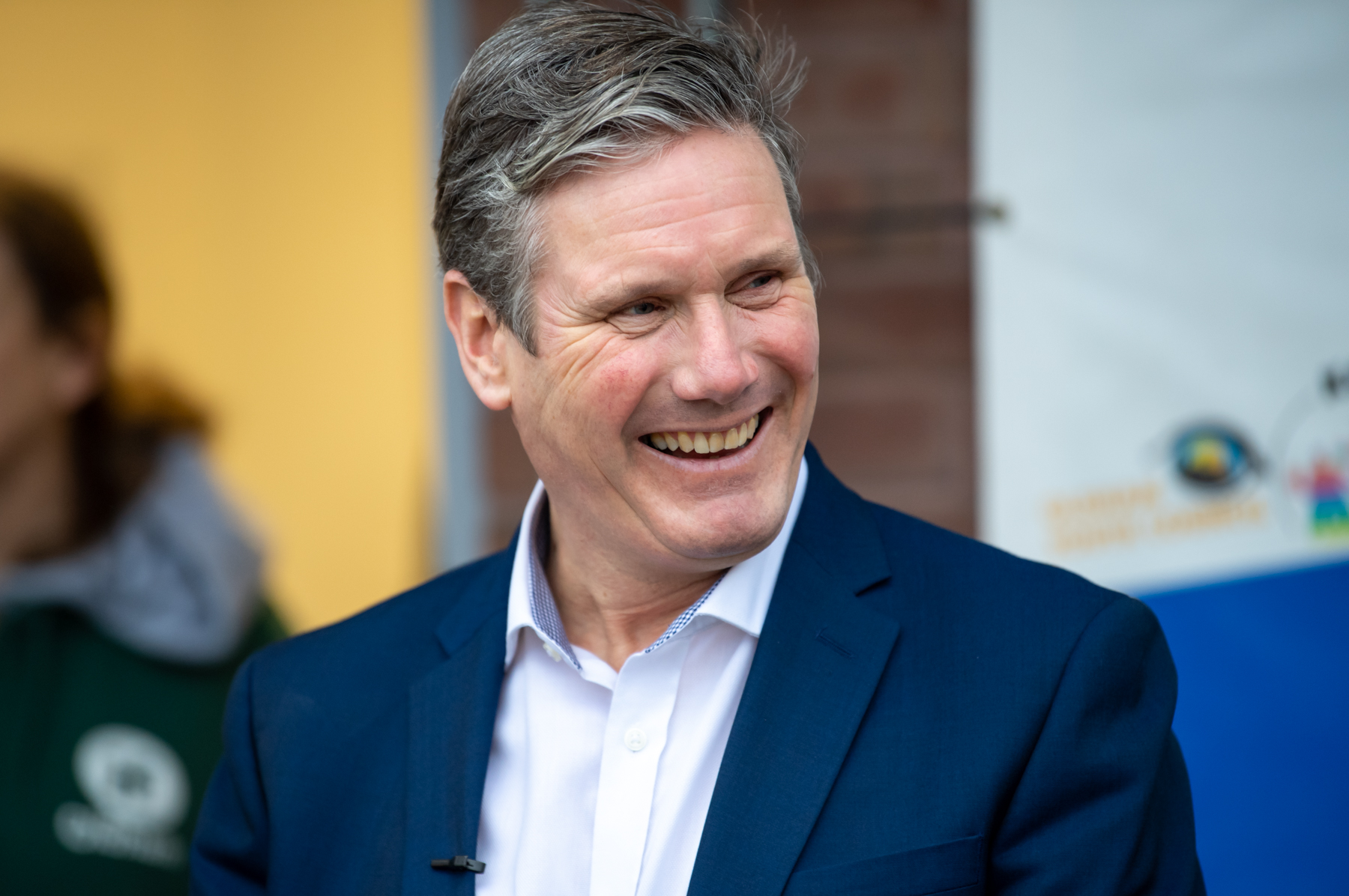
Image result for images of keir starmer
More humour please…

Starmer needs to scour his colleagues for some pizzazz. Anneliese Dodds at the Treasury is simply too earnest, for example, and Lisa Nandy as Shadow Foreign Secretary, is underused.

Post pandemic, make us think but also make us smile. Be those people you wouldn’t mind having a drink with. In that way, Labour will get under Boris Johnson’s skin and, at the same time, make more electoral headway.

Tories lose their identity under Johnson

It used to be easy to say what the Tories stood for; preservation of institutions, free markets, low taxes, a smaller yet fairly compassionate State, controlled deficits, a belief in the individual and support for aspiration. Essentially being a Tory was being conservative with a small ‘c’ and whilst the Conservative Party was always willing to compromise to win and hold on to power (the Labour Party has never got this except under Blair), such flexibility only went so far. You always knew where the Tories’ heart lay.

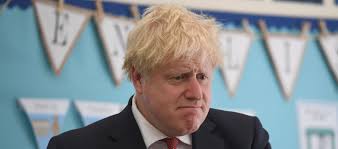
Boris Johnson's first year as PM: incompetence and maliciousness
Contemplating the dilemmas of government…

So where is the Tory Party now under Johnson? The answer is hard to fathom.

Under his leadership, the Conservative Party has mostly been defined by its Brexit stance. To be dominated by one issue never used to be in the Tories’ makeup and abandoning its broader-based raison d’etre has led to the departure of some of its most able parliamentarians.

In driving Brexit forward, the Government attacked Parliament and the courts. It berated experts and tried to ‘tear up’ the unwritten constitution. Irony upon irony prevailed as an unscrupulous old Etonian, advised by an alleged anarchist who wasn’t even a Party member, essentially launched class warfare but positioned the Tories on the side of the ordinary person versus the elites.

Destructive but effective. As a strategy, it worked. An 80-seat majority based on a slew of former Labour seats in the North and Midlands has given the Tories a further 5 years of untrammelled power. But the victory was based on Opposition splits over Brexit and in particular the move of the Labour Party to the hard, unpatriotic Left. Such opportunities for victory are unlikely to be available in the future.

Confusing signals from imminent budgets?

And, as the Tories seek to chart a path of post-pandemic recovery, they continue to lose their identity over economics and their reputation for skilful flexibility and prudence. There are budgets scheduled for both March and November, in part to confront the massive Covid-related deficit, but the brakes had already come off public spending long before the pandemic. Now, in refusing to abandon its manifesto pledges of not increasing income tax, national insurance and VAT, which represent 64% of tax revenues, the Government is left with few options but to attack entrepreneurialism. It is mooted that Corporation Tax and Capital Gains Tax will soar, whilst a property tax may also be introduced. And the pandemic-dominated budget deficit will continue to expand exponentially as the government continues with HS2 and other initiatives to ‘level up’ the North with the South. Some measures of course will be very welcome but not all, as intrusive State intervention, not always economic, ceases to be a Tory anathema.

Brexit, for the time being at least, is fading into the background and management of the Coronavirus will dominate political dialogue for some time. But inevitably, two party politics will become competitive again, particularly if the accusation of Johnsonian incompetence sticks. The latter is becoming less likely as he is potentially floated off the Covid rocks with a successful vaccine roll-out. However, in the face of a generally more competent, moderate Labour Party, better suited to arguing for a continuing increase in the role of Government, it is hard to identify what alternative the Tories offer and why you would vote for them. This loss of identity may cost the Government dear in the medium term but, by then, one doubts the current Prime Minister will be around to care.

Optimism for a Biden Administration rests on tone as much as policies

It was a perfectly calibrated inauguration, both in content and tone, and each of these ingredients are equally important to ensure success over the next four years.

In a sea of articles, there were several excellent, pre-inauguration ones assessing the prospects of a Biden administration in yesterday’s Financial Times. My only caveat was that they were a touch on the gloomy side. ‘Awesome stakes’ and ‘Why the US republic came close to death’ led the headlines. Actually, I am more optimistic than that.

Biden's Inauguration Speech Highlights Unrest, Pandemic and Calls for Unity  - Variety
Courtesy of variety.com

Martin Wolf, in particular, backed up his pessimistic thesis with statistics showing stark disparities across parties and ethnicity in attitudes to US politics. But there were positives in the detail. Donald Trump over-reached himself in the last days of his presidency, as did some of the populist Senators such as Ted Cruz and Josh Hawley, who backed him. They should have known better and taken a steer from the (now) Minority Senate Leader, Mitch McConnell, who has condemned Trump’s actions. I was struck by one survey which allows some optimism. There was virtually no support across all sections of society for the Capitol takeover. Approval of these actions, goaded by Trump, fell away with every day of media coverage showing the awful actions of an unhinged minority. Many, even those who initially felt Trump was a breath of fresh air, have had enough.

Undoubtedly, President Biden has a huge task ahead of him to unite the nation and bring some consensus back to US politics. Some policies, quickly introduced, such as a stimulus bill and stronger actions to control the pandemic, will do this. Others, for example re-joining the Paris Climate Agreement, will not, being the preserve of only those with liberal opinions.

What will unite the nation is a change of tone from this Democrat administration, which appeals to those who have felt constantly ignored by the ‘liberal establishment’. There is no better analysis of this than that contained in Professor Joan Williams’ book, ‘White Working Class, Overcoming Class Cluelessness in America’.

I have written about her analysis before as it is excellent. Essentially, those wrong-footed by populism should have seen it coming. Her thesis goes as follows:

Many people have conflated ‘working class’ with ‘poor’ but working class is, in fact, the elusive, purportedly disappearing middle class. They often resent the poor and the professionals alike. But they don’t resent the truly rich, nor are they particularly bothered by income inequality. Their dream is not to join the upper middle class, with its different culture, but stay true to their own values in their own communities – just with more money. White working class motivations are often dismissed as racist or xenophobic when they have their own class consciousness.

This is not to downplay the impact of racism or xenophobia but how the tone of politics, not simply policies, can help solve divisions where they exist, strengthening the US body politic in the meantime. If the Biden administration can empathise with how this section of voters feels, of being patronised and/or ignored by the establishment, and speak to these concerns, then it is half way there. Focusing on patriotism, individual freedoms and avoiding cultural wars, whilst of course tackling racism, will be key, combined with practical policies such as re-skilling parts of the workforce and embracing infrastructure investment. Interestingly, Keir Starmer is adopting the same approach to rejuvenating the Labour Party’s appeal here in the UK.

Even at 78, the politically centrist President Biden feels the right person to cross these divides. He, and other inauguration participants, made an excellent start yesterday.

Meanwhile, goodbye Former President Trump. One hopes you enjoy your time at Mar-a- Lago, spending more time with your lawyers…

Predictions for 2021

Such predictions always require a review of how accurate 2020 ones were. Umm…not too bad actually. Seven out of nine were pretty much correct. A quick run through is provided below. But of course, there is a proviso. Such analysis all seems irrelevant in the face of Covid. Who got that right? This was the only issue that mattered in the end and affected almost everything.

Anyway, here we go:

In UK politics, the predictions for 2020 were that the Tories would get Brexit done, selling out Brexiteers where they had to (fishing?) but pursuing an English nationalist agenda, at least in tone. In the face of Tory dominance, Keir Starmer was Labour’s best bet and that the LibDems will be politically dead for a generation or permanently, requiring a new centrist party but not yet. Mostly true where Covid allowed.

In Scotland, there would be no second referendum (correct) as the SNP had peaked (looks like being horribly wrong…).

Overseas, Trump would escape the consequences of impeachment by the House of Representatives and emerge politically stronger to win the presidential election. So true until the impact of Covid unseated him. One silver lining in an otherwise bleak sky.

1,850 Every Cloud Has A Silver Lining Stock Photos, Pictures & Royalty-Free  Images - iStock

Cultural wars across the West would intensify as liberal cities versus conservative rural regions slugged it out. So true and set to intensify further.

So, to 2021 if we can face it…

It will be a relatively quiet year because of Covid.

Despite conjecture, Johnson will stay as PM to bed down Brexit and see out Covid. The self-styled ‘world king’ cannot walk away mid-battle. But backbenchers, recognising an increasingly effective, competitive Opposition, will be restless about his style and competence and the stage will be set for a possible 2022 departure. Any independent review of the management of the pandemic will not be kind and, even before the long-term consequences of Brexit come to fruition, another game changing political career will ultimately end in failure.

Despite the SNP surge there will be no Scottish referendum on independence. Johnson will block it.

Biden will be more radical and effective than expected, particularly as the Democrats have seized the Senate. I was struck by commentary that he and Nancy Pelosi are determined to make a real impact in the closing chapter of their careers. Climate change and infrastructure (ex-tackling Covid) will lead their agenda. Short of an unexpected crisis, there will be no radical change in foreign policy except repairing the well documented damage of Trump. It will be painful for the UK, however, as it watches the US re-embrace the EU.

Whatever the polls say about the attitudes of Republican voters, Trump is now a busted flush having over-reached himself since Election Day. He will not shape events in 2021 leaving the GOP to sort out what sort of Party they want to be. Bruising attempts to drop many aspects of Trump’s legacy will succeed but not wholly.

Macron will try and seize control of the leadership of Europe ahead of the 2022 Presidential election in France and to take advantage of Merkel stepping down. A close call, but he will not succeed. Germany, and whoever is the next Chancellor, will maintain their dominance.

Lastly, across borders, there will finally be progress in reining in the powers of social media companies. There is a real consensus emerging that the power of the likes of Facebook and Twitter has gone too far. Freedom of speech considerations are no longer the lazy default position they were and require legitimate scrutiny. Governments will gradually assert control; monopolies will be broken and social media companies will ultimately be held to account perhaps through similar responsibilities to those of publishers. As the tide of fake news and attempts to manipulate democratic processes surge, this cannot come soon enough.

Of course, progress in curtailing the pandemic will continue to ‘Trump’ news agendas. But there is one good thing about 2021. At least you can use that phrase without being sadly ironic…

Reasons to be optimistic in 2021…

Not my regular style but there is only so much gloom readers can take… In an attempt to end the year positively I had thought I would celebrate a Brexit deal and the imminent defeat of the coronavirus. Oh dear…

But there are still reasons why a contemplative view of 2020 can cheer you up as we look to next year. Here are a few of them:

  • Boris Johnson is being found out and Cummings has gone. The unpleasant, extreme libertarian streak is abating in the Tory Party. Experts are back in vogue and Johnson is increasingly seen by his colleagues as ‘the wrong person to be PM at this time’. Vacillating incompetence, an inability to learn from his mistakes and wild exaggerations just don’t work. The view of his backbenchers is ominous for him. He has done his job in seeing off Corbyn but there is a belief that the tragedy of Covid-19 and its eventual aftermath requires a different character and indeed tone from the top. Interestingly, there are also growing mutterings from MPs that to be a Tory doesn’t mean anything anymore as a combination of the virus and the dash to populism to hold on to the ‘Red Wall’ has led to seemingly endless, massive public expenditure pledges. The future looks bright for Rishi Sunak…
  • On domestic policies, the issue of homelessness is finally a priority, the perilous state of social care can’t be ignored any longer and the NHS won’t be underfunded for a generation. The only caveat to the latter point is that NHS accountability is not sacrificed. Despite rising wonderfully to the challenges this year, it is far from a perfect organisation.
  • Overseas, Trump has been vanquished. However much he rages from the sidelines, he will no longer be POTUS. No more needs to be said.
  • Lockdown has sometimes brought the worst out of people – an obsession with shopping and materialism generally still evident at Christmas – but mostly the best. Community initiatives are everywhere to help the more vulnerable. The importance of family across generations has been emphasised, friends are helping struggling friends and employers’ duty of care to their employees is firmly centre stage. Quite right too.
  • Lastly and closer to home, in running my modest consultancy, JPES Partners, comprising some 20 people, the team has been exemplary. Working through the pandemic has been challenging as clients seek to maintain their external profile in difficult times through media engagement and homeworking is not the nirvana many talk about, particularly in a people business. When can you leave work behind you when it pours through your computer screen into your home? How can you unravel issues from a distance, particularly if you have rarely met the individuals in person, if at all? But everyone has worked hard, delivered exceptional results and gone the extra mile to make online interaction as smooth as possible. Last Friday, we had our Zoom Christmas Party. Containing an excruciating quiz, bad jokes, and plenty of alcohol delivered to employees’ doors, it lasted over two hours. The occasion flew by. Bearing in mind my antipathy to such things online, what more can be said. That is high praise indeed…

Have a relaxing festive break everybody and look forward to next year with as much optimism as you can muster. At least we can all agree that 2021 cannot come soon enough!

The disaster of Brexit crystallises

There is no upside to Brexit. The concept of national sovereignty is ephemeral in a global economy awash with pan-national crises. What does it mean in an age of global warming, pandemics, the absolute power of the US and the rising power of China? The answer is very little.

If the UK has issues such as a north-south divide, poor public services, weak infrastructure, fractured relationships with devolved governments, none are solved by leaving the EU. Some are exacerbated.

It is true that ending our membership of the EU will impact immigration and it is also true that the rise in immigrants from Eastern Europe has in some regions occasionally been difficult to absorb, at least culturally. But these individuals often staff our public services, the NHS in particular, work on our farms and pay their way. They will now be replaced more frequently by non-EU immigrants which one doubts was the motivation of Brexit voters.

We were constantly promised that a trade agreement with the EU would be easy, that an ‘oven-ready’ deal was in the offing. Well, another let down from Brexiteers, either by accident or design. Here we are, over 4 years later, scrambling for a last-minute deal. Those supporting Brexit now dominate government. They must own the final outcome, even a disappointing ‘skinny deal’, and there is nowhere for them to hide if we crash out.

There are two outstanding issues. First, fishing rights. These are a red herring since the fishing industry, according to its own figures, represents less than 0.1% of our economy and at least half of British caught fish are exported to the EU anyway.

Fun with fallacies 12: The Red Herring | Black Label Logic
Fishing rights are totemic only…

What really matters is the second issue which is around regulation and state aid. The EU will not let us in to their single market with regulatory or state subsidy advantages. Being on their doorstep is why comparisons with a Canada style deal, which doesn’t give Canada completely tariff and quota-free access to Europe anyway, are erroneous. A level playing field is crucial to the EU dealing with a major economy 21 miles across the English Channel and having a land border with Ireland.

The UK is stuck. One understands that full sovereignty, free from any EU restrictions, ought to be the goal of Brexiteers to make the initial pain of leaving the EU worthwhile. The problem is that such an absolute approach to ‘taking back control’ blocks a trade deal, being contradictory to the principles and political will which drives the European project. You can’t have your cake and eat it to paraphrase a well-known Prime Minister…

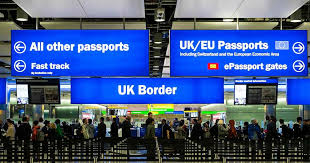
EU facts behind the claims: borders - Full Fact
Restrictions mount…

The cost and added complexity of achieving that full rupture will be enormous and hasten the UK’s decline. The car industry is already looking fragile with a series of damaging Brexit related announcements this week. The independent Office for Budget Responsibility estimates a no deal Brexit will cost £40 billion and that is on top of previous Brexit and now coronavirus-related losses. Freedom to travel to the EU is to be curtailed. None of the pitfalls of failing to achieve a trade deal were set out during the EU referendum by those promising the sunny uplands of a new arm’s length relationship.

David Cameron and George Osborne were wrong about the economic consequences of leaving the EU only in their timing. Those consequences are now crystallising. One hopes the glib, exaggerated promises of Johnson and the band populists around him will now be seen for what they are and that they pay the price electorally. I am not so sure that will happen, at least not yet, but it is early days…

Authority drains away from Prime Minister Johnson

It has not been a good week for the government, despite vaccine progress. Confusion over the rules splitting the country into new Covid lockdown tiers of varying severity, an embarrassingly large parliamentary revolt over passing the legislation required to implement those new restrictions and then carnage on the high street has piled on the misery. And it is only Wednesday.

There is just the little matter of a no-deal Brexit to sort out and we are done for the week…

Boris Johnson to address nation in 5pm press conference | Metro News

Authority is draining from Johnson as disillusionment with his handling of the pandemic grows. He looks exhausted and unhappy. We have had chaos amongst his No. 10 staff, rows with devolved governments and regional majors and U-turns galore. In order to get legislation passed to secure these new tiers of regional restrictions, Johnson was forced to implore his backbenchers in person in the Lobby not to revolt against his plans. 53 Tory MPs ignored him with another 16 apparently abstaining. Only the Labour Party’s abstention saved the day.

Increasing numbers of Tories feel the economic price being paid to suppress Covid is becoming too great. Many of them believe that Johnson and his government are too supply-side driven, overly steered by the needs of a sometimes unaccountable NHS and an ever-growing army of scientists enjoying the media limelight.

Outside Brexit and trying to manage the pandemic, it feels Johnson is lost. He wanted the top job badly but never had a clear idea of what to do with it when he got there. It was why he was so attached to his senior adviser, Dominic Cummings, to fill the vacuum. Now he is gone, Johnson’s only real policy is spending huge sums to ‘level up’ the North versus the South. It must be galling for him to watch his popular chancellor then take the credit for this. You can sense the tension rising.

My Westminster contacts tell me Johnson was widely perceived as a stop gap leader to see off Corbyn and there is no great loyalty to him. Umm…buyers’ regret…? There are rumours Johnson may be ousted within a year as a rejuvenated Labour Party under Keir Starmer scores hits. Apparently, a few letters have already gone into the 1922 Committee, which is the voice of Tory backbenchers, calling for a new leadership election. Incredible, when only a year ago Johnson won a General Election with an 80-seat majority.

Who knows? It still feels too early to get leadership jitters and a vaccine is on its way to hopefully defeat Covid. Perhaps MPs will relax by the Spring. But Johnson is currently on the ropes and is unlikely to fully recover.

Britain’s version of Trump may go the same way as his great supporter. Another blow to populism, because ultimately it is competence that counts, and there will be few tears shed across a good part of the political divide if that happens.

A new morality in communications?

Perhaps this is premature, but I detect a new, or should I say ‘old’ morality creeping back into communications, whether it be in politics or business. It comes to mind as the concept of ‘fake news’ is increasingly being derided and social media, under pressure to bear responsibility for what is published on its platforms, is slowly, too slowly many would say, starting to clean up its act.

Development Communications in the Non-Profit Sector

But it is more than that. The architects of dishonest communications are starting to disappear or mend their ways because it hasn’t worked. In politics, Trump is shuffling off the presidential stage and, however noisy he may be from the side-lines, he is no longer President and that is enough. I can’t believe I am saying this, but he was a brilliant propagandist. He knew his audience and how to incite them; he also knew how to disrupt mainstream news agendas mainly through Twitter to suit his own ends. The leading news channels regularly fell into his trap of endlessly covering his outrageous, often untrue statements, allowing him to hold centre stage on his own terms.

However, there is a limited shelf-life to this approach. People see through the tricks and tire of the divisive, explosive commentary. Fact checking gets tougher, opinion more polarised and, in the process, you lose the middle ground. More importantly, if you can’t back up your claims with competence and delivery, you are simply left with a vacuum and people see you for who you are. This is Trump. As coronavirus mismanagement grows and he tears up democratic norms in his response to his rejection by voters, an immoral communications strategy becomes self-defeating. What Trump now says, or what is said on his behalf, simply comes across as dishonest, uncaring, and faintly ridiculous, sadly with tragic consequences.

Johnson is no Trump but on communications strategy, he overlaps. Charismatically prone to untruths and exaggerations, certainly he is being held to account by this pandemic. The seriousness of his role and the level of scrutiny he is under has demanded a change of approach in communications because aggression and glib soundbites haven’t worked. Less guff and an ‘us versus them’ attitude to media relations, combined with more transparency is now the name of the game. A new cast of Downing Street advisers will ensure this change of substance and tone.

And so on to business. Much communications resource is currently focused on Environmental, Social and Governance (ESG) issues. Companies are increasingly under pressure from investors to demonstrate their credentials on a range of issues from alleviating climate change to improving the diversity and well-being of their work force. Not unnaturally they engage the services of external public relations firms to help them communicate initiatives and policies.

Two major public relations firms, one now out of business, have been accused of a lack of integrity; being reckless in their choice of clients and/or the actions undertaken on their behalf on ESG-related issues. Allegations ranging from hiding corruption in South Africa on the one hand to aggressive ‘greenwashing’ on the other have been made. But they have been found out, proving the advent of ESG applies to the moral standards of those who advise on communications strategy just as much as to underlying clients.

Strong, transparent communications, including the admission of mistakes, now ultimately brings rewards in an era of greater scrutiny. An opposite approach does not. There are no short-cuts on truth to be had without a price being paid. You do what you say and assume you will be held to account for it. Whether it is business or politics, that is good advice worth taking.

The curse of a written constitution

At one time, you could have despaired about the absence of a written constitution in the UK. It felt like amateur hour in governance terms. Powers set by vague precedent rather than codified in a single written document allow for all sorts of abuses. Blair’s kitchen cabinet agreeing to go to war in Iraq without proper constitutional oversight is one example. It also allows governments to potentially, almost unnoticed (since the general public are normally bored by such things), change crucial democratic relationships. Relatively recently, we have had Cameron’s casual, tactical agreement to referenda on voting and House of Lords reform to secure a coalition with the Liberal Democrats, admittedly rejected by voters. Then we have subsequently had Johnson’s attack on parliament and the judiciary.

It all seems worrying until we set the absence of a written constitution in the context of the gladiatorial nature of British politics. The PM, despite the power afforded by an overall majority, rarely has it easy in the House of Commons chamber. MPs are increasingly independent, and the public generally gives little credence to government authority. Cock ups are rarely forgotten, and, with a few exceptions, a tough independent media and judiciary mostly keep things in check.

An unwritten constitution also more easily allows for much needed reform to be undertaken where there is at least some consensus, such as the formation of a UK Supreme Court, strengthening of parliamentary Select Committees to hold ministers to account or more controversially, perhaps, fixed term parliaments.

But there is a more important reason why a written constitution is unwise. A codified document would act as a form of higher law and undermine the UK’s representative democracy. Agreement to amend and update such a formal constitution set in stone would be nigh on impossible. It could have the unintended consequences of pushing key, legitimate decisions away from elected politicians. For definitive proof of this, one need look no further than the United States of America.

Are there holes in the Constitution? - Harvard Law Today

Oh dear. What was once its shining beacon is now a millstone around its democratic neck and elected representatives end up being by-standers in the face of it, not all of which can be explained by congressional gridlock.

A powerful, written constitution sucks the oxygen out of legitimate democratic debate and decision-making. Healthcare, abortion, the right to bear arms in the face of automatic weapons and mental health criteria, the grotesque abuses of political funding all seem outsourced by the US constitution to a judicial process which is now, with some irony, becoming a substitute for an accountable political process.

So revered is this document, there seems no flexibility to update key parts of it governing elections which is crucial for modern day America. The constitution continues to allow presidents to be chosen by an unrepresentative electoral college rather than the popular vote; for a powerful Senate, unlike the more accountable House of Representatives, to be elected based on all states having two senators regardless of size; for Supreme Court justices to be appointed for life by just the Senate; for an increasingly politicised Supreme Court to wield enormous and growing unaccountable power over crucial areas of public life.

Recent events have brought this home. A Trump presidency, having lost the popular vote in 2016 by three million, and a Republican Senate majority, pushed a highly conservative Supreme Court nominee into place days before a presidential election whilst Obama was denied the same opportunity nine months before the end of his presidency. There is a slew of crucial Supreme Court cases on key areas of policy that will by-pass Congress in the coming months. Then, a currently untroubled constitution allows Biden, with a lead in the popular vote heading towards six million, to be prevented from preparing for his presidency by Trump who refuses to acknowledge the election result. This would be bad at any time but disastrous mid-pandemic.

A written constitution needs reviewing, updating and improving to avoid sclerosis or worse in public life. If its dominance as a single, codified document means it is almost untouchable, particularly in an era of political polarisation, ominous pressures can build with potentially calamitous effects. On balance, in a reasonably well functioning democracy, if you don’t happen to have one, keep it that way.

It was (almost) the economy, stupid…

The first warning that there would be no Democratic blue wave came with the Edison exit poll. 34% of those who had voted cited the economy as their top priority. Management of the coronavirus pandemic limped in third at 18%.

Biden based most of his strategy on the pandemic. Campaigning in a mask at what appeared to be low energy, socially distanced rallies, he bet on Trump self-imploding amongst his raucous supporters. Well, he won so it is hardly relevant to discuss the merits of this strategy, but what is certainly not in dispute is that the polls were badly wrong. Trump and the Republicans generally did much better than expected.

Joe Biden changes Twitter bio to President-Elect within minutes of declared  victory, World News | wionews.com
Biden clinches victory

The reason seems largely to have been driven by economic factors. Until the pandemic, activity was booming. Record low unemployment levels, including amongst minorities, resonated as did the attractiveness of tax cuts, even if the bulk went to corporates and the wealthy. After an endless period of stagnation, workers in the lowest quarter of incomes saw wages rise 5% in the first three years of Trump’s presidency. Accusations of Democrat ‘socialism’ in the South also played well and demographic trends are not the ‘get out of jail’ card Democrats thought. They have more work to do with Latino voters, for example, on misconceptions around their policies.

Trump is seen as a non-establishment, highly successful businessman by his supporters, often more diverse than many commentators have assumed. He plays on being the antithesis of a professional politician. In this election, the mishandling of the pandemic might well have been viewed as a surprisingly transitory issue versus Trump’s more permanent, so-called business based economic success.

Trump’s ultimate defeat will rightly be attributed to his polarising personality, which was simply too much in the end. His refusal to accept defeat is a suitable epitaph. Policy-wise, however, the message of this election is more nuanced; Democrats will need to be careful about their longer-term priorities and govern from the centre ground. And what is wrong with that?

America is clearly widely split politically but this blog doesn’t share the gloom of many liberal commentators who believe disruptive Republicans, even Trump himself, could be back with a vengeance, to ruin Biden’s term of office. A Biden victory is a Biden victory. Despite Trump adding three million more votes to his 2016 tally, Biden is at least 3-4% ahead in a record popular vote.

The removal of Trump as the nation’s voice will make a huge difference to the tone of politics and respect for its democratic institutions. Trump and his supporters may well be noisy from the side-lines but many Republicans, even right-wing ones, will be glad to see the back of him. And, whilst much of American politics will be gridlocked as usual, there is surely scope for bipartisanship on economic measures to alleviate the impact of coronavirus, infrastructure investment and even some elements of initiatives on climate change. The US may well catch up with Europe on the further integration of ESG factors into broader investment decisions.

Overseas, Biden could re-build relationships with traditional allies, re-join WHO and the Paris Agreement on climate change, participate again in the Iran nuclear deal and at least lower the tone on trade disputes. In Europe, probably to the UK’s detriment on influence generally and a UK/US trade deal in particular, Biden will likely embrace Germany and France first. He likes the EU and will be much less sympathetic to Johnson’s aggressive Brexit stance. No bad thing for the UK in the longer-term.

The Democrats performed relatively poorly in the face of Trump, and America overall is currently deeply and dangerously divided. Biden may well be seen as a transitory figure, but he is not Trump and that may be enough. His collegiate style is right for the times and that alone makes his election victory a much-needed source of optimism.