Tory ‘Red Wall’: it had better hold up

The Tories are standing on their heads. Their raison d’etre and bedrock of support was always via an appeal to the wealthier parts of the UK, predominantly the South. They had a very clear offering to the centre-right of the political spectrum; support for institutions, lower taxes, controlled budget deficits, smaller government, mostly constructive nationalism, a United Kingdom, a tough but largely constructive approach to the EU. All with a sub-text that collectively such an approach allowed for a stronger economy to support the less well off.
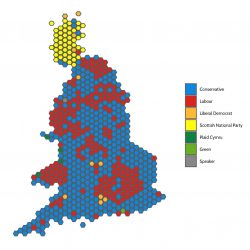
Volatility, realignment and electoral shocks: Brexit and the UK General  Election of 2019 - The British Election Study
Tories conquer much of the North

No longer.

Admittedly, the pandemic has driven much of the recent political agenda, but the Tories have been busy adjusting their political stance ever since Johnson was voted leader and this will continue after the pandemic recedes.

In a successful swing at Labour’s heartlands, the Tories have stood for the opposite of the usual. Anti-EU, this debate was partly framed by giving power to the government to aggressively intervene in the economy, whether it is initiating huge infrastructure projects or propping up ailing industries such as steel (Margaret Thatcher must be turning in her grave). And to hell with Brexit’s overall impact on the economy… They have also been cavalier with the Union, have a new sub-text of spending money like water, pandemic notwithstanding, and tax rises will almost certainly be focused on the better off. They have to date successfully engaged in culture wars that the ‘old’ Tories used to largely and politely side-step, except for the odd red-faced backbencher.

No wonder Labour, even under Keir Starmer, has not been able to lay a glove on them.

Lucky with his Opposition led by Corbyn in 2019, Johnson won in the South through fear and won spectacularly in the Midlands/North through great tactics as Labour’s traditional seats turned blue.

But will this alliance of voters hold? A few straws in the wind, including the by-election defeat in Chesham and Amersham, may make the Tories a little uneasy:

  • Attacks on the Green Belt which is upsetting traditional supporters in the South
  • Higher taxes in the face of a more moderate Labour Party which may just allow voters in the South to think it is safe to vote elsewhere
  • Culture wars going too far. Snide comments from ministers on the Black Lives Matter bending of the knee will strike a note of widespread irritation, particularly now some national footballers are involved, with one openly calling the Home Secretary racist
  • Brexit. Whilst done, if not the impact of its longer-term fall-out, not caring about the Union and continuing with initiatives to gently or not so gently undermine institutions generally may start to resonate with voters, particularly in the South
  • Scrutiny on general competence as we emerge from the pandemic. This may attract the attention of all voters. It is interesting that in the recent Batley and Spen by-election, if it wasn’t for George Galloway’s divisive campaign aimed at the Asian community, which split the Labour vote, Labour would have won handsomely in this Northern seat
  • Then lastly, cuts in foreign aid. The Tories are being attacked from many sides, including by all their living former Prime Ministers, although probably not by their new target base of voters

As this blog has written before, Tory hegemony seems strong, and it is difficult to see anything but a Tory victory at the next election.

However, Labour is under new, moderate if, to date, ineffective leadership and the LibDems came second to the Tories in well over 70 seats mostly in the South. The new Tory ‘Red Wall’ in the North had better hold as some traditional Tory voters may be getting restless and with good cause.

Huge step forward for capitalism

Sometimes it feels that the famous Churchillian phrase about democracy could be applied equally to free markets; ‘democracy is the worst form of government – except for all the others that have been tried.’ It is an analogy that can cross boundaries to economics!

Western capitalism as we know it is under threat. The disparities of wealth in many countries have grown; injudicious tax cuts in the US for the better off, global asset price inflation due to quantitative easing, elements of corruption and elitism, now the pandemic. The list is long. Much of it has fuelled populism which, of course, is a poor solution to inequality. Just think Trump, Bolsonaro and Modi for a start. They may not intentionally have set out to undermine capitalism/free markets but their sense of entitlement, acceptance of corrupt practices, particularly when supporters are involved, and a disastrous handling of the pandemic have all contributed to greater inequalities and capitalism’s malaise.

So, it is a huge relief and very welcome that the world’s leading economies yesterday signed up to a plan to force multinational companies to pay a global minimum corporate tax rate of at least 15 per cent. It is a recognition that things have to change. Many multinationals, notably technology companies, have reached a size where they face little competition and accountability, moving money around the globe to dodge legitimate taxation. No longer. A fair treatment of companies, large and small, global and local is crucial to the survival of Western capitalism. The ‘little person’ should have an equal voice and this initiative could raise at least an extra $100bn in taxation potentially for public investment. No mean feat.

Janet Yellen and Rishi Sunak lead the way

Future initiatives to strengthen capitalism should involve more active corporate governance to curb senior executive pay. For example, according to the latest Chartered Institute of Personnel and Development (CIPD) report on executive remuneration, the average FTSE 100 Chief Executive gets 119x the remuneration of the average full-time employee. This multiple has risen pretty much consistently over the years and apparently there is no tangible evidence as we emerge from the pandemic that companies have begun to address the fundamental flaws in the executive pay-setting process.

Incredibly, one might not even be averse to considering some form of wealth tax which seems the only solution to dealing with the inequality of wealth caused by excessive asset price inflation since the 2008 crash and the advent of quantitative easing.

The world faces multiple crises as it tries to escape the pandemic. In the West, in particular, there are huge challenges facing economies including infrastructure investment, lifetime education to reskill the workforce and access to comprehensive health and social care. Populism and threats to democracy will only be defeated in the longer term if disparities of wealth are narrowed to pay for much needed improvements in how society operates.

Agreeing a global minimum corporate tax rate, whilst seeming a little dry to grab many headlines, is a huge step forward for capitalism and another visible benefit of President Biden’s victory over Trump. There is still much work to do, however, to convince all voters that Churchill’s comments on democracy apply equally to free markets as we know them.

Tory dilemmas as they face an abundance of electoral riches

A week after a by-election hammering, it may seem odd to talk about Tory electoral dominance but there it is. Chesham and Amersham was not a game changer whatever many pundits may say. And neither will the Batley and Spen by-election be unless Labour lose it which will only confirm Tory hegemony anyway.

Chesham and Amersham is the revenge of the Metropolitan Line elite |  Financial Times

The Tories dominate the North and dominate the South. They can upset/please one constituency of voters or the other, or perhaps none or both but what a choice! Labour are nowhere and whilst congratulations are due to the LibDems for last week’s shock win, they currently remain a home mainly for protest votes. Ever thus…

The next General Election is for the Tories to lose and with an abundance of electoral riches, they must resolve some dilemmas. But there have been harder choices in British politics…

In the North, the Government must spend, spend, spend, and build, build, build. In the South, it should save, save, save, and protect, protect, protect. What to do?

Major infrastructure projects are set to continue and there will be further moves to centre government on the North. For the South, planning reforms will be watered down to protect the Green Belt. It is not logical to encourage building in areas most people want to live in anyway when trying to ‘level up’ with the North at the same time.

And on the economy, whilst it is clearly time to save, it can be at the expense of the better off, usually older voters. Interestingly, after a trip to the North, even there you could detect nervousness in conversations about how spending can’t continue at the current rate, and who will pay for the Covid bills. Raising taxes and cuts to pension contribution tax reliefs will hardly cause howls of protest anywhere. This is where the Tories have plenty of room for manoeuvre. Particularly as Labour and the LibDems are hardly going to outflank them on tax to win over Tory core voters in the South.

There are some slightly ominous straws in the wind; the damage from the Brexit deal and deteriorating relations with the EU are mounting. Boris Johnson is also not as electorally invulnerable as people thought amid growing concerns about what today’s Tories really stand for.

But that is for another day. The Tories have fewer difficult dilemmas than one imagines and, presently, however frustrating for some, they appear to be able to have their electoral cake and eat it.

Brexit damage mounts, unnoticed by the North for now…

Oh no, not another Brexit commentary…well, it is needed. The trajectory of the impact of Brexit was most likely to be anger and then relief, followed by pugnacious nationalism, puzzlement, possible regret and back to anger again; but perhaps a different sort. We are in the middle stages of this cycle.

Let’s take stock. In the news currently, where are we with trade deals?

UK hopes dwindling for post-Brexit trade deals with EU and US
Tricky trade relations continue…

49% of exports go to the EU and the post-Brexit trade deal has damaged several sectors. In the City of London, to date, a net 7,500 jobs and a trillion dollars of assets have moved to EU hubs. Regulatory equivalence agreements have been signed only in relation to aspects of derivatives trading (for 18 months) and the settling of Irish securities (until June). The EU is dragging its feet elsewhere as it wants to build its own capital markets. London will still predominate across financial services sectors including asset management, but its relative position is probably likely to weaken.

Elsewhere the damage is mounting. Brexit bureaucracy is hitting the food and drink industry with sales to the EU down 40% year on year, although to what extent this is partly due to Covid disruption is a moot point. The £35bn UK fashion industry warns of decimation as a result of red tape and travel restrictions. The UK music industry describes the first three months of Brexit as a disaster, with industry bodies suggesting 94% of musicians are negatively affected due to the UK making no progress on visas/customs and other controls on performances in continental Europe. And let’s not talk about fishing, where Brexit-voting fishermen from Scotland to Cornwall feel betrayed.

In Northern Ireland the aggressive Lord David Frost, Cabinet Minister responsible for implementing Brexit, warns of a summer of turbulence in Northern Ireland if the Northern Ireland Protocol, establishing a trade border in the Irish Sea, (which he negotiated only a few months ago), isn’t re-written. So far, the first casualty is Arlene Foster, the DUP leader and First Minister, duped into supporting Johnson’s deal. She has lost her job, at least the former one, to a deeply unimpressive, homophobic creationist, Edwin Poots. Oh dear. Northern Ireland looks shaky, and Scotland has a chance to re-make its case for departing the union, all fueled by Brexit. A diminished UK is, well, a diminished UK, less able to influence its destiny and shape global affairs.

Elsewhere, when the UK left the EU, the EU had 40 trade deals with 70 countries outside the EU. 63 countries have rolled over agreements with the UK, so no disadvantage but no advantage either. An agreement with Japan (2% of trade) was agreed on less favourable terms. Negotiations over the crucial US agreement have yet to begin and a huge row has just developed within Government over an agreement with Australia who want unfettered access to our agricultural sector, setting the precedent for negotiations with New Zealand and the US. The Secretary of State for the Environment, Food and Rural Affairs has warned of hugely damaging consequences to our farming industry and is currently arm wrestling with the true free marketeers in Cabinet.

Lastly on trade, there is now the scope, post-Brexit, of setting up freeports. Good in theory but more work is needed as 23 countries including Canada, Switzerland, Norway and Singapore specifically prohibit manufacturers benefitting from freeport-type deals which apparently is not unusual or unexpected. Take note Hartlepool.

Now the roll-out of jabs buys Brexit time but only for so long. The EU negotiator, Barnier, in his recent memoirs, openly wondered whether Johnson was pursuing a ‘madman strategy’ in his Brexit negotiations and lost trust in him keeping his word on anything. Well, welcome to Johnson’s world of winning at any cost.

The damage of Brexit is slowly cumulative, but the incoming tide has yet to reach a North of England rightly disillusioned with how it has been treated in the past. At some stage in the future, as the evidence mounts, the region may realise Brexit wasn’t the solution it was promised.

Wanted: a new UK (English) political party

The Tories are triumphant. Johnson’s brand of populism plus a successful vaccine roll-out continues to draw the oxygen from opposition parties. England and, at least for now, the UK, is a one-party state. The dangers of this are obvious but for most voters won’t be visible for years.

You have to congratulate Johnson. He has landed on a winning formula as the face of Cummings’ strategic planning…

And what are the consequences for Labour and the LibDems?

These two parties are hopelessly adrift. At the start of 2021, this blog highlighted the uphill struggle for Starmer/Labour and the requirement of a new centrist party to counter the death of the Liberal Democrats. Today, this has become painfully obvious much earlier than expected.

Starting with the Labour Party, there is simply no point to it as it is currently constructed. Its grass roots are mostly too left-wing. Corbynites, like the Trumpites in the US Republican Party, are endemic but, unlike Trump, have no electoral appeal whatsoever. The influence of trade unions is also out of date and undemocratic. What clothes Labour had; public sector investment and notions of working-class solidarity, have been stolen by Johnson’s Conservatives. Add to this toxic mix for Labour of splits over Brexit and an inability to embrace nationalist sentiment convincingly in its heartlands, and it feels like game over for another generation. Keir Starmer is a decent man and the best available leader but that is not enough.

Turning next to the LibDems, there is nothing new to say. They screwed up Brexit, are too nice and too vague. Outside pavement politics, they lack a killer instinct and, even if they had one, wouldn’t know where or how to apply it.

So, for the Opposition, the way forward is a new party; a carefully constructed centrist one which will have to be years in the making to work and probably led by a Blairite. For all his faults, one is struck by the fact the most incisive, commonsensical commentary on current events often comes from Blair himself. Indeed, if you read about his time in government, his largest mistakes domestically often came when he had to pander to his left-wing in the Labour Party. Imagine if a Blairite was free from historical baggage…

I know we have been here before and for a new party to work, it will take patience as well as talent to succeed. A fresh start would ultimately involve the evisceration of both Labour and the Liberal Democrats before tackling Tory hegemony. It won’t be easy.

We shall see but the health of democracy, at least in England, demands a better choice than we have now.

Prime Minister Johnson: an accident waiting to happen

We have all come across such personalities. The reckless friend or irritating colleague who, with their often-superficial charisma, believe they can cut corners to get what they want. Rules are for other people and careless with detail, their abilities are either exaggerated or wasted.

Normally, the consequences of their actions are minor, or any damaging impact is confined to them personally. Not if you are Prime Minister.

This blog has warned about Johnson’s personality from the start. Loose with the truth, reckless with the unwritten constitution and breezily ignoring the details of each political job he has held, he has stopped at nothing to reach the top rung of politics. The trail of destruction is manifest. A tactical swerve to supporting Brexit, empty promises of Brexit’s benefits, fulfilling a policy vacuum with the appointment of the ‘anarchical’ Dominic Cummings, playing fast and loose with the rights of Parliament, the destruction of Tory moderates. The list goes on. If you are Arlene Foster/the DUP, a Scottish unionist, a Cornish fisherman, a Permanent Secretary recently ousted, a former member of Theresa May’s cabinet or even Nazanin Zaghari-Ratcliffe, you will have suffered the consequences.

But it has worked. The Labour Red Wall fell with frustrations over endless Brexit wrangling and Jeremy Corbyn’s incompetence and extremism, creating the perfect environment for Johnson to prosper.

Like every chancer, he will not stop until he really screws up. And you will have to wait a while. Nobody could predict the pandemic but huge errors in its management have been subsumed by the welcome success of the vaccine roll out. Only a public enquiry will shine a real light on government actions but don’t hold your breath. And recent revelations of his alleged comments about Covid victims and how the Downing Street refurbishment was paid, whilst damaging straws in the wind, are not yet enough, one feels, to do lasting harm.

The relationship of Tory MPs with Johnson has always been transactional. There is mostly no innate loyalty towards this most unTory of Tory leaders. If he keeps winning elections, he will keep his job but, if not, the end will be swift. One suspects that end is not in sight, particularly as the Tories are forecast to do well in elections next week. Starmer, disappointingly, hasn’t found his feet and with a feeble Cabinet there are no strong internal contenders to replace him. Add to this the fact that there are many other things worrying voters in this most extraordinary of times and one predicts Johnson is safe for now.

But Johnson is Prime Minister and the consequences of his personality and actions gradually mount; more cynical disdain for the role of politicians and their morality; more pushing of the envelope through donations to buy influence, less scrutiny of government as the role of judicial oversight is weakened, greater threats to the Union as Johnson’s Brexit promises unravel and, in the longer run, an unknown future for a Conservative Party which has been accidentally repositioned.

Many commentators warned about the consequences of a Johnson premiership. When the accident happens, Johnson’s fall may well be brutal but not quite as consequential as the long-term damage currently taking place to public life.

In the meantime, any complaints should be directed to Johnson’s private mobile phone number which has apparently been publicly available for the last fifteen years…

Quiet Biden makes impressive progress

Not so long ago my small company paid just US$20,000 less in annual corporation tax than a large American corporation did in Europe that year. I would like to say it was a reflection of my company’s global domination but, sadly, no. The difference in turnover was several billion dollars and not in the right direction! So frustrated was I by the workings of capitalism and the global tax system, particularly for the ‘little person’, I was tempted, but of course resisted, an embrace of socialism…

Move on to today and we have a 78-year-old President Biden looking to achieve things most commentators said couldn’t be done. Incidentally why are the Republicans allowed to attack him for senility in such a blatant way? Are there not laws against ageism in the US?

A Closer Look At Biden's Policy Proposals | Here & Now
Biden: all action

Biden is seeking both to achieve a minimum corporation tax globally, designed to prevent multinational corporations from shifting profits to low-tax jurisdictions, and to pursue a proposal which would allow countries to charge corporation tax on the largest multinationals based on sales in that country. Biden has asserted US leadership on this issue and may well succeed. Germany and France are broadly in favour, low corporation tax countries like the Netherlands and particularly Ireland are making conciliatory noises. It will also head off the need for the EU to go solo with all the trade tensions that might cause. The UK has already conceded that ever lower corporation tax rates are not the solution to boost economies and close deficits, with sharp rises on the way.

Raising corporation tax to more uniform and fair levels has the added benefit of narrowing wealth disparity and allowing infrastructure investment. Leading business figures who have benefitted from many tax perks over the years talk about threats to capitalism and Environmental, Social and Governance concerns. It is time to put their money where their mouth is.

On the back of this, Biden is planning huge infrastructure investment through his US$2.3 trillion American Jobs Plan on top of his US$1.9 trillion American Rescue Plan. Whilst there are legitimate worries about fiscal strains and inflation, the time feels right. Anyone travelling in America would notice that a long-term threat to its future is its crumbling infrastructure and it is time to level the playing field somewhat by business picking up part of the bill through fairer, broader based taxes.

And Biden, having grasped the Covid threat, has also found time, presumably with highly competent aides, for pulling troops out of Afghanistan, imposing sanctions on Russia, reviving the Iran deal and tackling climate change, all without barely a tweet. In comparison, the Trump years seem more damaging every day.

There are many hurdles ahead but three cheers for grown up politics and the wisdom of age!

Fulfilment is a rescue dog

I have to confess I am a dog person. Cats don’t really do it for me, but this blog applies to all of us who love pets, particularly rescue ones.

Just over nine years ago, having trawled through the Dogs Trust and Battersea Dogs Home websites in vain, looking for a suitable rescue dog for a London home, we signed up to Labrador Rescue, South East. More months passed and nothing. In frustration we put our name down for a puppy and then the call. There was an excitable brown Labrador called Rollo who apparently would be perfect for us. He was 5 years old, and his first owners could no longer cope with him. Separated from his brother he was badly in need of a secure long-term home and lots of affection.

Our rescue dog, Rollo. He will be much missed.

We arrived at the foster home where Rollo was being kept temporarily and the rest as they say is history. Bursting with energy, unused to any form of controlled walking on a lead and heavily overweight, he threw himself at us. His need for attention was overwhelming. We filled in forms as to our suitability as a dog owner, our house was inspected and home he came, only on loan mind you (Labrador Rescue are very strict!) but that was it. We never looked back.

Demanding, stubborn, food obsessed, always stoic and somewhat curmudgeonly in later life, owning Rollo was a full-time, but rewarding occupation. In the early days, we trained him, made him fitter and, much to his disgust, slimmer. Losing 15kgs, he looked great after the first 12 months. In fact, neighbours would say to us; ‘what you have done with Rollo is fantastic… my partner is overweight and unfit, any tips?’ Our reply was daily long walks on a lead and restricted helpings of food in a bowl in the corner of the kitchen. Umm…perhaps not so helpful… But the quality of Rollo’s life improved massively and, in the end, got him to a fine old age where he could be stoic and curmudgeonly!

He was also vulnerable, increasingly so in later life, but it was a privilege to keep him protected. Rollo was not burdened with too much common-sense whether it was in relation to traffic, falling into canals, snuffling out rotten food, taking on dogs which were far too aggressive for him etc. etc. Then, unfortunately, he suffered all the problems of a pure breed Labrador, in particular early onset arthritis, stomach problems exacerbated by his anti-inflammatory drugs to keep him mobile, and finally an enlarged heart. Numerous trips to the vets and a few hospitalisations later, his medicine cabinet was larger than that of an average pharmacist. The vets said he probably wouldn’t make 10 but we got him to 14 and they were as chuffed as we were.

Lastly, his contradictions. We thought he only loved his owners for the food. He would walk up to complete strangers as if they were his long-lost friend, making you feel somewhat sidelined. He would sulk in spectacular fashion, sitting with his back to us for hours, particularly if he felt a few more scraps from the table should have come his way. Yet, wherever we were so was he. Outside, seemingly oblivious to his surroundings, he would mooch but panic if he couldn’t see us. Inside, he was our shadow, even in old age barking to demand we helped his wobbly legs get him downstairs so that he could join us in the kitchen. And last thing at night, if he was in the mood, even towards the end, nothing but nothing could stop him climbing 3 flights of stairs and bursting through the bedroom door so that he could sleep (and snore!) close to us.

Sadly, Rollo passed away of a heart attack on Wednesday, aged 14, falling asleep for the last time. It happened at the vets where he was being treated for a stomach infection, so he was in good hands to the end. Needless to say, whilst not wholly unexpected, we were devastated.

Rollo could be frustrating and was always high maintenance, but we never regretted a moment of our time with him. We rescued him when he was no longer wanted and gave the lad a safe, loving home. His very presence was a source of fulfilment to all who knew him and he was quite the local celebrity. One hopes that somewhere else he is now running pain free on perfect joints with endless supplies of food.

As lockdown ends and there are many unwanted dogs bought in haste requiring a new home, our advice is go and rescue one. You won’t regret it.

Covid: the unfortunate side effects of policy largesse

Rishi Sunak is a class act. His budget was delivered perfectly. His handling of yesterday evening’s press conference consummate. This morning’s performances clear and resolute. On top of the detail, fluent and modest, he was convincing in having his cake and eating it. He pledged support for levelling up, public services generally and encouragement for business and future entrepreneurs through incentives for investment, green technology, the creation of freeports etc. How refreshing a contrast to the Prime Minister. ‘Honest Rishi’ certainly beats a dissembling Johnson.

Rishi Sunak eyes tax rises in March budget | News | The Sunday Times
Challenges will continue to mount…

And yet we know there is pain to come. It is spend now and pay later and, as this plays out, the concept of ‘levelling up’, already under pressure, will buckle. There are obvious reasons for this and more subtle ones.

First, the obvious ones. The government will have spent some £400bn on cushioning the impact of the pandemic through highly sensible measures from furloughing, small business loans, and grants to businesses particularly hard hit by lockdown. At an individual level, benefits have been topped up, the self-employed have received assistance, even evictions from rented accommodation were suspended, to list a few initiatives. But the universal credit increase is due to end in September, furloughing will wind down, leaving the scars of higher unemployment and some small businesses will simply never recover. Many public sector wages will remain frozen and initiatives to move some government activity up North feel like window dressing. In several respects, one can argue ‘tough’. The government cannot continue supporting the economy and individuals at this level for ever. Something has to give if you are to avoid an entirely socialist model of governing or, even worse, a collapse in the impact and credibility of endless government debt. This is a reasonable argument.

The more subtle reasons for ‘levelling up’ faltering and disparities of wealth growing are due, however, to the same policies that have been in place since 2008 to manage economic shocks; huge monetary easing. The unintended consequences of such actions, essentially pumping vast amounts of money into the financial system through government bond buy-backs and maintaining low, almost zero interest rates, have created huge asset bubbles which have continued throughout the pandemic. These are partly exacerbated by some additional poorly-directed government largesse in areas such as housing.

The evidence during this Covid crisis is stark. The economy is awash with cash allowing cheap borrowing. Stock markets rose globally by some 10% in 2020. Property prices have risen, despite the crisis, fueled by housing shortages and stamp duty holidays. Covid business loans have not always been used appropriately but to finance takeovers, for example, and that is before one considers fraud with some £20 billion estimated to have gone missing. Targeted austerity in relation to public services in the UK may be over, but it will not offset accelerating disparities of wealth. If you have investments and own your own home, you will be doing well regardless of the pandemic, just like you have been doing since the economic crash of 2008. If you do not, then you will be struggling and that is before you consider the additional wealth gap across generations.

This is a global phenomenon not simply a domestic one. An article in yesterday’s FT highlighted the fact that the Federal Reserve stimulus has made private equity executives, who are some of the richest people on Wall Street, even richer as they have received hundreds of millions of dollars in payouts despite a struggling US economy. This is before a proposed US$1.9 trillion Covid stimulus package, which, whilst necessary in parts, will inflate asset prices further. If all this fuels a return to inflation which is highly possible, guess what this has historically always done, exacerbated disparities of wealth…

On balance, this budget does not stand up to the ‘levelling up’ test if the aim is to reduce overall disparities of wealth absolutely and across regions. Whilst the government has introduced many sensible measures to mitigate the impact of the pandemic, it will not counteract and may even add to the unfortunate side-effects of long-term policy largesse.

One thing is for sure. Recovering from Covid will be as tricky as Covid itself.

EU wobbles under multiple pressures

The EU has been having a rough time of late and here are a few reasons why:

First, the debacle of the Covid vaccine roll-out. For those of us in the UK who supported continuing EU membership and decry zero sum game nationalism, particularly when it now relates to vaccines, this has been frustrating to say the least…

An illustrative image of medical syringes in front of the flag of the European Union displayed on a screen in the background. On Monday, January 18...
Problems mount starting with the Covid vaccine roll-out…

The European Commission’s embarrassing U-turn on trying to impose vaccine restrictions on Northern Ireland in the face of poor advance ordering of vaccines for EU members relative to the UK was a spectacular own goal. To add to the EU’s woes, assertions initially aired by German officials and then highlighted by President Macron, with no hard evidence, that the UK’s Oxford AstraZeneca vaccine was relatively ineffective for the over 65s, has ensured EU disarray over the vaccine roll-out was complete. Friends of mine on the continent and in Ireland are looking enviously at us, as they wait in vain to be vaccinated. Surely a first. But in the face of a virus which respects no borders, it is in our interest as much as ever that the EU gets this right.

And in mentioning President Macron, he too seems to be shooting himself in the foot to the EU’s detriment. He is increasingly fractious as he tacks to the Right to combat Muslim extremism, introducing a controversial law banning the filming of police actions, subsequently withdrawn in the face of allegations of police brutality towards ethnic minorities. Combined with indulging in his bout of vaccine nationalism versus the UK and looking strained, it is surely linked to the popularity of the Far Right. A recent presidential election (due April 2022) poll puts Marine Le Pen just 4% behind Macron in a run-off. Early days but worrying.

Add to this the departure of the steady, reliable and powerful Merkel in October and there seems a lack of bandwidth in leadership to guide the EU out of its troubles. Even Draghi’s rise to the premiership in Italy is cause for concern. Whilst highly able, this technocratic appointment just highlights the failure of democracy in a nation which cannot hold together government coalitions, even mid-pandemic.

Next are issues relating to the troublesome former Eastern European bloc. Hungary and Poland, in particular, are becoming increasingly authoritarian, leaving the EU perplexed in how far to go to rein them in. Despite resolving issues that nearly derailed a coronavirus recovery fund, the cultural divide with western Europe continues to grow. Judicial reforms, restrictions on the media and the erosion of checks and balances have reinforced the governing parties’ dominance there. Banning abortion, restricting LGBT rights and curtailing media freedom are all on the legislative agenda in these countries. Only last week, Poland’s governing Law and Justice party (PiS) proposed a tax on advertising revenues to further undermine private, independent media. Since the PiS took office in 2015, Poland had fallen from 18th to 62nd in the World Press Freedom Index. Just one example of a disturbing trend. The EU is a bulwark that protects democracy in these relatively new, independent nations but is struggling to strike the right balance on intervention.

None of these issues are cause for Brexit-inspired celebration in the UK. The fall-out of our departure from the single market grows and when the coronavirus pandemic is hopefully tamed, the EU’s challenges will ultimately remain our challenges too. I wonder whether solutions to them would have been easier to achieve had we remained a member. Only time will tell.