A Labour Opposition that fails to oppose

This most unTory of governments has done it again. In proposing a solution to financing social care reforms and cutting record post-Covid NHS waiting lists, tax rises of c£12 billion per annum over the next three years will increase the total tax take to 35.5% of GDP, almost the highest post-war level and certainly the highest since 1950. Fiscal conservatives must be proverbially turning in their graves.

What Johnson’s Conservative Party really stands for remains unanswered, and its populist stance is certainly confusing to traditional Tories; but this is a subject for another blog.

Labour flails as the Tories prove the power of incumbency…

What is clear about these social care reforms is that they confirm the power of incumbency. The Government can boast it is finally providing a comprehensive solution to an intractable problem, which has either been avoided by past administrations or attracted proposed solutions which have caused huge electoral unpopularity. This is a powerful message and who could oppose initiatives which now seemingly provide an in-depth answer to our deepest fears: health, and care in old age? Breaking manifesto pledges on tax is hardly going to resonate with the public. Nobody believes politicians’ promises anyway and it is a legitimate argument to say that exceptional Covid times require an exceptional response.

These reforms are unlikely to unravel, and a mooted Tory backbench revolt has not materialised. Indeed, it is fair to say there is something to recommend them. The tax increases, whilst regressive, are well spread. The inclusion of the value of housing will only kick in as part of the asset equation if you actually move into a care home. Combined with the capping of the majority of care costs at £86,000 will ensure many (Tory) voters living in modest homes for which they have saved most of their lives will not have to sacrifice the planned inheritance for their children. It was this that did for Theresa May’s proposed reforms. Of course, wealthy individuals sat on expensive properties are largely untouched and it is surprising more is not being made of this.

Which takes me to the Labour Party. Where is it? What are its plans? It has had two years to formulate a clear response on social care but the only thing one has heard so far is carping from the side-lines followed by initiatives, as yet undefined, to be presented before the General Election. It will be too late for Labour by then. The Tories will have implemented their reforms and, in doing so, will have been seen to have done something. That is enough.

There is a legitimate debate to be had about an alternative solution to revenue raising from wealth, inheritance and/or extra property taxes. In addressing asset inflation, it would be far more progressive and help narrow disparities of wealth, but one doubts Labour will ever be brave enough to moot these. For the Official Opposition, this is a lost opportunity. One of many which will consign it to electoral oblivion.

The Tories have taken the initiative by wearing Labour’s tax raising clothes. Labour in response is flat footed and ill-prepared. By the time the consequences of this largely incompetent government across a range of policies become clear, Johnson will have won yet another General Election and be on a lucrative public speaking tour, safe in the knowledge that his future social care costs will be picked up by the State.

There have been several requests from readers about how they can access this blog directly. Please go to http://www.insiderightpolitics.com and sign up. It only takes a few seconds to ensure content is delivered to you in an instant! You can also follow me on Twitter: @insiderightblog.

Britain’s isolation exposed by Afghan debacle

Another chapter in this UK government’s incompetence as it is blindsided by its ‘closest’ ally.

A humiliating end to the West’s 20 years in Afghanistan

The benefits of the UK’s special relationship with the US are at the best of times often exaggerated. Now under ‘the US is back on the international stage, cooperating with allies’ Biden, they seem as valueless as they were under Trump. How depressing. Biden was a post Trump, much needed breath of fresh air. An emboldened, far-right Republican opposition, (despite being the original author of this foreign policy disaster), to the Biden inspired Afghan chaos is quite frankly scary. We await the US domestic political fallout with trepidation.

But on this side of the Atlantic the UK government’s response to this latest debacle can only be described as complacency blended with ignorance and a seeming inability to influence any aspect of US foreign policy. The Prime Minister was on holiday as 20 years of Western efforts to stabilise and democratise Afghanistan collapsed. The Foreign Secretary was also on holiday, too busy to make calls to his Afghan counterpart. Add a further three Whitehall departmental chiefs absent on vacation and the failure of government foreign policy was complete.

Last Wednesday’s Commons debate was noticeable for Tory backbench criticism of its frontbench. Former Prime Minister May was scathing. Former soldier, Tom Tugendhat, gave a moving and devastating critique of the West’s actions generally and the US and UK in particular. This was not the post Covid packed House of Commons reception Johnson was hoping for. He looked as isolated there as his country is internationally.

Where does this leave global Britain? Having turned its back on Europe it has been knifed in the front by its staunch US ally. It seems a Democrat or Republican president makes little difference at such crucial moments. Britain is impotent on the world stage and such declining status is hastened by the lack of action from this third-rate government. Good, prominent former Tories like Rory Stewart, an expert on this unfolding crisis, are no longer members of the Conservative Party, and today’s Tories should be ashamed of themselves for this reason alone.

As for poor Afghanistan, abandoned to its Taliban fate by the West, the future looks grim. There is little to add to everything written, except one point only just surfacing. Whilst the frustration of Biden et al at such little ‘nation building’ progress is to some extent understandable, you cannot comprehend their belief that there aren’t sufficient geopolitical strategic interests to stay the course. China and Russia rub their hands with glee with China already eyeing up apparently US$3 trillion of rare earths there to be mined. On top of the Taliban’s control of the opium trade, it all spells further major troubles ahead.

And post Brexit, isolated Britain? Under Johnson, perhaps under any leader now, the Afghan debacle is further proof that this country continues to shrink on the world stage.

Time for greater State funding of political parties

This represents a change of mind. I have always been wary of State funding of political parties. It feels too cosy, too unaccountable and may cause further alienation of the public from Westminster. No longer.

The FT and The Sunday Times have just undertaken an admirable investigation into the funding of the Conservative Party. It makes grim reading. Huge donations from a myriad of often obscure businesses require more scrutiny. Suggested links with Russian oligarchs, a ‘Tory Advisory Board’ for those who donate more than £250k, allegations of overly close relationships between property developers and ministers leading to favourable planning decisions, all interwoven with alleged conflicts of interest between the current Tory co-chairman and his business activities do not smell good, particularly when overseen by a Prime Minister who hardly makes financial probity a priority…

UK political parties received record £40m of donations in election run-up | Party  funding | The Guardian

Then the Labour Party has its own issues. Struggling to get donations from business, it relies far too unhealthily on trade union funding which represented more than 90% of donations for the 2019 General election. This gives trade unions too much influence. The last blog referenced the importance of the Unite leadership election on the Party’s future direction in part due to it being Labour’s largest donor. It shouldn’t be like this particularly when only a minority of its members vote Labour in the first place. It simply hard wires the inability of the Labour Party to undertake the much-needed reforms required to modernise its offering to voters.

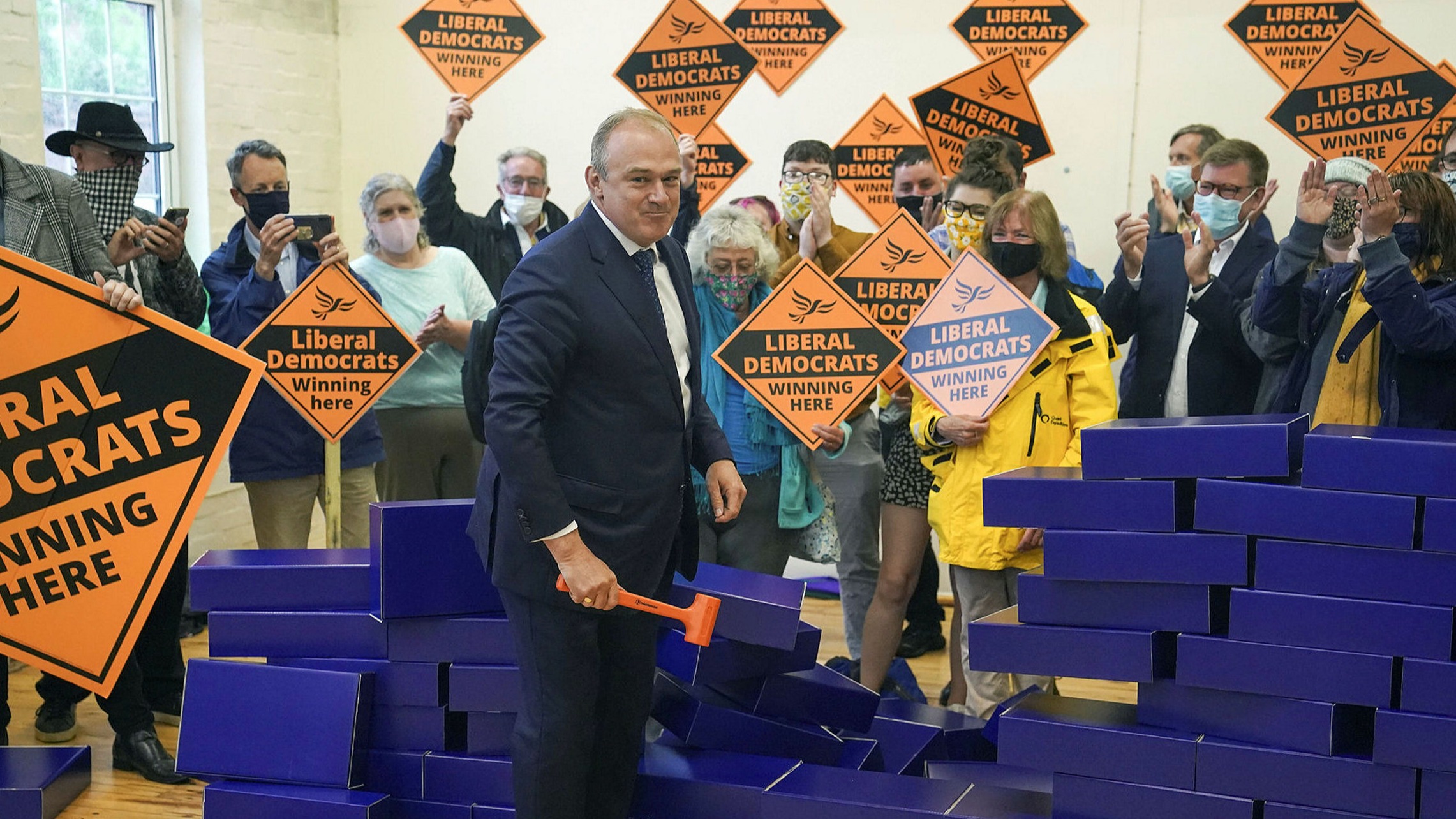
Finally, to the Liberal Democrats. Donations at the last General Election were a fraction of the other two parties (£1.2m for the LibDems versus £19.4m for the Conservatives and £5.4m for Labour). It neither has a firm base of business or trade union support. Tough you might say. It is a small party which has never governed on its own for over 100 years. But its parliamentary presence never reflects its share of votes fairly and many would argue we need to move away from the often-stale Hobson’s choice of the two major parties.

This country needs a better political system than we have currently. It has already been seen as not fit for purpose in managing the pandemic. The quality of politicians is falling and the choice of how we are governed is too limited. Voting reform and a written constitution seem huge hurdles to overcome but perhaps implementing an independent review of party funding is reachable.

There have been attempts to introduce reforms in 2006 and 2011. These involved a cap on individual donations supplemented by more state funding, but unsurprisingly self-interest meant such initiatives went nowhere.

Workable solutions are not complicated. A greater element of state funding which to some extent can replace corrosive uncapped external donations might at least breathe fresh air into our politics. It would, of course, have to be overseen and periodically adjusted in a truly independent way by a standalone body free from party political influence.

Certainly, maintenance of the status quo should no longer be an option. Something has to change and embracing reform would be a relatively easy win and positive for the body politic.

Keir Starmer’s Labour Party must stand for something

Last weekend was a minor revelation. Attending a BBQ for my Godson’s 18th, conversation amongst the younger guests turned briefly to politics, at their instigation…

Bright and articulate, their views on politics and politicians were excoriating. The LibDems were a ‘dead party’ they said. As for Keir Starmer…., he and the Labour Party stood for nothing, comparing him unfavourably even to Corbyn who ‘at least had convictons’. No Starmer policies could be named, just an irritation with Labour abstaining on Covid related regulations in Parliament rather than having definitive views. Johnson came out the best albeit without the bar being set very high. He at least ‘stood for something’, notably Brexit, and had more character. There was a feeling however that he was probably fairly unfit to be Prime Minister.

Oh dear. I suggested a solution was that they go into politics to raise its standards. You must be joking was the reply. Careers in the civil service, engineering and the armed forces beckoned. Umm…Politics is rapidly becoming a profession that fails to attract the brightest and best.

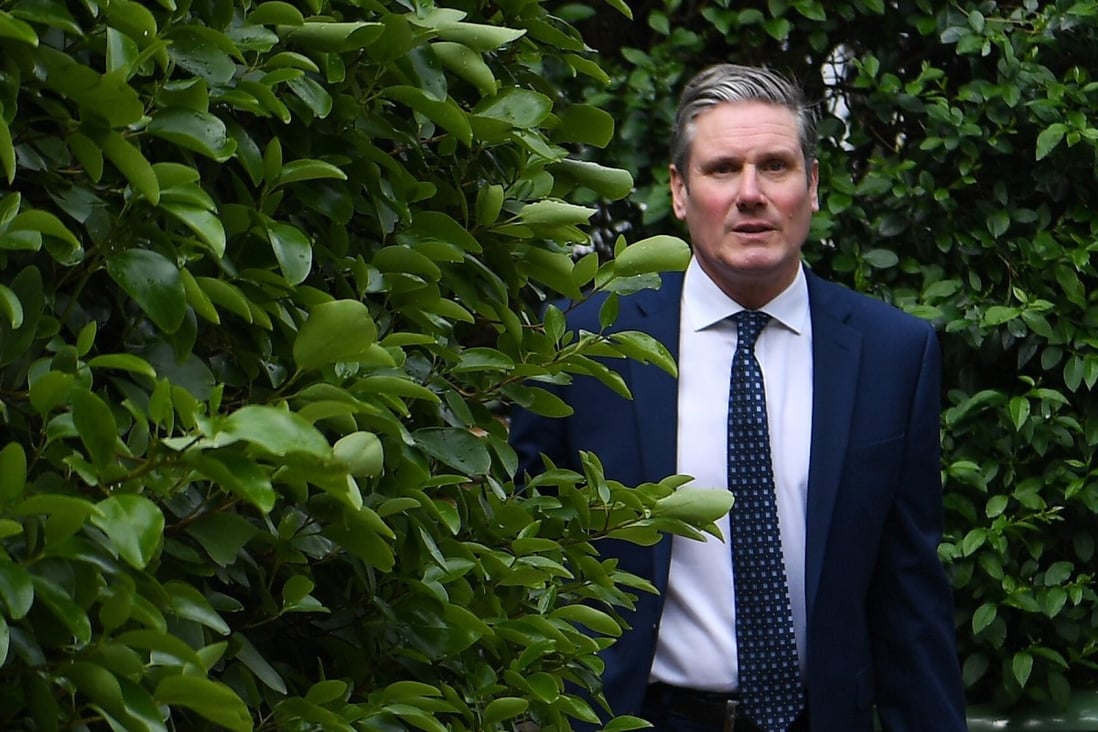
But turning to the Government’s Opposition, what is the problem with Labour? Having survived the Batley and Spen by-election, Starmer is on a mission to rejuvenate the Labour Party. He has a job on his hands, admittedly made more difficult in a political environment dominated by a pandemic. Last week, he travelled to Blackpool to gain the views of former Labour voters in now Tory held seats. Their response was as bad as the young, soon to be voters, above. Views varied from irritation at opposing Brexit, a focus on Labour’s history of building up debt, failing to turn round run-down areas and simply letting down core voters with a London-centric view of life. Starmer, as a leader, scored poorly.

Keir Starmer is Boris Johnson's new opponent – but could he lead a United  Kingdom? | South China Morning Post
The Labour leader needs to come out of hiding…

Under Starmer, Labour recently announced a purging of hard left factions and has been tough with disloyal Corbynites. Moderates may win the leadership of Labour’s largest backer, the trade union Unite, helping his cause. But this is the Party speaking to itself without any resonance with ordinary voters. It is simply a reminder that a new centre-left party is required in the long run.

But, today, if the Labour Party is to make progress against Johnson’s often chaotic Tories, Starmer’s team needs to produce a stream of ideas to get voters thinking. How are public services going to be paid for? What is Labour’s alternative social care plans to be ready when the government announces theirs? How do they rejuvenate inner cities in cooperation with the best of their regional/City mayors? What does life-long learning really mean in practice and how should it be organised and funded? How can we have a better relationship with the EU which makes the casualties of Brexit (including many who voted for it) feel Labour has constructively moved on. Finally, just ignore the culture wars, and start opposing the Government on aspects of managing the pandemic. Labour’s Shadow Home Secretary this morning attacked the ‘pingdemic’ but couldn’t provide an alternative solution. Pathetic.

It may be that Starmer is just too cautious and not political enough. But if he and his Labour Party don’t stand for something and soon, the Tories will romp to victory at the next election however poorly Johnson’s team governs.

Tory ‘Red Wall’: it had better hold up

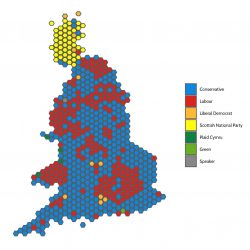
The Tories are standing on their heads. Their raison d’etre and bedrock of support was always via an appeal to the wealthier parts of the UK, predominantly the South. They had a very clear offering to the centre-right of the political spectrum; support for institutions, lower taxes, controlled budget deficits, smaller government, mostly constructive nationalism, a United Kingdom, a tough but largely constructive approach to the EU. All with a sub-text that collectively such an approach allowed for a stronger economy to support the less well off.

Volatility, realignment and electoral shocks: Brexit and the UK General  Election of 2019 - The British Election Study
Tories conquer much of the North

No longer.

Admittedly, the pandemic has driven much of the recent political agenda, but the Tories have been busy adjusting their political stance ever since Johnson was voted leader and this will continue after the pandemic recedes.

In a successful swing at Labour’s heartlands, the Tories have stood for the opposite of the usual. Anti-EU, this debate was partly framed by giving power to the government to aggressively intervene in the economy, whether it is initiating huge infrastructure projects or propping up ailing industries such as steel (Margaret Thatcher must be turning in her grave). And to hell with Brexit’s overall impact on the economy… They have also been cavalier with the Union, have a new sub-text of spending money like water, pandemic notwithstanding, and tax rises will almost certainly be focused on the better off. They have to date successfully engaged in culture wars that the ‘old’ Tories used to largely and politely side-step, except for the odd red-faced backbencher.

No wonder Labour, even under Keir Starmer, has not been able to lay a glove on them.

Lucky with his Opposition led by Corbyn in 2019, Johnson won in the South through fear and won spectacularly in the Midlands/North through great tactics as Labour’s traditional seats turned blue.

But will this alliance of voters hold? A few straws in the wind, including the by-election defeat in Chesham and Amersham, may make the Tories a little uneasy:

  • Attacks on the Green Belt which is upsetting traditional supporters in the South
  • Higher taxes in the face of a more moderate Labour Party which may just allow voters in the South to think it is safe to vote elsewhere
  • Culture wars going too far. Snide comments from ministers on the Black Lives Matter bending of the knee will strike a note of widespread irritation, particularly now some national footballers are involved, with one openly calling the Home Secretary racist
  • Brexit. Whilst done, if not the impact of its longer-term fall-out, not caring about the Union and continuing with initiatives to gently or not so gently undermine institutions generally may start to resonate with voters, particularly in the South
  • Scrutiny on general competence as we emerge from the pandemic. This may attract the attention of all voters. It is interesting that in the recent Batley and Spen by-election, if it wasn’t for George Galloway’s divisive campaign aimed at the Asian community, which split the Labour vote, Labour would have won handsomely in this Northern seat
  • Then lastly, cuts in foreign aid. The Tories are being attacked from many sides, including by all their living former Prime Ministers, although probably not by their new target base of voters

As this blog has written before, Tory hegemony seems strong, and it is difficult to see anything but a Tory victory at the next election.

However, Labour is under new, moderate if, to date, ineffective leadership and the LibDems came second to the Tories in well over 70 seats mostly in the South. The new Tory ‘Red Wall’ in the North had better hold as some traditional Tory voters may be getting restless and with good cause.

Huge step forward for capitalism

Sometimes it feels that the famous Churchillian phrase about democracy could be applied equally to free markets; ‘democracy is the worst form of government – except for all the others that have been tried.’ It is an analogy that can cross boundaries to economics!

Western capitalism as we know it is under threat. The disparities of wealth in many countries have grown; injudicious tax cuts in the US for the better off, global asset price inflation due to quantitative easing, elements of corruption and elitism, now the pandemic. The list is long. Much of it has fuelled populism which, of course, is a poor solution to inequality. Just think Trump, Bolsonaro and Modi for a start. They may not intentionally have set out to undermine capitalism/free markets but their sense of entitlement, acceptance of corrupt practices, particularly when supporters are involved, and a disastrous handling of the pandemic have all contributed to greater inequalities and capitalism’s malaise.

So, it is a huge relief and very welcome that the world’s leading economies yesterday signed up to a plan to force multinational companies to pay a global minimum corporate tax rate of at least 15 per cent. It is a recognition that things have to change. Many multinationals, notably technology companies, have reached a size where they face little competition and accountability, moving money around the globe to dodge legitimate taxation. No longer. A fair treatment of companies, large and small, global and local is crucial to the survival of Western capitalism. The ‘little person’ should have an equal voice and this initiative could raise at least an extra $100bn in taxation potentially for public investment. No mean feat.

Janet Yellen and Rishi Sunak lead the way

Future initiatives to strengthen capitalism should involve more active corporate governance to curb senior executive pay. For example, according to the latest Chartered Institute of Personnel and Development (CIPD) report on executive remuneration, the average FTSE 100 Chief Executive gets 119x the remuneration of the average full-time employee. This multiple has risen pretty much consistently over the years and apparently there is no tangible evidence as we emerge from the pandemic that companies have begun to address the fundamental flaws in the executive pay-setting process.

Incredibly, one might not even be averse to considering some form of wealth tax which seems the only solution to dealing with the inequality of wealth caused by excessive asset price inflation since the 2008 crash and the advent of quantitative easing.

The world faces multiple crises as it tries to escape the pandemic. In the West, in particular, there are huge challenges facing economies including infrastructure investment, lifetime education to reskill the workforce and access to comprehensive health and social care. Populism and threats to democracy will only be defeated in the longer term if disparities of wealth are narrowed to pay for much needed improvements in how society operates.

Agreeing a global minimum corporate tax rate, whilst seeming a little dry to grab many headlines, is a huge step forward for capitalism and another visible benefit of President Biden’s victory over Trump. There is still much work to do, however, to convince all voters that Churchill’s comments on democracy apply equally to free markets as we know them.

Tory dilemmas as they face an abundance of electoral riches

A week after a by-election hammering, it may seem odd to talk about Tory electoral dominance but there it is. Chesham and Amersham was not a game changer whatever many pundits may say. And neither will the Batley and Spen by-election be unless Labour lose it which will only confirm Tory hegemony anyway.

Chesham and Amersham is the revenge of the Metropolitan Line elite |  Financial Times

The Tories dominate the North and dominate the South. They can upset/please one constituency of voters or the other, or perhaps none or both but what a choice! Labour are nowhere and whilst congratulations are due to the LibDems for last week’s shock win, they currently remain a home mainly for protest votes. Ever thus…

The next General Election is for the Tories to lose and with an abundance of electoral riches, they must resolve some dilemmas. But there have been harder choices in British politics…

In the North, the Government must spend, spend, spend, and build, build, build. In the South, it should save, save, save, and protect, protect, protect. What to do?

Major infrastructure projects are set to continue and there will be further moves to centre government on the North. For the South, planning reforms will be watered down to protect the Green Belt. It is not logical to encourage building in areas most people want to live in anyway when trying to ‘level up’ with the North at the same time.

And on the economy, whilst it is clearly time to save, it can be at the expense of the better off, usually older voters. Interestingly, after a trip to the North, even there you could detect nervousness in conversations about how spending can’t continue at the current rate, and who will pay for the Covid bills. Raising taxes and cuts to pension contribution tax reliefs will hardly cause howls of protest anywhere. This is where the Tories have plenty of room for manoeuvre. Particularly as Labour and the LibDems are hardly going to outflank them on tax to win over Tory core voters in the South.

There are some slightly ominous straws in the wind; the damage from the Brexit deal and deteriorating relations with the EU are mounting. Boris Johnson is also not as electorally invulnerable as people thought amid growing concerns about what today’s Tories really stand for.

But that is for another day. The Tories have fewer difficult dilemmas than one imagines and, presently, however frustrating for some, they appear to be able to have their electoral cake and eat it.

Brexit damage mounts, unnoticed by the North for now…

Oh no, not another Brexit commentary…well, it is needed. The trajectory of the impact of Brexit was most likely to be anger and then relief, followed by pugnacious nationalism, puzzlement, possible regret and back to anger again; but perhaps a different sort. We are in the middle stages of this cycle.

Let’s take stock. In the news currently, where are we with trade deals?

UK hopes dwindling for post-Brexit trade deals with EU and US
Tricky trade relations continue…

49% of exports go to the EU and the post-Brexit trade deal has damaged several sectors. In the City of London, to date, a net 7,500 jobs and a trillion dollars of assets have moved to EU hubs. Regulatory equivalence agreements have been signed only in relation to aspects of derivatives trading (for 18 months) and the settling of Irish securities (until June). The EU is dragging its feet elsewhere as it wants to build its own capital markets. London will still predominate across financial services sectors including asset management, but its relative position is probably likely to weaken.

Elsewhere the damage is mounting. Brexit bureaucracy is hitting the food and drink industry with sales to the EU down 40% year on year, although to what extent this is partly due to Covid disruption is a moot point. The £35bn UK fashion industry warns of decimation as a result of red tape and travel restrictions. The UK music industry describes the first three months of Brexit as a disaster, with industry bodies suggesting 94% of musicians are negatively affected due to the UK making no progress on visas/customs and other controls on performances in continental Europe. And let’s not talk about fishing, where Brexit-voting fishermen from Scotland to Cornwall feel betrayed.

In Northern Ireland the aggressive Lord David Frost, Cabinet Minister responsible for implementing Brexit, warns of a summer of turbulence in Northern Ireland if the Northern Ireland Protocol, establishing a trade border in the Irish Sea, (which he negotiated only a few months ago), isn’t re-written. So far, the first casualty is Arlene Foster, the DUP leader and First Minister, duped into supporting Johnson’s deal. She has lost her job, at least the former one, to a deeply unimpressive, homophobic creationist, Edwin Poots. Oh dear. Northern Ireland looks shaky, and Scotland has a chance to re-make its case for departing the union, all fueled by Brexit. A diminished UK is, well, a diminished UK, less able to influence its destiny and shape global affairs.

Elsewhere, when the UK left the EU, the EU had 40 trade deals with 70 countries outside the EU. 63 countries have rolled over agreements with the UK, so no disadvantage but no advantage either. An agreement with Japan (2% of trade) was agreed on less favourable terms. Negotiations over the crucial US agreement have yet to begin and a huge row has just developed within Government over an agreement with Australia who want unfettered access to our agricultural sector, setting the precedent for negotiations with New Zealand and the US. The Secretary of State for the Environment, Food and Rural Affairs has warned of hugely damaging consequences to our farming industry and is currently arm wrestling with the true free marketeers in Cabinet.

Lastly on trade, there is now the scope, post-Brexit, of setting up freeports. Good in theory but more work is needed as 23 countries including Canada, Switzerland, Norway and Singapore specifically prohibit manufacturers benefitting from freeport-type deals which apparently is not unusual or unexpected. Take note Hartlepool.

Now the roll-out of jabs buys Brexit time but only for so long. The EU negotiator, Barnier, in his recent memoirs, openly wondered whether Johnson was pursuing a ‘madman strategy’ in his Brexit negotiations and lost trust in him keeping his word on anything. Well, welcome to Johnson’s world of winning at any cost.

The damage of Brexit is slowly cumulative, but the incoming tide has yet to reach a North of England rightly disillusioned with how it has been treated in the past. At some stage in the future, as the evidence mounts, the region may realise Brexit wasn’t the solution it was promised.

Wanted: a new UK (English) political party

The Tories are triumphant. Johnson’s brand of populism plus a successful vaccine roll-out continues to draw the oxygen from opposition parties. England and, at least for now, the UK, is a one-party state. The dangers of this are obvious but for most voters won’t be visible for years.

You have to congratulate Johnson. He has landed on a winning formula as the face of Cummings’ strategic planning…

And what are the consequences for Labour and the LibDems?

These two parties are hopelessly adrift. At the start of 2021, this blog highlighted the uphill struggle for Starmer/Labour and the requirement of a new centrist party to counter the death of the Liberal Democrats. Today, this has become painfully obvious much earlier than expected.

Starting with the Labour Party, there is simply no point to it as it is currently constructed. Its grass roots are mostly too left-wing. Corbynites, like the Trumpites in the US Republican Party, are endemic but, unlike Trump, have no electoral appeal whatsoever. The influence of trade unions is also out of date and undemocratic. What clothes Labour had; public sector investment and notions of working-class solidarity, have been stolen by Johnson’s Conservatives. Add to this toxic mix for Labour of splits over Brexit and an inability to embrace nationalist sentiment convincingly in its heartlands, and it feels like game over for another generation. Keir Starmer is a decent man and the best available leader but that is not enough.

Turning next to the LibDems, there is nothing new to say. They screwed up Brexit, are too nice and too vague. Outside pavement politics, they lack a killer instinct and, even if they had one, wouldn’t know where or how to apply it.

So, for the Opposition, the way forward is a new party; a carefully constructed centrist one which will have to be years in the making to work and probably led by a Blairite. For all his faults, one is struck by the fact the most incisive, commonsensical commentary on current events often comes from Blair himself. Indeed, if you read about his time in government, his largest mistakes domestically often came when he had to pander to his left-wing in the Labour Party. Imagine if a Blairite was free from historical baggage…

I know we have been here before and for a new party to work, it will take patience as well as talent to succeed. A fresh start would ultimately involve the evisceration of both Labour and the Liberal Democrats before tackling Tory hegemony. It won’t be easy.

We shall see but the health of democracy, at least in England, demands a better choice than we have now.

Prime Minister Johnson: an accident waiting to happen

We have all come across such personalities. The reckless friend or irritating colleague who, with their often-superficial charisma, believe they can cut corners to get what they want. Rules are for other people and careless with detail, their abilities are either exaggerated or wasted.

Normally, the consequences of their actions are minor, or any damaging impact is confined to them personally. Not if you are Prime Minister.

This blog has warned about Johnson’s personality from the start. Loose with the truth, reckless with the unwritten constitution and breezily ignoring the details of each political job he has held, he has stopped at nothing to reach the top rung of politics. The trail of destruction is manifest. A tactical swerve to supporting Brexit, empty promises of Brexit’s benefits, fulfilling a policy vacuum with the appointment of the ‘anarchical’ Dominic Cummings, playing fast and loose with the rights of Parliament, the destruction of Tory moderates. The list goes on. If you are Arlene Foster/the DUP, a Scottish unionist, a Cornish fisherman, a Permanent Secretary recently ousted, a former member of Theresa May’s cabinet or even Nazanin Zaghari-Ratcliffe, you will have suffered the consequences.

But it has worked. The Labour Red Wall fell with frustrations over endless Brexit wrangling and Jeremy Corbyn’s incompetence and extremism, creating the perfect environment for Johnson to prosper.

Like every chancer, he will not stop until he really screws up. And you will have to wait a while. Nobody could predict the pandemic but huge errors in its management have been subsumed by the welcome success of the vaccine roll out. Only a public enquiry will shine a real light on government actions but don’t hold your breath. And recent revelations of his alleged comments about Covid victims and how the Downing Street refurbishment was paid, whilst damaging straws in the wind, are not yet enough, one feels, to do lasting harm.

The relationship of Tory MPs with Johnson has always been transactional. There is mostly no innate loyalty towards this most unTory of Tory leaders. If he keeps winning elections, he will keep his job but, if not, the end will be swift. One suspects that end is not in sight, particularly as the Tories are forecast to do well in elections next week. Starmer, disappointingly, hasn’t found his feet and with a feeble Cabinet there are no strong internal contenders to replace him. Add to this the fact that there are many other things worrying voters in this most extraordinary of times and one predicts Johnson is safe for now.

But Johnson is Prime Minister and the consequences of his personality and actions gradually mount; more cynical disdain for the role of politicians and their morality; more pushing of the envelope through donations to buy influence, less scrutiny of government as the role of judicial oversight is weakened, greater threats to the Union as Johnson’s Brexit promises unravel and, in the longer run, an unknown future for a Conservative Party which has been accidentally repositioned.

Many commentators warned about the consequences of a Johnson premiership. When the accident happens, Johnson’s fall may well be brutal but not quite as consequential as the long-term damage currently taking place to public life.

In the meantime, any complaints should be directed to Johnson’s private mobile phone number which has apparently been publicly available for the last fifteen years…