Predictions for 2022

Each January political predictions are made for the year ahead. Rarely do commentators revisit past forecasts mainly because people hardly remember them and they are, inconveniently, similar to those of most economists, frequently wrong.

This modest blog with limited, albeit growing readership, has to rake over last year’s predictions to cling on to credibility despite the adage you are only as good as your next forecasts…

So how does the 2021 scoreboard look? Well actually quite good. Eight predictions were made of which six were correct, one partly correct and one still work in progress. None were wrong. Phew!

It is difficult to believe Johnson was master of all he surveyed at the start of 2021 despite the raging Covid pandemic. There was no real threat to his leadership, only rumours that having delivered a full Brexit he may leave the premiership asap to spend more time with his bank balances. This blog disagreed. It forecast that Johnson would go nowhere in 2021 whilst Covid dominated, and his ego drove him to more ‘historic’ actions including reaping the benefits of a supposedly joyous Brexit. However, there would be growing restlessness at his style of leadership and overall incompetence and the seeds would be sown for another game changing political career to ultimately end in failure. Correct.

No Scottish independence referendum or even the promise of one. Correct. This will not happen in this parliament under Johnson or any other Conservative leader.

The next forecasts were on US politics. Biden would be more radical than expected in domestic policy, foreign policy would barely depart from the Trump era and Trump would be a busted flush. Mostly correct. The disappointing Biden has certainly tried to be radical domestically even if one West Virginia Democratic senator has stymied his US$1.75 trillion ‘Build Back Better’ spending Bill. Foreign policy has largely followed Trump, specifically in relation to Afghanistan (where was the promised cooperation with allies?) and China. Trump has been side-lined despite his depressing sorry hold over today’s Republican Party. More on all this later.

On European politics, Macron would try, almost succeed, but ultimately fail to seize Merkel’s mantle of leading Europe. Correct. German political stability reigns and therefore so does its dominance through a Social Democratic led alliance with the continuity chancellor, Olaf Scholz, at its head. Draghi in Italy has outshone Macron in maturity and Macron’s increasingly petulant actions against the British et al to seek re-election has diminished him.

Next, the spotlight on the power of social media companies would intensify with new political initiatives to curtail their power. Work in progress into 2022 and beyond.

Lastly, Covid would dominate the political landscape throughout the year. Sadly correct.

So how does 2022 look? Predictions on likely events this year are tricky as there is nowhere to hide. Key outcomes are absolute. Gulp! Here we go…

All change: predictions for the UK property market in 2022

2022; a year of absolutes…

This has been re-written twice already since yesterday! Putting aside any preferences this blog may have…Boris Johnson seemed likely to survive throughout 2022. Febrile speculation that his premiership had six months to go and that he would be ousted after the local elections felt wide of the mark. Johnson has no real successors; he would smarten up his act (cue new 2022 haircut…) and his calculated gamble on Covid restrictions would just about succeed. Yes, the economy looks fragile on the cost of living front and lights are flashing amber for him as the Labour Opposition is a little stronger and his backbenchers continue to revolt. But think about it. Mooted successors are Liz Truss (loved by the grass roots, loathed by colleagues, no perceived election winner), Rishi Sunak (currently too tied to Johnson) and Jeremy Hunt (a grown up with insufficient charisma). Oh dear. He would just about manage to strengthen his core team to avoid further No. 10 debacles and, as for Labour, they should be 20 per cent ahead not 5-6 per cent. What they stand for still lacks any sort of clarity in the eyes of voters.

One proviso, however. Johnson had to avoid any more scandals or existing ones developing for the logic of this analysis to apply. Incredibly events are deteriorating swiftly as details of further Downing Street lockdown parties emerge. Until this week, he looked likely to lead the Tories into what now looks a more likely 2024 general election but his ability to self-destruct in the highest office should never be underestimated…His future is in the balance. In the short-term, he will still probably survive because he always does but this is a far more reckless prediction than it seemed just a few days ago. He has lost what little moral authority he had, and the Tories will look to replace him ahead of the next election.

In the US, the Democrats will get a pasting in the November mid-terms. Biden will be a lame duck, but the future does not lie in a resurgent Trump but rather a more political, calculating far-right Republican who, in many ways, will be more threatening than Trump. The Democrats, hopelessly split, will not settle on the also disappointing Kamala Harris as Biden’s successor so the US political stage will remain ill-defined in 2022 until leading future presidential candidates emerge more clearly. All this will exacerbate the depressing partisan divisions engulfing the nation. It really does feel like we are watching the beginnings of the end of an empire.

Macron will win the French presidential election in April. The far right is split and the near right’s candidate, Valerie Pecresse, is not established enough. European politics will remain stable despite spats with East European states (watch the Hungarian parliamentary elections in April closely to see if populism there maintains its resonance). Germany and an improved Italy under Draghi will clip Macron’s wings. One bright spot might be an improved UK/EU relationship post the French elections.

In terms of major political elections, that only leaves Brazil and I confess I have no idea of its future post the October presidential race except for the likely demise of the vile Bolsonaro which must surely be a good thing.

And finally, China will continue to increase its global dominance in the face of a divided America, and relatively weaker Europe. Russia will not invade Ukraine. Such a threatened gamble is a sign of Putin’s weakness not strength. However, it will pay off in undermining NATO’s resolve (and raison d’etre) to push its diminishing influence eastwards.

So Happy 2022 to all readers. This may at least be the year Covid loosens its grip on global events and that, if nothing else, is a reason to be optimistic.

There have been several requests from readers about how they can access this blog directly. Please go to http://www.insiderightpolitics.com and sign up. It only takes a few seconds to ensure content is delivered to you in an instant! You can also follow me on Twitter: @insiderightblog.

A sudden sense of decay grips the Tories

Incredible. Speaking to senior Tory MPs at the weekend, they think Johnson is done for and give him six months at most. Spreading faster than this depressing and worrying Omicron virus, the decay around him is everywhere. Chaotic, not serious, not really understanding what being a Tory in government means, his colleagues have had enough. Johnson’s one saving grace was his election winning ways. These have deserted him. Not even a 60% Brexit voting North Shropshire was biddable to his former charms.

A grim end to the year…

And worst of all for the Tories, they are collectively tainted with sleaze and incompetence combined with the growing factionalism of liberalism versus lockdown. The resignation of the awful, self-styled British bulldog, Lord Frost, is a hammer blow to Johnson’s authority but also the unity of purpose this Tory government was meant to represent. Brexit is becoming so yesterday, even if its full impact has yet to be felt, leaving a vacuum in its place. And make no mistake about it. Those who voted for the chancer Johnson as leader must take full responsibility for creating this most unTory of governments. It was an accident waiting to happen with potentially dire consequences.

There is not much to amuse people nowadays but jokes at the expense of today’s administration is the easiest way to elicit a laugh. Its death may be a long time coming but widely shared ridicule is often fatal.

So Johnson’s relationship with his back benchers is irreparable, his collapsing reputation rightly dragging the whole Party down. With an open goal to aim at, Keir Starmer, a more serious man for serious times, may be gaining some credibility.

That just leaves the economy. Oh dear. Inflation has hit 5%, brutal tax rises kick in next Spring and more Covid restrictions risk derailing economic recovery. Standards of living are likely to fall and further EU single market barriers kick in next year too.

This blog’s analysis of what might bring Johnson down is proving correct but certainly not the timescale. And the poison has spread to the Tories as a whole as was always the danger.

Johnson, of course, could still survive. Febrile Tory back benchers, even senior ones, are not always the best guide to the future and the power of incumbency should not be underestimated. But ultimately, the long-term damage has been done.

But look forward to next year when Omicron is in retreat, a chastened Tory Party, possibly led by a grown up, raises its game in the face of a more confident and capable Opposition.

Politics in 2022? One could almost feel optimistic…

Have a safe and merry Christmas in these challenging times.

The moral dilemmas of an Office Christmas Party…

Our Company, JPES Partners, is mostly staffed by younger people. They have embraced the need to be vaccinated and several of us have had our boosters, but not in a Johnsonian ‘boosterism’ way…Throughout the pandemic their diligence in meeting client needs and keeping activities going successfully has been really excellent. Indeed heart-warming, as is their concern for colleagues and their families in these challenging times.

So it is with a heavy heart that we have decided to cancel our Christmas Party next week in favour of much more modest, socially distanced festivities. We simply do not want to expose employees unnecessarily to the dangers of having to self-isolate over the Christmas break. We all want to enjoy this time of the year avoiding, as much as possible, putting older relatives at any sort of risk. We have our Company offsite at the end of January and will reschedule it to then, hoping that the latest wave of this damn coronavirus is receding by this time.

These decisions were clear-cut. It feels like the best balance of common sense and keeping the show on the road. So, we ask ourselves, why is it so difficult for the Government?

What goes on behind this door is everybody’s business…

It is because there is a moral vacuum at the heart of this administration. As written many times before, Johnson sets the tone and he is a chancer, a rule breaker, for rules apply to other people not him. Economical with the truth but having connected with voters with his superficial charisma, he feels entitled to ‘wing it’. Well, that is not good enough and certainly not in a Prime Minister.

He is being found out through the actions of his staff and his own actions. It does not look pretty. Blatantly misleading statements about parties in Downing Street last December, the excruciating recording of a mock press conference addressing them, on top of the Owen Paterson affair and the funding of Johnson’s Downing Street flat is adding up to be quite a disaster. The government is losing its moral authority, just when it needs it to manage the Omicron wave of the virus. And the rot starts from the top.

Today, Downing Street cancelled its Christmas Party in a wholly inconsistent way to the alleged activities of last December. One doubts there were moral dilemmas in reaching this decision. It was simply a tactical ploy to try and pour water on indignant flames.

Too little, too late. It is time the Tory Party as a whole fully woke up to the flaws in the man leading it before voters do. Otherwise, there won’t be many future Happy Christmases for this Government.

Labour’s shadow cabinet reshuffle should worry the Tories

This blog has consistently argued that another Johnson led General Election victory is highly likely. The Tories feel like the only game in town as Keir Starmer has limped on as a relatively honest but mediocre Labour leader and the LibDems mostly fade into the background.

Indeed, any straws in the wind to date hinting at Tory vulnerabilities relate only to Johnson himself, and his relationship with his backbenchers, not the Tories as a whole.

And yet…and yet…

One ingredient for a Labour revival is the credibility of the Labour front bench. Starmer botched the last shadow cabinet reshuffle providing his awful Deputy Leader, Angela Rayner, (directly elected so cannot be fired), with a factional victory of sorts. The end result was some minor improvements but not enough and Starmer looked weak in the process.

Where were the emerging or existing Labour Big Beasts? They needed to be front and centre to make progress. The first reshuffle mostly didn’t uncover them when they would have been of real benefit, particularly as the Tories are hardly overwhelmed in this department.

So, this week’s latest reshuffle is interesting. Yvette Cooper finally returns as Shadow Home Secretary (replacing the largely unimpressive Nick Thomas-Symonds), the highly economically literate Rachel Reeves stays as Shadow Chancellor with her authority enhanced, the sharp and, importantly, centrist northerner, Lisa Nandy, moves from the Foreign Office (off you go, the overrated David Lammy to this now backwater) to challenge Gove at the Orwellian ministry of Levelling Up. Then there is the shrewd Pat McFadden supporting Reeves at the Treasury and a rising star, Wes Streeting, goes to Health. An added bonus is that former leader, Ed Miliband, a reminder of past failings, has had his portfolio reduced. Not too painful but why doesn’t he go off and run a mid-sized NGO whilst his more talented older brother runs a larger one?

Labour leader, Keir Starmer (2nd from left) walks to today's shadow cabinet meeting with some of his new appointees including David Lammy (far left) Shadow Foreign secretary, Yvette Cooper (3rd from left) shadow Home Secretary and Rachel Reeves (far right) shadow Chancellor of the Exchequer after yesterday's reshuffle. Picture date: Tuesday November 30, 2021. PA Photo. See PA story POLITICS Labour . Photo credit should read: Stefan Rousseau/PA Wire
Labour moves its bigger beasts to the frontline

This is the reshuffle Keir Starmer always wanted and he has now got it. And it has just arrived as the Tories are wilting with a somewhat underpowered, accident-prone Cabinet.

In the last blog the three-pronged assault on Johnson’s, and possibly the Tories’ grip on power was unhappy Tory backbenchers, a faltering economy and Labour getting its act together. The latter two were not happening. With this reshuffle, Labour’s performance has the potential to improve, and the score has now moved from one out of three to perhaps one and a half.

The Tories, and Johnson in particular, should therefore start feeling a little nervous. Coronavirus, even Omicron style, is unlikely to provide enough distraction to avoid a decent challenge being noticed by voters from this now more talented Labour front bench.

There have been several requests from readers about how they can access this blog directly. Please go to http://www.insiderightpolitics.com and sign up. It only takes a few seconds to ensure content is delivered to you in an instant! You can also follow me on Twitter: @insiderightblog.

The route to Johnson’s downfall

It won’t be sleaze that brings down Johnson in the end. As written many times in the past, sadly that is ‘priced-in’. The clumsy ‘sex and favours’ story about Jennifer Arcuri, for example, in this weekend’s Observer was hardly a surprise and offered no new revelations.

His personal failings are 'priced-in'​ for now...
His personal failings are ‘priced-in’​ for now…

But what will?

Essentially a combination of three things; the economy through a deterioration in living standards, a Labour revival, and a collapse in relations with his backbenchers.

Taking these in reverse order, the latter is well on its way to being fulfilled. The hanging out to dry of lemming like MPs (ex 51 of them) as they voted to re-write parliamentary standards rules and rescue Owen Paterson, only to be metaphorically slapped in the face as the government u-turned, has caused huge resentment. The finances of (mostly Tory) MPs are now being heavily scrutinised as criticism of second jobs in local and national media mounts. They are all being tarred with the same brush and several MPs I have spoken to are absolutely hopping mad. This needn’t have happened.

Johnson is not popular amongst fellow parliamentary colleagues. He is seen as chaotic and amoral. On spending, he is not even viewed as a Tory. He had better keep being seen by those colleagues as an election winner…

On the second issue, a Labour revival is probably as far away as ever. Yes, they have suddenly moved into an opinion poll lead, but the recovery is weak. The problems of ineffective leadership and lack of attractive, believable policies are still there and the threat of Labour offering a competitive challenge ahead of the next General Election still seems pretty unlikely.

So, lastly to the third ‘it’s the economy, stupid’ issue. The jury is out. It is too early to say. A hopefully post Covid recovery is still underway and there is plenty of talk of ‘levelling up’ backed by decent amounts of cash. But if reality in the North falls short of expectations, standards of living are undermined by inflation and tax rises and Brexit related shortages bite, then the public mood could change very quickly.

For Johnson personally lights are flashing amber. Only one of those three issues has crystallised. It will take at least two for him to be under real threat. He is still likely to lead the Tories into and win a 2023 General Election (if it is delayed until 2024 then it signals a lack of confidence of victory), but the odds have narrowed somewhat.

Johnson’s real problem is his backbenchers. For a man who ‘likes to be liked’ he has made himself very unpopular indeed and that is not going to change any time soon. The economy and Labour had better continue to ‘deliver’ in his favour…

Quietly appalled by today’s Tory Party

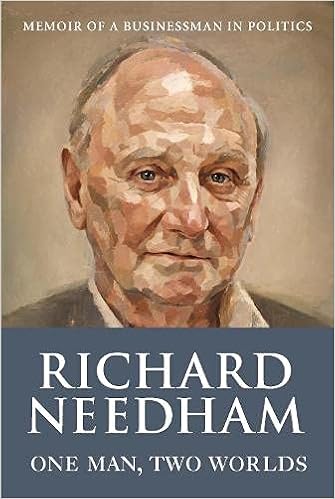
There was a book launch on Monday night at the unlikely venue of The Magic Mike Live Theatre in the Hippodrome Casino with the author, Sir Richard Needham.

Who is Sir Richard Needham you might ask? He is an obscure former Member of Parliament who was Under-Secretary of State for Northern Ireland and Minister of State for Trade in John Major’s government. His book, ‘One Man, Two Worlds’ and certainly worth a read contains sharply observed reminiscences of a businessman in politics, but its contents are not the subject of this blog.

It was the event and those attending it that immediately impressed. Some 200 were present including former cabinet ministers and a few currently in parliament. Quite a crowd and an appreciative one at that. The evening was a talk about past, ‘Blue Chip’ political careers featuring, of course, Richard Needham, but also Chris Patten (former Cabinet Minister and Governor of Hong Kong) and Matthew Parris (former Member of Parliament and leading political commentator). It never dragged over an hour and a half.

The content was fascinating, covering their motivations for pursuing a political career, mistakes and accomplishments during demanding decades in the public eye and the toll it took on their families. There was a focus on the purpose of being in politics, what you sought to achieve in an often-non-ideological way, avoiding confrontation whenever possible in a desire to bring people together to get things done.

Sir Richard spoke movingly about how badly Northern Ireland has been treated by the mainland over decades, how he sought to bring communities together by eschewing division and how damaging Boris Johnson’s approach to Brexit has been for the province. Catholics and Protestants are once again drifting apart not helped by an education system that at all levels still remains almost wholly segregated.

Chris Patten discussed his wrestles with the poll tax when in government and how China, even for the most cynical, has surprised on the downside in its treatment of Hong Kong. Matthew Parris discussed his keenness to become a Member of Parliament and his equal keenness to leave parliament seven years later, believing he could influence events more feely as a political journalist. All three referenced the palpable decency of John Major as Prime Minister.

What did the speakers at their core have in common? Honesty, principle and ability. And it is here that they, and many of the audience, parted company with today’s Tory Party. Diplomacy ruled but by defining what they were not, Needham, Patten and Parris intimated a quiet despair at the motives and behaviour of those in government today. Clearly and precisely, they put space between themselves and the overall approach of Johnson’s regime. And who could blame them.

Aspiring politicians are mostly good people

I declare an interest. I have been an assessor for the Conservative Party’s Parliamentary Assessment Board for some while, so I have met many aspiring politicians, a few now close to the top of the greasy pole. All individuals wanting to stand as a Prospective Conservative Parliamentary Candidate must pass this Board to join the approved parliamentary candidates’ list. It is a system which has mostly worked very well over time.

I am prevented from giving too much detail about what such assessments involve but it is fair to say being a team player and having a good judgement over constituency issues is key to being successful. Nobody wants a parliamentary party simply made up of wannabee Prime Ministers and diligent backbenchers with or without ministerial talent is first and foremost what the Conservative Party and, indeed, democracy needs. And remember, they are there to represent all constituents, not just the voters that put them in parliament.

So, who is driven to pursue the perilous route to being an MP? It is time consuming, thankless both before and after any success, and most don’t make it in the first place despite years of trying.

Having interviewed hundreds of individuals, my experience is that the vast majority are good, well-meaning people rooted in their community. The sheer amount of voluntary work they undertake would put most of us to shame. Yes, they have their ideology and campaign to support it, but their efforts also lie in being local councillors, school governors, fund raisers for charity, community volunteers to name just a few activities. Some have overcome issues in their personal lives or navigated career challenges. In other words, despite a strange but healthy interest in the minutiae of our democratic system, they are mostly like you and I.

POLL: Should people have a right to anonymity on social media? | The  National
Abuse of MPs is growing and a threat to democracy

So, when I read articles or watch interviews in the mainstream media or follow social media constantly denigrating elected politicians, questioning their motives, liberally using the words ‘hate’ or worse, you really despair. Of course, politicians need to be held to account and face penalties if they err, but not in this way. It undermines our beliefs in a largely well-functioning democratic system and makes the lives of participants stressful and sometimes depressing. Politics is a career for the thick skinned, but everyone has their limits.

When David Amess MP was murdered, the one small glimmer of hope from this terrible tragedy was the light thrown on the best aspects of our elected politicians. It was a reminder that he and the vast majority of his colleagues in all parties do good work, mostly unsung, and often in the face of unacceptable abuse.

The polarised, hostile commentary surrounding today’s politicians has gone too far. It must stop for the health of democracy and those elected individuals who participate in it. We should appreciate their role, respect it, and aim for a kinder politics.

Tories’ relentless optimism may well pay dividends

Johnson’s government is performing a high wire act. As supply chain problems have mounted from petrol to Christmas turkeys, ministers are staying relaxed, at least in public. They blame a pre-Brexit model of low paid immigrants filling key jobs, from HGV drivers to fruit pickers and broader support services.

The brighter future is based on higher paid British workers meeting all our supply needs. If there are problems today, it is a price worth paying for this post-Brexit nirvana. Oh, and there is ‘levelling up’ to come too.

The impressive Chancellor, Rishi Sunak, was full of optimism in his Conservative Party Conference speech this week. Listing a range of measures to encourage technological investment and training initiatives, he also pledged post pandemic fiscal rectitude as he put his faith in the individual not the State and also his faith in his own leadership credentials… It was all action through free market capitalism, mitigated by carefully targeted government support. Good stuff for those who worry about the size of the State, particularly post Covid, and with a positive view of the post-Brexit sunny uplands. It provides a level of optimism which will resonate for the time being.

Then you have Johnson’s bravura speech today. His premiership has always been a risky, unTory venture, one that has paid handsome dividends to date through robbing Labour of its heartlands. Whatever his Chancellor preaches, it has been based on big spending and high taxes. Now his government is attacking business and one can at least sympathise with some of his analysis. Rescuing the British economy from itself is about greater productivity through more investment and this doesn’t all have to be about government. Companies have benefitted for years from low taxes, cheap labour and growing profits. They have to be a key part of the solution too.

‘Boosterism’ works, at least for now…

The problem is that this isn’t the whole picture. Brexit is causing huge disruption, and this is Johnson’s government’s fault. Correcting its impact will take years if it can be accomplished at all and reversing Covid induced rises in universal credit benefits, for example, to encourage people to stay or get back to work is a short-term solution to the long-term issues outlined above. And continental Europe has shown government intervention needs to be substantial (with high taxes well spent) to make an impact, whatever the role of business.

The timing is poor for Johnson’s current narrative. Against the backdrop of sharp rises in the cost of living, there will be a huge squeeze on incomes for those less well off. Will this finally translate into some deep Tory unpopularity? Well, two things have to happen; a developing belief that the future does not look as optimistic as Johnson alleges and that Labour offers a credible alternative.

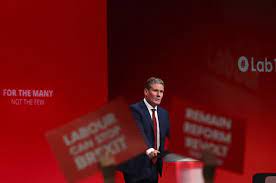
On the latter, the Labour Party Conference was quite a contrast. Ridden with personal animosity and pessimism about where the country is today and where it is heading, Labour for decades hasn’t delivered in its heartlands and since 2010 has mostly seemed incapable of governing competently. Why should people believe Keir Starmer’s tepid leadership approach now? Things will have to get worse, much worse, and quickly, for a significant shift in sentiment.

About the former, Johnson is a good times Prime Minister, loose with the truth as he reiterates his ‘boosterism’ approach to politics. Whilst he struggled in the depths of the pandemic he has mostly got away with his significant defects. It is ‘priced-in’ as they say and if his optimism and that of his senior ministers on current economic headwinds holds in the minds of voters, at least through to the next election, Labour won’t be able to lay a glove on them.

There have been several requests from readers about how they can access this blog directly. Please go to http://www.insiderightpolitics.com and sign up. It only takes a few seconds to ensure content is delivered to you in an instant! You can also follow me on Twitter: @insiderightblog.

Labour digs itself into an ever-deeper hole…

Oh dear, this week’s annual Labour conference was meant to be the relaunch of Keir Starmer’s leadership. The fact he needs a relaunch in the first place so early in his role speaks volumes.

It has not worked and the voting public, much shrewder than many commentators give them credit for, have noticed. An opinion poll in yesterday’s (London) Evening Standard made bleak reading. Only 25% of respondents say Labour is ready to form a government and even fewer, at 20%, say the Party has a good team of leaders.

Starmer, one guesses, is a good man but not a political one. Botched shadow cabinet reshuffles, few defining policy initiatives and sub-standard, clumsy Blairite manoeuvres on his own party have all backfired.

Another difficult week for Keir Starmer…

Consequently, coverage of Labour’s activities in Brighton this week has not been kind to Starmer. Forced to dilute his amendments to leadership rules, he finally got through a requirement that you need 20% of Labour MPs to support a leadership bid, abolished the ability (incredible it existed in the first place!) to join the Labour Party on a one-off basis for a fee of £25 simply to vote in a leadership ballot and achieved tougher deselection thresholds for Labour MPs. All good stuff but executed without Blair’s finesse. It simply reminded voters this is a Party that talks to itself in a way the Tories would never do.

Then the awful Deputy Leader, Angela Rayner, calls the Tories ‘scum’ and the last Corbynite in the Shadow Cabinet, Andy McDonald, Shadow Employment Secretary, resigns mid-conference protesting at a lack of support for a £15 minimum wage which he possibly forgets would bankrupt many small businesses. It stole the thunder from an impressive speech by the Shadow Chancellor, Rachel Reeves. Just hopeless.

And why does all this matter? Because the state of British politics has never been weaker. Allegations of corruption and gross incompetence swirl around Johnson and many of his team. The country is now finding out just how damaging Brexit is as labour restrictions cause supply shortages from fresh food to petrol. We are only just struggling out of an often poorly managed pandemic response and the government has yet to be held to account for its actions. Only a nimble, effective Opposition can provide the scrutiny required to improve political discourse and this week the Labour Party has been found wanting…, yet again.

A new party, as argued before, is badly needed. In the meantime, we are left with Keir Starmer having to give a conference ‘speech of his life’ tomorrow to rescue his leadership and Labour’s already weak election chances. It shouldn’t be like this.

Globalisation: coming back in vogue?

The forces driving globalisation have not gone away. They are just in abeyance as populist politicians have used nationalism to seek election success, whipping up the frustrations of voters who felt partly disenfranchised by the impact of cross-border decision-taking.

A pandemic and climate change are driving a reassessment of the merits of globalisation

But the world is a small place, continuing to shrink, and there are two issues driving home the need for globalisation: climate change and the pandemic. Neither can be addressed solely by individual nations and the public increasingly recognises this.

As we approach COP26, even the most nationalist of governments and their supporters understand there is no way out but to cooperate in order to head off catastrophic temperature change. It is no good the UK setting CO2 reduction targets, for example, if China has approved the opening of 24 new coal fired stations in the first half of 2021 alone. Cross-border diplomacy to implement global restrictions on emissions is essential to bring to a halt, let alone reverse, heat damage to the planet.

And such cooperation applies equally to individual companies and investment managers who invest in them as they wrestle with Environmental, Social and Governance (ESG) policies. Under pressure to minimise and then eradicate their carbon footprint, it is far more than just a brand issue for executives. Businesses have to demonstrate responsible investment decision-taking and, to avoid accusations of greenwashing, show they are making a real difference. In particular, investors allocating capital must exert influence by pooling resources globally to force companies and even governments, via exposure to sovereign debt, to change their ways. (Incidentally, forming alliances needn’t undermine competition in the asset management sector. There is a myriad of ways to undertake proprietary research and construct portfolios to deliver a spread of investment returns despite evidently overlapping exposures).

Robert Armstrong in the Financial Times makes some good points in his recent article for the publication, stating his belief that financial markets do not have a meaningful part to play in solving ESG related problems until citizens and governments act first and decisively. But fundamentally, business is as much a part of society as the institutions that have a formal constitutional role in governing us. They should set an example in tandem with governments and citizens on climate change, let alone on diversity, and use global cooperation where relevant to make a difference. Government regulation alone is not enough, certainly from the perspective of creating a consensus on the need to act.

Second, the pandemic. This is no one country’s problem and not in the gift of any one country to provide a solution. Mask wearing globally has spread faster than the brand of coca cola as mankind grapples with the devastating impact of Covid-19. The solution lies in globalisation; a globally based approach to vaccine creation and delivery, travel restrictions, regulation of laboratories playing with viruses and broader healthcare initiatives.

Which takes us neatly to the final point. How do we ensure the net benefits of globalisation are understood and accepted by voters, investors, and the media alike? It is by shrewd communications, explaining how each aspect of cooperation between nations, each global solution, impacts individuals for the better in their everyday lives; how each country cannot shield itself on its own from malign forces so easily able to spread from one border to the next. Globalisation should be presented as a force of liberation supported by practical examples, not a way to stifle accountability.

When the xenophobia of nationalist politicians no longer wins elections, globalisation will be back in vogue. A pandemic and climate change are providing a powerful helping hand.

There have been several requests from readers about how they can access this blog directly. Please go to http://www.insiderightpolitics.com and sign up. It only takes a few seconds to ensure content is delivered to you in an instant! You can also follow me on Twitter: @insiderightblog.