Platitudes are not enough, Starmer’s Labour Party must stand for something

We know what today’s Labour Party is not. It is not anti-Semitic. It is not in favour of Jeremy Corbyn standing as a Labour candidate. It is mostly not unpatriotic. It is mostly not in favour of public sector strikes but negotiated settlements. The list of tepid stances goes on.

More policy specifics needed…

We know what it is for. A series of missionary positions were announced today; growth, making the UK a green energy superpower, safer streets, an improved NHS, raising education standards. Laudable aims with a long-term approach advocated, but details to follow.

After today’s speech by Starmer, are voters any clearer where Labour really stands on tax and spend, poorly delivered public services including the NHS, business friendly policies, levelling up, immigration, a renewed relationship with Europe? Are they for the individual versus the State or vice versa?

Labour’s lack of definition is ok for now, but not as we get closer to the election. The Tories will raise their game and, with plenty of money to back them, will uncover the discrepancies at the heart of Starmer’s Labour Party, not least a focus on his backing of Corbyn for 4 years.

You will know what the Tories stand for; Brexit, public sector reform, ultimately the goal of lower taxes, and some element of social conservatism. And an unforgettable reputation for general economic incompetence, which Sunak will struggle to overcome. They really can’t get away with the goal of halving inflation by the way which, statistically, will happen anyway!

None of this may matter, of course. The public is heartedly sick of the Tories currently, Starmer’s dull competence is rightly in vogue, and luck seems to be with him. Not just the Tories’ implosion but Nicola Sturgeon’s imminent departure must surely be worth a few extra Labour seats in Scotland.

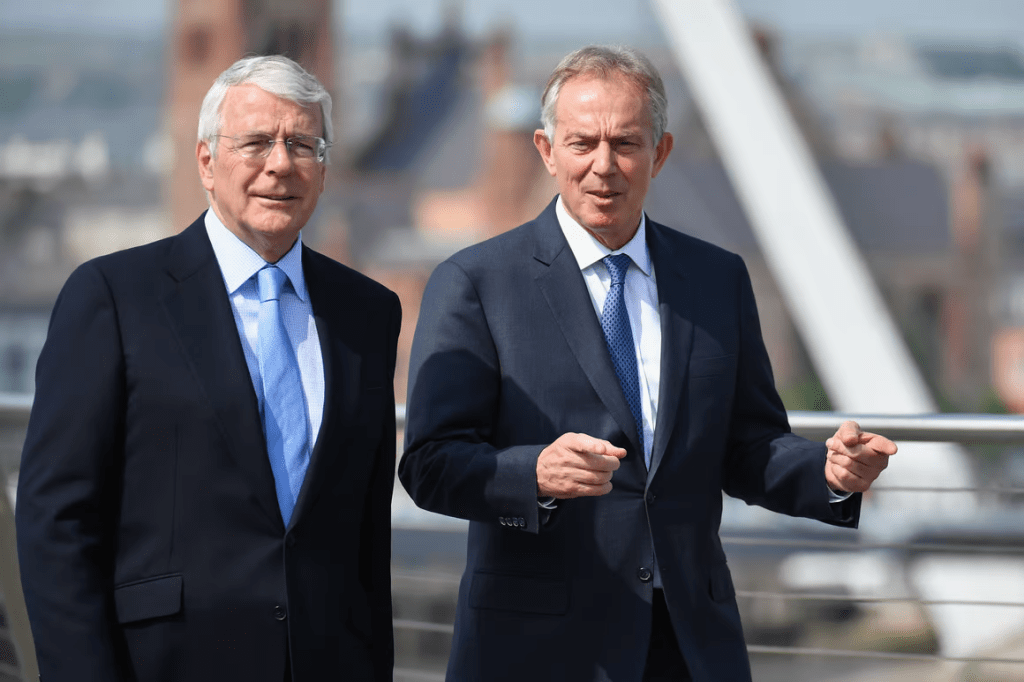
Is this enough? Probably, but if I were Labour, I wouldn’t take the risk. Time to listen to that old master, Tony Blair, one feels and deliver some memorable specifics now.
Biden barely puts a foot wrong

He may be approaching 80 and looking and sounding his age, but President Biden has barely put a foot wrong since taking office in January 2021.

His presidency did not have an auspicious start with a rushed exit from Afghanistan without consultation with allies. Biden was meant to signal a new approach to international relations, but it felt very much ‘Trumpite’ business as usual at the time. Still, he always advocated a withdrawal from Afghanistan, never supporting additional resources in the region under Obama, so perhaps we should have been less surprised.

Since then, however, Biden’s unsung presidency has been hugely successful with a string of legislative successes at home. He passed a $1.9 trillion post-Covid rescue plan which has contributed to the creation of over 6 million jobs. He re-joined the Paris Climate Accords and passed the Inflation Reduction Act driving aggressive action on climate change with the aim of cutting US emissions to half of 2005 levels by 2030.

He passed a long overdue Bi-Partisan Infrastructure Law, upgrading rickety infrastructure across America. If that was not enough, a Bi-Partisan Safer Communities Act requiring those under 21 to undergo enhanced background checks was the first, albeit modest, gun control law victory in three decades. He has cut medical costs for ordinary Americans and appointed more moderate federal judges at this stage of his presidency than any president since JFK.

All this against a tiny minority in the Senate which has grown by one since the better than expected mid-terms. By focusing on the Republican Party’s extremism, the Democrats gained in the Senate and restricted losses to only a small number in the House of Representatives.

Biden’s approval ratings languish but inflation needs to continue to come down and many of his legislative achievements will take time to bear fruit. He is certainly well placed to stand again if his health holds up and the Republican’s addiction to Trump and extremism generally continues.

Biden’s response to Russia’s invasion of Ukraine has been outstanding…

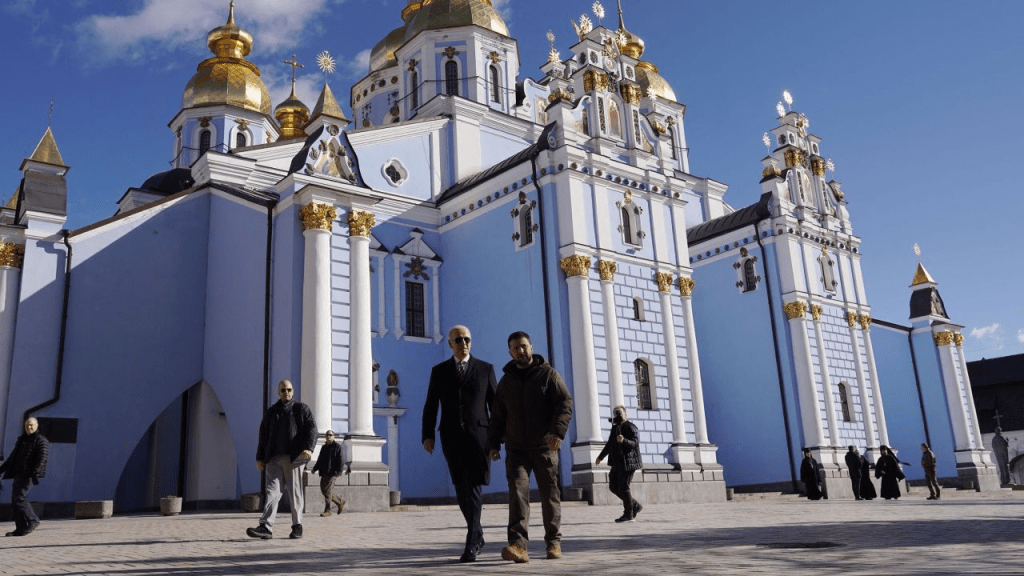
But it is Biden’s response to Russia’s invasion of Ukraine that really stands out. Leaking Russian actions in advance has brilliantly helped President Zelenskyy and the West generally win the propaganda war. He has ensured America leads a united West against Russia both morally and with a huge commitment to delivering arms to Ukraine, understanding that a Putin victory is a long-term global threat to all democracies. His visit to Ukraine today was masterly in its timing and substance.

Could you imagine the state of the world if Trump was still President or indeed another extreme Republican? Whatever your politics in the UK, we should applaud this elderly incumbent and sincerely hope he stays around to guide America on its current path.

Tories just can’t make any headway

It says a good deal about today’s Tories that the pro-Brexit, Thatcherite PM, Rishi Sunak, is seen as a moderate force towards the Left within his Party.

Sunak’s tenure has probably come too late to save the Tories

Why? Because Sunak believes in sound finances, only cutting taxes when the country can afford it; because he believes in building strong relationships with our European allies as he seeks a solution to the Northern Ireland Protocol; because he objectively believes in probity in government regardless of Party loyalty, which led to him rightly leaving Johnson’s Cabinet. Incredible.

Sunak is manifestly competent, but many in his Party are not. Despite a paper majority of over 70, he can barely muster enough support on any, even remotely, controversial issues. Many of his MPs have given up the ghost, and Red Wall Tory colleagues were never schooled in the art of Party loyalty anyway. Staring defeat in the face, there is no fear in upsetting their Front Bench as they threaten revolt. The fleeting opportunity of ministerial advancement is seen as pointless. Sunak is dragging the train as they say. And it shows.

Then there is the probity of his Cabinet. When you are asking voters to pay record amounts of tax, you cannot have a Party Chairman subject to a fine from HMRC for not paying sufficient personal tax out of ‘carelessness’ in his complex tax arrangements. Dominic Raab, the Justice Secretary, is facing 24 counts of alleged bullying. And then the former PM, Johnson, has been caught using his BBC Chair appointee to help broker an £800,000 loan when in office.

You can’t write the script. Starmer does not have to particularly shine to take apart this seemingly tired, out of touch Tory government. Sadly, for Sunak and loyal Conservatives, Sunak’s tenure has probably come too late, and the faces of his troubled and troublesome backbenchers show it.

To answer the question of an earlier blog, it is now very much 1997, not 1992.

The sheer irrelevance of the Church of England

I know… I know… never talk about religion… but this is not strictly about what individuals believe, rather it is about organisational failures and poor leadership generally. It is at the heart of the decline of the Church of England, even taking into account the overall pressures from an increasingly secular society.

A damning view that the Church of England is ‘sinking in its own irrelevance’…

Let’s begin. Out of 85 million who identify with the Anglican Communion, 25 million are represented by the Church of England. Yet denomination membership in the UK has halved from 3.4 million in the 1960s to 1.6 million in 2020 and regular attendance at Church of England services has fallen by 40% to 600,000 since 2009. Incredibly, only 14% of the UK’s population identifies with the Church of England. The grim list of statistics goes on.

The barrier to a solution to this decline, of course, is that numbers are religious power and of the 85 million Anglicans globally, many are based overseas with very different views on a variety of issues, most notably social liberalism. In an attempt to keep everyone on board, successive Archbishops of Canterbury have often sat on the fence on controversial issues to keep the church together. It therefore stands for less and less.

It has certainly hastened the decline of Anglicanism in the liberal West. It has led to the Church following rather than leading on a range of social issues, appearing out of touch, old fashioned and, in some cases, downright cruel. It is, in a damning recent quote, ‘drowning in its own irrelevance’.

And this has culminated in a hopelessly contorted position on gay marriage in churches announced this week. Whilst a majority of the UK population supports same-sex marriages wherever, including a majority who identify themselves as Anglicans, Church of England bishops, after five years of debate (!), have just refused to back gay marriage in churches but still back clergy blessings of civil same-sex marriages. This comes from an organisation that only allowed the ordination of women priests in 1992 and female bishops in 2014…

The distinctly anaemic current Archbishop of Canterbury, Justin Welby, believes in keeping his views on same-sex marriage secret whilst in post. What sort of leadership is that?

Deep down, the Church of England’s approach is never going to solve the rift between theological conservatives and pro-equality progressives.

Despite the power in numbers of followers, is it time for honest debate and a possible Anglican split? The time for sitting on the fence is surely over on key issues wider society has already resolved in its own mind. Otherwise, the Church of England will continue to sink.

2023: a tough year ahead but room for optimism…

Sigh… it is time for another set of predictions for the year ahead. It may be age but it feels trickier than ever to work out what is likely to happen. The outcome of some events such as the Ukraine war may influence almost everything.

But, first, this blog’s predictions for 2022. Their accuracy will allow you to decide whether to read further.

Well, whilst not a vintage year, five out of seven were correct although one, along with almost all commentators, was spectacularly wrong. Let’s get that out of the way first.

‘Russia will not invade Ukraine’. Umm… This was made on the understanding there was no long-term upside to taking this initiative and it would ultimately uncover the weakness of Putin. The latter point may be correct but not much compensation for the suffering Ukrainians.

Second, in the US, the Democrats would get a pasting in the mid-terms. I am happy to get this wrong particularly as Republicans in the House of Representatives are currently showing their increasing extremism. They have only just elected a Speaker from their own ranks after 15 ballots who is totally in hock to MAGA fanatics.

Time to move to the correct predictions. In the UK, Johnson would survive 2022 only on the proviso no further revelations came out of ‘Partygate’ or another scandal appeared. Well as the blog was completed further scandals from ‘Partygate’ did appear and then another fib from No. 10 caught up with Johnson and he was gone.

Fourth, Johnson’s calculated gamble on relaxing Covid restrictions would succeed. Despite Johnson’s ultimate demise, this was correct. Politics is so unfair!

Internationally, fifth, sixth and seventh were also correct. Macron would win the French Presidential election; Bolsonaro would lose his in Brazil. In the US, despite Biden’s frailties, the future would not lie with Trump but rather a more calculating political, far-right Republican. Cue Ron deSantis, Governor of Florida…

So now to 2023. Here we go…

In UK politics, there will be no election this year (an easy prediction!) but no recovery in the Tories’ fortunes either. The damage of three PMs in 2022, a recession, tax rises, a failing NHS and public sector strikes after 13 years of Tory rule will stick in voters’ minds. Whilst competent, Sunak’s style as yet does not quite resonate but deep down most Tories know the return of Johnson is no solution either, and it will not happen. On the other hand, Starmer will need to stand for something more concrete as the economy will undoubtedly start to recover in the second half of the year.

In the US, subject to health considerations (a big if), Biden will run again. Otherwise look to Buttigeig, Vice-President Harris or one of the Democrat’s successful Senators/Governors such as Amy Klobuchar from Minnesota or Gavin Newsom from California. On the Republican side, if he runs, deSantis will trump Trump.

The Ukraine war will last throughout the year. There can be no escape for Putin, trapped by nationalists on his Right and the West’s surprisingly robust, united opposition. What further drives the West is the fear of China’s threat to Taiwan. After their Covid debacle China won’t invade imminently but the threat is increasing.

There are no significant elections globally except in Turkey where one would expect the wily President Erdogan to win yet again. Although it won’t be easy this time round with all the major cities held by the Opposition.

Lastly, for optimists, in the UK, we have the pomp and ceremony of a Coronation in May and are hosting Eurovision in the same month. This blog comfortably predicts they will be happy events despite the stormy backdrop to both of them and might just help us get through a challenging year.

A happy and successful 2023 to you all.

Reasons to be cheerful, one, two, three…

There was a programme on Radio Four earlier this week concerned about whether media coverage of the cost of living crisis, strikes, NHS meltdown, Ukraine, climate change etc was depressing the nation in its relentless negativity. Was it causing a spiral of misery? Such unprecedented self-awareness!

It certainly feels so. Many I know simply can’t face the news as reported and are turning their back on it. Nobody wants the varnished truth but are we undermining our ability to cope by ignoring some of the positives around us?

Time to smile?

Well I dug around, searching for some good news to finish the year amidst the gloom and there is a surprising amount, some of it in full view. So here we go…

First, an easy one. Protecting the planet. On Monday, at COP15, 23 targets were agreed by 195 counties and the EU to ensure 30% of land, rivers and sea globally are in protected areas by 2030. Harmful farming subsidies will be reformed/phased out, risks of pesticides will be halved, rich countries will transfer US$30 billion to poorer ones for biodiversity protection. If not perfect, it is a huge step forward.

Second. Health. Longevity globally has risen from 53 in 1960 to 73 this year, up a year since 2021 despite Covid. 80% of children by the age of one will have been inoculated against at least one disease. There has been the first significant breakthrough in a search for curing Alzheimer’s and then all that progress on vaccine technology driven by Covid.

Third, closer to home. UK politics. Whatever your views, we have the most competent PM since at least Cameron (pre-Brexit referendum) faced by a viable Opposition. Sunak is economically literate, understanding the need for a solution to the craziness, for example, of having record vacancies whilst 13%, of the workforce is on some form of out-of-work benefits. Inflation will head down towards 3% next year with interest rates following according to most forecasts. Strikes really will get resolved because they have to and, internationally, we are rebuilding relationships with key allies. Come on, things will be better than this year!

We can also talk through the failure of Russia to take Ukraine although at immense cost and a possible Russian retreat/ defeat next year. The West has held its nerve in supporting Ukraine comprehensively despite the pessimists saying otherwise. We are witnessing the almost certain demise of Trump’s malign political influence and, oh yes, in science, a real breakthrough on the way to achieving nuclear fusion.

Lastly, a final point to leave you with. Numerous studies show optimists live considerably longer than pessimists. So turn off the news, stay positive and enjoy the festive break. It’s good for you… apparently…

Merry Christmas 🙂

Will Trade Unions rescue the Tories?

We are in for a miserable winter. The first decent post Covid run-up to Christmas is being marred by growing industrial strife. If you add all the groups together it feels we are almost in general strike territory.

A winter of strife…

Nurses want 19%, Border Force guards have just announced airport walkouts to support demands for a 10% pay rise. The RMT, having been offered 8% over two years with no compulsory redundancies (but more efficient working practices), announced a slew of Christmas strikes. The Royal Mail are striking, ambulance staff are joining picket lines and teachers have walked out in Scotland. The list goes on. There is talk of the army taking over crucial services to stop potential disasters in essential services.

Christmas party cancellations alone, due to strikes, have almost hit Covid levels wiping £1.5 billion off hospitality revenues.

The Government calculates that to cave in to all these demands would cost north of £28 billion, fuelling further inflation and then further pay demands. It is a legitimate warning as this is exactly how high inflation becomes embedded in economies.

We are, of course, facing an unprecedented cost of living squeeze and many of the pay demands have some legitimacy, being the legacy from over-enthusiastic austerity measures. However, those in the public sector kept their jobs during Covid when many workers in the private sector ultimately lost theirs or took significant pay cuts. Many founders of small businesses, in the hospitality sector for example, lost life savings. Then public sector pensions are often more generous than in the private sector. Comparisons on pay require more detailed analysis than simply average/median salary statistics.

Unsurprisingly, polls show public support for striking nurses but not rail workers any more now the scale of Christmas disruption is apparent. One poll even suggests the public is happy to make transport strikes illegal.

Rishi Sunak talks about legislation to curb strikes in key public services but there is not much detail, and he does appear somewhat enfeebled in such a fractious Tory Party. The Labour Party equivocates and some of their MPs have joined picket lines despite opposition from Starmer.

On balance, all this disruption probably adds to a sense of Tory inspired chaos after a turbulent few months for the Government. The Tories will probably get the blame from voters for a country seemingly heading in the wrong direction. Many voters will feel they should be sorting things out in a spirit of compromise.

However, polls also show industrial unrest is at least galvanising core Tory and some floating voters. Frustratingly, it seems a sad reflection of 12 years of Tory rule that strikes may be the best thing going for the Government at the moment.

The question is…1992 or 1997?

A long, long time ago, the 1992 General Election actually, I was a young Conservative Parliamentary Candidate standing in a slightly marginal Labour held seat in SE London. I didn’t actually want to be an MP, just putting a marker down for the future. It seemed a fairly safe bet I wouldn’t be elected. Thatcher had been defenestrated, Major was untested and after 13 years of divisive Tory rule, Labour were riding high.

Well, the Conservative Party against all expectations, won. I lost but not, gulp, by much. Tories, in focusing on the economy and voter concerns about the quality of the Labour leader, Neil Kinnock, were given another turbulent five years.

Fast forward to 1997, and a hopelessly divided Conservative Party, practically ungovernable, was wiped out by the charismatic Tony Blair.

Changing fortunes in the 1990s…

On this spectrum, where are we today? Well, the Tories are ungovernable, divided on everything from Europe (again!) to immigration and house building targets to name but a few issues. If it wasn’t so serious, with almost comic timing, they are on their fifth leader in six years. Sunak is the new competent, technocratic PM, but has little authority over a party riven by factions.

Labour are 25% ahead in the polls and have just walked the Chester by-election. It looks game over for the Tories. Tory MPs have to confirm whether they are standing again by fifth December, and several are voting with their feet and going including some in their 30s and 40s.

And yet, and yet…the Tories have drawn level again on the economy in some polls despite the disaster of Truss’s short reign and doubts still remain about what Keir Starmer stands for.

On balance, it feels more like 1997 than 1992 simply because the Tories have made such a mess of things. Sunak has come along too late to be their saviour and the Conservative Party internally is in a terrible state. The wider front bench of the Labour Party appears competent and Starmer has more gravitas than Kinnock could ever muster.

But doubts still persist about the outcome of the General Election likely to be in 2024. Labour have to win an incredible 124 seats to gain an overall majority. It may come as a surprise to many, but it is not quite game over for the Tories.

Shadow Chancellor skewers the Tories

Rishi Sunak has brought sanity back to the Tory Party. Confident, competent, technocratic even, he believes in sound money and, internationally, strong relationships with allies including the EU. He has had his hands tied with some of his Cabinet choices, but this will not last for long. His problem, however, is that his premiership has come too late.

Much ammunition to use against the Government

After 12 years of Tory government including five years of severe austerity, this clever, but thoroughly miserable Autumn statement ushers in a ‘back to the future’ moment. More austerity as the economy heads into recession, inflation north of 10% and plenty of cuts. Rightly, the Government cannot give in to excessive public sector pay claims but there will be months of public sector strife with strikes and periods of working to rule. Despite generous uplifts in the minimum wage, pensions and benefits, there will be little to gain politically as voters feel quality of life experiences deteriorating. Living standards are expected to fall by a record 7%.

Admittedly, many of the forces creating economic mayhem are global, notably the legacy of Covid and the impact of the Ukraine war, but that is not sufficient cover.

Starkly, the US economy is 4.2% larger than pre-Covid, the EU zone 2.1% larger, the UK 0.7% smaller. A devastating article in the FT today highlights that the NHS spends a fifth less per capita than similar European countries. Then there is Brexit which has hit trade hard. This week, former Environment Secretary, George Eustace, describes a post-Brexit trade treaty with Australia, for example, as ‘not a very good deal’ despite praising it at the time. According to the Office of Budget Responsibility, trade as a share of GDP has fallen 12 per cent since 2019, two and a half times more than in any other G7 country and it expects the longer-term impact of Brexit to affect trade intensity by some 15%. Only a third of voters now believe Brexit was a good idea.

Finally, an interest rate premium from the fallout of Trussonomics with rising interest rates wiping out many of the gains from subsidising energy bills for those on flexible rate mortgages.

There does not seem much to show from a Tory government in power since 2010 with five different Prime Ministers. A good one at the end is unlikely to erase voters’ memories.

And then to Labour. So much to attack but what is different now is that despite the blandness of Keir Starmer, they have an impressive front bench. First amongst equals is Rachel Reeves, Shadow Chancellor, and she laid into the Government with forensic detail today whether it be weaknesses in energy policy, stealth taxes or the failure of windfall taxes on energy companies due to offset allowances. At the say time, Labour are carefully laying the ground to ensnare Sunak in all the policy choices (mistakes) of the last few years.

It is said Oppositions rarely win General Elections; it is Governments that lose them. It is hard to disagree.

Right-wing populism; an ever present danger…

First, the good news. The choice of candidates was not great but at least former President Luiz Inacio Lula da Silva beat incumbent Jair Bolsonaro, in last week’s Brazilian presidential elections. That is a victory of one candidate who had his corruption sentence annulled against another who has his own corruption investigations, as yet untested in court.

However, more importantly, Bolsonaro took a ‘Trumpite’ approach to managing the Covid pandemic with all the terrible consequences that followed; 700,000 Brazilian deaths. Then there is the destruction of the Amazon rainforest. The now former Brazilian President was a pro-development, far-right nationalist who sided with criminal syndicates of illegal ranchers and loggers resulting in record levels of deforestation. An area of rainforest the size of Greater London was cleared in September alone ahead of the elections.

Bolsonaro has questioned the role of democracy and threatened, again like Trump, not to recognise the election result if he lost. Without conceding, he is surely gone and good riddance. But despite his appalling record, Bolsonaro nearly got re-elected with 49% of the vote. Almost a triumph for far-right populism. At Congress level his supporters performed strongly.

‘People over populism’ is not necessarily a winning formula…

In Italy, despairing voters have elected a far-right coalition government led by the Brothers of Italy party with deep roots in a fascist past.

And, adding insult to injury, Netanyahu, another populist right-winger facing corruption charges has made a comeback as Israel ‘s likely next Prime Minister. The price he has paid is an alliance with ultra-nationalist and ultra-Orthodox Jewish allies which is a further challenge to Israel’s delicate democracy and internal stability. Netanyahu’s supporters talk of amending the judicial system to ensure corruption charges are dropped. Shameless and depressing.

Finally, we turn to this week’s mid-term elections in the US. America is more polarised than ever. Despite Biden passing legislation on climate change, gun-control, infrastructure investment and child poverty in the face of narrow majorities in Congress, that is not enough. The Democrats face defeat even as Republicans push to make abortion illegal, give local officials the power to overturn election results at a State level and continue to support Trump in the face of clear evidence he was complicit in supporting an attempted coup on 6th January last year.

The very fabric of democracy in under threat in the US but that doesn’t rank as a priority in comparison to inflation, crime and illegal immigration. Add to this toxic mix the crazy ‘wokeness’ of left-wing Democrats with policies such as defunding the police, and there are grounds for real despair at the future of the US as a stable democracy.

We await the results with trepidation and what it means for the possible return of Trump which seemed relatively unlikely for all his blustering… until now.

Right-wing populism is the Japanese knotweed of politics; deeply embedded with roots that are seemingly impossible to destroy. Despite the public being mostly centrist, if moderates don’t govern competently from a centrist position and deliver, the lurch to the undemocratic Right is always at hand.

As we will probably find out on Tuesday with our most important ally…