Tories damned by latest YouGov poll…

It has not been a good start to the political season for the Tories. The concrete debacle in schools plays directly into Labour’s narrative and voter concerns more generally that the country just isn’t working under this government. The problem for the Tories is that after 14 years in power, however unfair on some issues, there is nowhere left for them to hide.

But this morning’s YouGov poll outlined in The Times is the most startling confirmation yet of the Tories’ decline. This blog is being written whilst travelling, so no images, I am afraid, but what could capture these results…?

Over half the public will not contemplate voting Conservative at the next election. The Conservative Party is seen as just too right wing on all major issues, specifically public service spending. Only on transgender rights and illegal migration is there some alignment, but these are not priorities for the electorate.

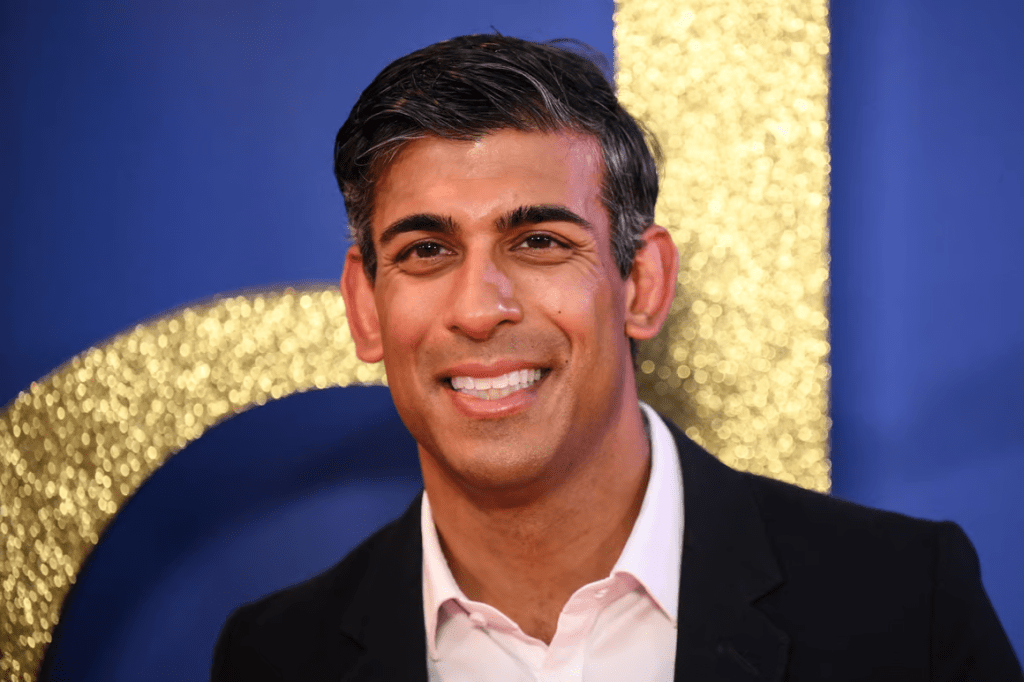
Sunak is the most competent PM since a pre-Brexit Cameron, but he seems not to be resonating with the electorate. Only 26% think he is doing a good job, and he has a terrible approval rating of minus 41% capped only by the Tories’ approval rating of minus 48%. Starmer is in smaller negative territory but is less popular than his party. Ironically, that is not a bad place to be.

Labour is starting to feel like a government in waiting and with a few positive policy announcements, could clean up at the next election. 2024 is certainly starting to feel like 1997, even if there is not the same enthusiasm as there was for Blair.

As for the Conservative Party, it needs to move towards the centre. If the siren voices of its right-wing prevail, it is game over for a generation.
No wonder the civil service ‘blob’ are in control

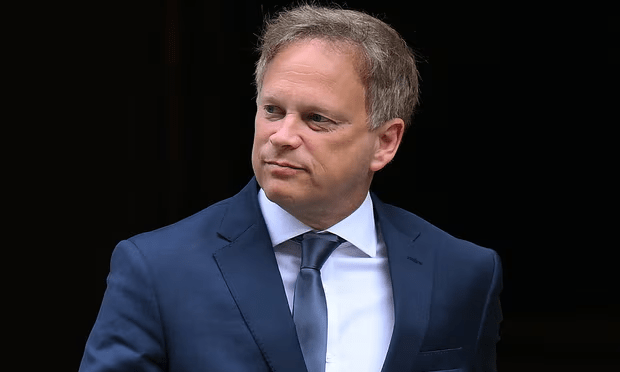
So, there we have it. The tiniest of Cabinet reshuffles caused by Ben Wallace stepping down as Defence Secretary. He is replaced by Grant Shapps who takes up his 5th, yes 5th, Cabinet job in the last 12 months. Widely considered a lightweight by his colleagues and without any relevant Defence experience, he is nevertheless seen as a good communicator. Forget about the Ukraine war. He got the job apparently because Sunak didn’t want one of his better spokespeople bogged down at Energy when he reneges on some of his green policies to exacerbate a cultural war with Labour.

Grant Shapps and his dizzying change of roles…

And you wonder why people despair of politics?

The Civil Service often directs government in individual departments simply in the absence of any knowledgeable ministers who have an agenda and stick around. Of course, reshuffles are part of a Prime Minister’s armoury but not to the extent of the chaos of recent years. The Tories’ record has been lamentable.

Here are just a few statistics on the number of office holders in key posts since 2019:

  • Chancellor: 5
  • Home secretary: 4
  • Housing secretary: 4
  • Health secretary: 4
  • Business/Energy secretary: 5
  • Education secretary: 6
  • Northern Ireland: 4
  • Trade: Role 3

How can this lead to decent long-term policy making? How on earth can ministers keep up to speed with the detail of their latest role and provide stable leadership in their departments? Political expediency is everything now, more than ever before if you look at comparable statistics of ministerial turnover going further back. And the public notice, becoming wearier and more cynical with each change.

Overwhelmed by Brexit, then Covid and a merry-go-round of ministers, the Civil Service, for all its faults, one suspects is often just trying to keep the show on the road. It is not so much the ‘blob’, just the professional arm of government.

NHS Update No. 2

For regular readers of this blog, you may remember my recent musings on my experience of the NHS. I was treated for the separation of key tendons from my kneecap in Lancaster and London hospitals courtesy of the actions of our boisterous rescue black Labrador, ‘Norm’. We still have him, by the way, but more of that later…

Norm got his just deserts… it feels like one-all now…

Critical of a lengthy 8 day stay in Lancaster Hospital with no MRI facilities for 4 days, and crazy information sharing procedures between hospitals, it is only fair that I update you on a more positive note.

My treatment at University College Hospital (UCH) in London has since been outstanding. I have had or am having a month of hydrotherapy sessions, bi-weekly physio appointments, a tailored exercise regime for the gym, and access to orthopaedic specialists who are now no longer needed. The level of care has been heart-warming. Who needs private health insurance…, at least for this condition…

I am told by those in the know that UCH is one of the best run hospitals in the country with post Covid waiting lists down on pre Covid levels. It attracts some of the best medical talent, but it is not all about money. It is exceptionally well-run albeit with a slightly repetitive online communications set-up.

A few extra overall observations as I complete my recovery. Whilst accountability is a good thing, too many ring-fenced NHS budgets seem to have created fiefdoms and inefficiencies. This is certainly the view of some senior clinicians and administrators. Best practices in one hospital should be more openly shared with others. The performance of hospital trusts is too variable, and after the terrible Letby trial and concerns of doctors about her behaviour being ignored, registering hospital managers seems a good idea to explore. The IT in the NHS is hopeless and there has to be a genuine debate on the risks to patient confidentiality versus a more comprehensive information sharing system.

Anyway, I am back on my feet being a perfect pupil, undertaking all the rigorous physio exercises set for me as homework, with the benefits clearly visible. Doctors say my recovery is remarkable. I will take this compliment and not question whether it is generally or for my age…

As for Norm, he is a happy boy despite a well-timed castration… Ouch! But it feels like one-all now…

Enjoy what is left of the Summer.

Summer blues… or possibly not…

If you absorb media content, the world is an unhappy place; global warming, the Ukraine war, the march of the far-right in Europe and the resurgence of Trump in America. Closer to home, we have rail strikes, doctors’ strikes, faltering public services including an increasingly unstable NHS and an unhappy body politic generally.

Clouds can have silver linings…

None of these issues and their day-to-day impact should be underestimated, particularly with the hottest July on record, but as we head off on our holidays it would be wise to consider some positives, if for no other reason, to keep us sane…

Wind and solar power produced a record amount of the world’s electricity last year, and this year is set to be a new record. Rising temperatures and their impact are creating a sense of climate change urgency amongst the world’s largest polluters, notably China and America. Just this week, a new global coalition was formed to specifically cut methane emissions, which cause one-third of global warming. There are now more protected areas across land and ocean due to cross-border agreements than ever before, and all polls point to fewer climate change deniers generally. The direction of travel is reassuring, if not the speed.

The rise of the far-right in Europe is worrying but not inevitable. For example, in last Sunday’s Spanish elections, the hard-right Vox Party almost halved its seats in parliament and consequently is not in a position to support a right-wing government as a junior coalition partner. Trump’s legal woes mount, and this blog is still firmly of the belief he will not stand or, if he does, will not be able to beat even the ageing Biden. The pretty vile deSantis, potentially worse than Trump, is also in trouble. Finally, whilst the tragedy of the Ukraine war continues, Putin’s reign looks more unstable than ever and who would have bet on a stalemate with Russia when this conflict began? And with Turkey now dropping its objections, NATO welcomes its two new members, Sweden and Finland. There are no benefits to Russia from its actions in Ukraine.

In the UK, most public sector workers including nurses have settled their pay claims with the government. Sunak is a massive improvement on Johnson and Truss. The Tories’ period of madness seems to be over and Labour under Starmer looks ready to govern fairly competently if the current desire for change becomes irresistible. The electorate actually has a choice this time!

So, as we head off on our summer breaks, there are some reasons to be optimistic which even this blog has noticed…

Happy holidays!

Time for a change is the only political theme this morning…

It could have been worse for the Tories. They are mostly not safe anywhere but clung on in Uxbridge, where the single issue of extending the Ultra Low Emissions Zone saved them.

But across the three by-elections, the Tories’ share of the vote dropped by 21% in line with polls. It is not a reflection on Sunak, more popular than his Party, but austerity followed by a failing, divisive Brexit, followed by the chaotic amorality of Johnson, followed by the car-crash premiership of Truss. As this blog has written several times, Sunak’s competent premiership has come too late to rescue this discredited, over-long period of Tory rule.

Voters have had enough… Tories are mostly not safe anywhere...

The simple question to ask voters after 13 years is, do you feel the country is in a better place than in 2010? On current evidence, the answer is resoundingly no, even if there are some well-hidden achievements along the way.

But the Westminster bubble grinds on, turning its excoriating gaze onto Labour (the LibDems can be parked for another day). What do they stand for? Will the economy be safe in their hands? How green will they be and at what cost? How will they improve public services when there is no money? How will they deal with trade unions and their left-wing generally? Will they cuddle up to the EU and, if so, make a meaningful pact with it? Ultimately, is Starmer political enough? All legitimate questions, but today, they miss the point.

It is anybody but the Tories and Labour remain on course to win the next General Election, probably with an overall majority. In fact, in some ways, the results are extra bad news for the Tories in that the London result will encourage Starmer’s safety first strategy. It doesn’t really matter whether he gains power through enthusiasm or stay-at-home Tory voters. The die has been cast.

As for the Conservative Party? They will have some real soul-searching to do in Opposition. Will they move to the Right? Probably, if their membership and some unpleasant right-wing factions have anything to do with it. But the country is screaming out for a sensible centre-right alternative, and this is where this Party should lie, like it used to, if it is to oust a future Labour government quickly.

Europe’s problem with the Far-Right

If there is one thing that would drive this deeply anti-Brexit blog into the arms of Brexiteers, it would be the rise of what appears to be soft fascism across Europe.

The outlook does not look good. The far-right are prospering everywhere.

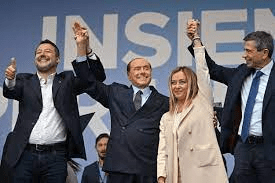
In Italy, Giorgia Meloni’s hard right coalition led by her arch-conservative Brothers of Italy party took power last October and is now in the process of trying to impose its conservative moral values on the population. For example, as reported in the Financial Times yesterday, they do not believe same sex couples should raise children. Last week, the birth certificate of a son born to a lesbian couple was annulled by a Padova city prosecutor with backing from the minister for family and birth rates. The interior ministry has ordered city mayors to stop automatically issuing birth certificates recognising same-sex couples as children’s legal parents, leading to lengthy legal disputes. This is only the start, one suspects, of a further erosion of gay rights.

Europe’s worrying drift to the far-right…

In France, the National Rally under Marine Le Pen has hit 24% in the polls. And this rise will only be further fuelled by the riots taking place there. She leads opinion polls in her response to them and is preparing yet another run, her fourth, at the presidency in 2027. Nobody is betting that next time, she isn’t in with a strong chance of winning.

In Germany, the hard-right, Putin sympathising AfD has hit 18% in the polls, achieving third place and snapping at the heels of the Social Democrats. In Sweden, the hard-right Sweden Democrats are in third place at 18%, and its equivalent in Spain, the Vox Party, are in a similar position. Then, in Hungary, Orban and his Fidesz party, who have governed since 2010, continue to gradually erode press freedoms and the independence of the judiciary, flouting the EU in the process.

There are various factors driving this trend. Immigration, inflation, weak economies, and expensive green policies are all a boost to anti-establishment, populist parties, even if, in the end, they are usually far worse at governing than moderates. The implosion of centre-right parties is also helping drive politics to the extremes.

But for all the frustrations of modern life today, there is no excuse for embracing extremism, particularly with Putin on your doorstep.

Wearingly, and with some success, hard-right, populists have never given up, even when they initially lose at the ballot-box. Whether it is Le Pen in France or even Trump in the US, it is a constant whack-a-mole game to defeat them. Democrats everywhere cannot let their guard down.

Europe certainly benefits from the largely moderating influence of the UK. It would have been invaluable if we had remained a member of the EU. We have much work to do to help keep our neighbours on a centrist path, even if nowadays from the sidelines.

A day is a long time in politics…

Yesterday was good for the Tories. Last week’s departure of Boris Johnson from Parliament was followed by a resounding acceptance of the Privilege’s Committee’s recommendations. He didn’t even get to keep his parliamentary pass. 118 Tory MPs voted in favour of the report. It should have been more but at least it gives Rishi Sunak a breathing space to define his premiership, free from the antics of at least one of his predecessors.

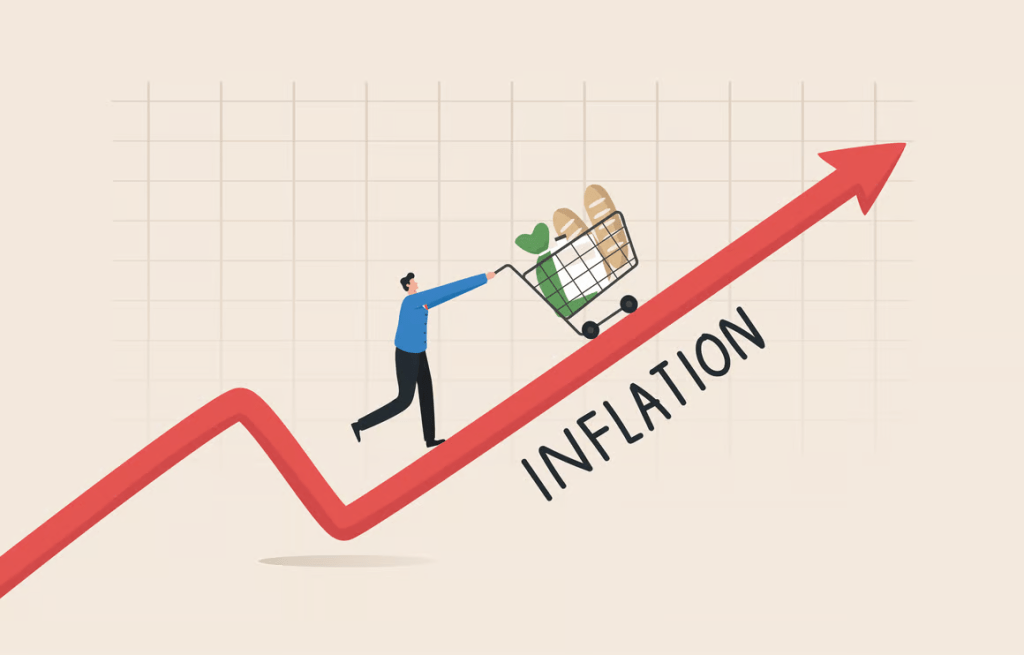
Today’s news was less good, however. The UK’s inflation rate remained at 8.7% with core inflation actually rising from 6.8% to 7.1%. The equivalent figures are 6 per cent in France, 6.3 per cent in Germany, 7.1 per cent across the whole of the EU and 2.7 per cent in the US, using the most comparable measure, according to the Financial Times.

Stubbornly high inflation is causing an electoral headache for the government.

Interest rates will rise on Thursday by at least 25bps to 4.75% and the squeals of mortgage pain will be heard across the country.

The problem for Sunak is that his five pledges which, statistically at least, mostly seemed possible to achieve just a few months ago do not appear so any longer. The squeeze on the UK economy will have to carry on for longer than expected and he may miss his 5% end-year inflation target. NHS waiting lists have risen recently. Debt will rise as rates rise. Ironies of ironies, the only priority he has had some success on is ‘small boats’ with crossings down 20% so far this year.

Labour has yet to fully convince on the economy, but it is reining in spending promises and Rachel Reeves, the Shadow Chancellor, is increasingly coming across as highly competent. Combined with the shenanigans over Johnson and grim inflation news, that growing sense the Tories have been in power too long, and it is time for a change, has been reinforced.

Sunak’s logical route out of this mess was progress on his key priorities, but today that seems harder to achieve. Add in positive news for Labour out of Scotland, and the swingometer between a 1992 versus 1997 general election result is now more heavily leaning towards the latter.

A good week for the Tory Party

We all know it is probably too late. The increasingly impressive Rishi Sunak has taken over a tired, divided Party and tried to give it some shape. Competent economic management, stronger international relations, a better deal with the EU over Northern Ireland are all laudable. But after 14 years many of the initiatives are simply about undoing the errors of previous Tory administrations. Against this backdrop, the desire for change, albeit with relatively tepid support for Starmer and his Labour Party, is too great.

A chance to demonstrate a break with the past…

One other factor drives down support for the Tories; a palpable sense of corruption. Dodgy peerages, dodgy donations, dodgy appointments, some unsavoury people hanging around the Party’s fringe. There is a sense of entitlement where one rule applies to ‘little people’ and another for those in power. This perhaps drives a belief that the Tories’ time is up more than anything. It is certainly not solely economics or the state of public services because few voters currently think Labour would be much better.

So it is really important that Sunak demonstrates new integrity in his government and a break with the past and that is why the last few days have been so helpful.

Johnson has gone and, make no mistake, will not return either this side or the other of a general election. Seen off by the Privileges Committee (note, a majority of Tory Party MPs overseeing its deliberations) and his resignation honours list, he has gone blustering into the night. He represents a shameful episode in the country’s governance and the Tory Party’s judgement of appointing him in the first place. Undoubtedly talented, he never had the moral compass to be successful as PM.

Sunak’s row with him has gone public and that allows Sunak to demonstrate a fresh start. It allows him to restore the principles of good government and that will provide the opportunity for the electorate to take a second look if the Tory Party can show discipline under his leadership.

After the past week, Sunak only has to sort out high inflation, negligible economic growth, rising debt, rising NHS waiting lists and a flotilla of small boats, and he is in with a chance…

Labour’s rEUnion will take place by stealth

The most dramatic new policy from a Labour government will not be an annual £28 billion invested in the green economy. Neither will it be greater workers’ rights.

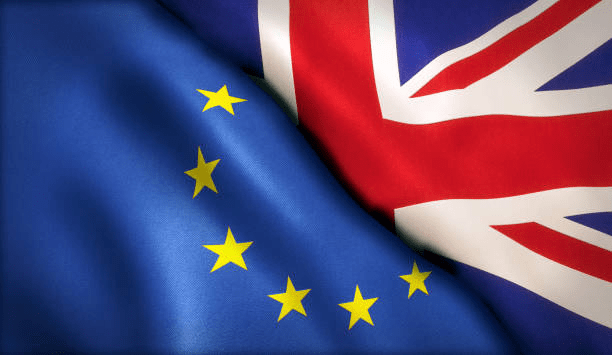
Whatever Keir Starmer says in advance of the general election, it will be the gradual, stealthy embrace of the EU as though we never left. The political commentator Ian Dunt said re-joining the EU is a believable ten year project. I agree. But little will be said about this direction of travel in the early years of a first Labour administration.

A stealthy embrace of the EU will take place under Labour…

There is no point in holding a second referendum in the foreseeable future. We are denying it to the Scots and certainly don’t want to waste energy and political capital by winding up the angry sub-40% who still think Brexit was a good idea. Neither does joining the single market work today if it means undermining the one salient feature of Brexit, however pointless in practice, that we have control of our borders.

No. Driven by Russia’s aggression, we will align our military forces more closely with the EU as it, in turn, starts to create a single defence capability. We will participate fully in the Horizon research project, fully align financial services regulation, negotiate visa-free access to Europe (visas are due for UK citizens from 2024), and even negotiate pet passports. There will be no bonfire of EU laws as promised and already partly reneged on by the Conservatives.

None of this will be an obstacle to positive post Brexit initiatives of greater efforts in training our home-grown workforce, and as part of this, it is common sense that migrant workers can’t be employed for 20% less than the usual rate for the job. This is already Labour Party policy.

A good Labour government can have its cake and eat it. Domestic reforms to improve national productivity whilst aligning ourselves more closely with the EU again. And if this is successful, the possibility of re-joining the EU on a ten year view.

Quietly, slowly, patiently, the greatest self-inflicted damage to the UK’s political and economic standing will be reversed.

Michel Barnier interviewed on ITV this week said the UK can return to the EU anytime. The Conservative Party, metaphorically turning in its grave, will be a bystander in this process when it eventually happens.

Politics needs to get its house in order

The mood music just isn’t getting any better for the Tories. As Sunak tries to look to the future under his improved leadership, he is dragged back into the past by the Covid enquiry.

Under the formidable chair, Baroness Hallet, the enquiry has asked for all Boris Johnson’s fully unredacted WhatsApp messages and diary entries. The government is resisting and may go to the courts to prevent having to hand them over. They have until 4 pm today.

Standards need to rise in how government is conducted

Johnson’s disastrous reign still overshadows the Tories. One also suspects there is some really embarrassing material in his texts, perhaps involving a bunch of today’s ministers, including even the PM himself. Oh dear. If ministers, incredibly, end up legally challenging the government’s own Covid enquiry, it will be another nail in its coffin.

It takes me back to Peter Hennessy’s fine writings on constitutional government. He documented admiringly how Thatcher ran her administration by the book, even the Falklands war, through committees with civil servants present and minutes taken.

The rot started with Blair and his ‘sofa government’ and has continued in particular via Cameron and Johnson. Decisions are taken in secret by a small cabal of ministers and advisers with no accountability. One understands there are more social media channels today and Covid set severe limits on gatherings, but this is no excuse for government by text.

The lack of a written constitution means that the erosion of proper procedures in policy making has continued unchecked and undocumented.

Time to put an end to it and get back to fully, ‘by the book’, publicly accountable government. Perhaps Starmer, as a former Director of Public Prosecutions, can make a start.

In the meantime, the heavy anchor of Johnson and his florid informal musings (never put in writing what you don’t want to see in public!) will continue to drag Sunak’s government under water.