The famous epithet for Johnson proved true. The ‘greased piglet’ escaped the immediate fall-out from the Sue Gray report last week and appeared to be relatively home and dry, his premiership bolstered, some would say, with a cynically timed £15 billion hand-out to deal with the impact of soaring energy prices.
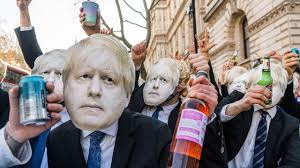
Things are just not getting easier for Johnson…
And yet, this week, it doesn’t feel like that. Without raking over the gory details of the Gray report, the sheer scale of rule breaking and ‘frat-boy’ culture in No.10 continues to reverberate and that is before rumours of more parties, yet to be investigated. Added to this is Johnson’s hubris. Very few believe he is genuinely sorry for what happened on his watch and news that Johnson has watered down the ministerial code including its introductory wording, possibly in case he is found guilty of breaking it is hardly reassuring.
27 Tory MPs have now called publicly for Johnson’s resignation with this list growing over the weekend but, more importantly, there are many others who express deep discomfort about his behaviour privately. This blog is aware of a number of MPs who don’t appear anywhere near the media’s radar wanting Johnson to go, appalled by the Gray report’s findings. As they return to their constituencies this week for a Jubilee break, they are unlikely to be reassured by what they hear from activists and voters more generally. A snap opinion poll showed 59% of the electorate want Johnson to go including 27% of Tory voters. Three quarters of voters think Johnson knowingly lied to parliament. Johnson and his supporters’ defence has also hardly helped matters in emphasising the importance of ‘morale boosting’ leaving drinks as a justification for parties. Alicia Kearns, Tory MP for Rutland and Melton, summed up a common private refrain commenting about ‘the shameful lengths some will pursue to preserve this premiership’.
Then there is the general positioning of the Tory Party. There is an increasing chorus, even from sympathetic commentators, that no-one knows what it stands for under Johnson’s leadership. Certainly not competence; certainly not lower taxes and preservation of the institutions of state; certainly not abiding by international agreements and attempting to strengthen the economy by building a positive post-Brexit relationship with Europe. And even the most die-hard of Tories are uneasy about populist measures such as deporting illegal immigrants to Rwanda, a state with a distinctly dubious human rights record. This blog was recently told a deal with France was certainly in the offing to help solve the immigration crisis until deteriorating relationships with the EU and France in particular, fuelled by rows over the Northern Ireland Protocol, put an end to discussions. How frustrating that politics in the UK has reached this point.
Although it has to be said that a General Election defeat is by no means a certainty, the future does not look rosy for the Tories under Johnson. An increasing proportion of voters seem to have made up their mind about the Prime Minister and not in a favourable way. Any benefit from the recent largesse to mitigate the cost-of-living crisis is likely to be short-lived and has confused core Tories who were told just weeks ago that it was ‘unTory’ to levy a windfall tax on energy companies.
Then there are two uncomfortable by-elections to navigate and an enquiry by the Commons Privileges Committee into Johnson’s statements to parliament on parties in Downing Street.
The heat on No. 10 may intensify over the Summer and not in a good way. For Johnson, the damage has probably been done. For the Tory Party as a whole, the next few months may prove that the fall-out from its leader’s character and actions has swept it up too.


 Inside Right Politics