It used to be easy to say what the Tories stood for; preservation of institutions, free markets, low taxes, a smaller yet fairly compassionate State, controlled deficits, a belief in the individual and support for aspiration. Essentially being a Tory was being conservative with a small ‘c’ and whilst the Conservative Party was always willing to compromise to win and hold on to power (the Labour Party has never got this except under Blair), such flexibility only went so far. You always knew where the Tories’ heart lay.
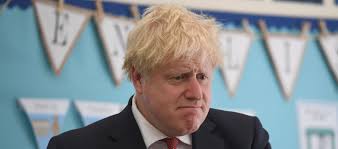
So where is the Tory Party now under Johnson? The answer is hard to fathom.
Under his leadership, the Conservative Party has mostly been defined by its Brexit stance. To be dominated by one issue never used to be in the Tories’ makeup and abandoning its broader-based raison d’etre has led to the departure of some of its most able parliamentarians.
In driving Brexit forward, the Government attacked Parliament and the courts. It berated experts and tried to ‘tear up’ the unwritten constitution. Irony upon irony prevailed as an unscrupulous old Etonian, advised by an alleged anarchist who wasn’t even a Party member, essentially launched class warfare but positioned the Tories on the side of the ordinary person versus the elites.
Destructive but effective. As a strategy, it worked. An 80-seat majority based on a slew of former Labour seats in the North and Midlands has given the Tories a further 5 years of untrammelled power. But the victory was based on Opposition splits over Brexit and in particular the move of the Labour Party to the hard, unpatriotic Left. Such opportunities for victory are unlikely to be available in the future.
Confusing signals from imminent budgets?
And, as the Tories seek to chart a path of post-pandemic recovery, they continue to lose their identity over economics and their reputation for skilful flexibility and prudence. There are budgets scheduled for both March and November, in part to confront the massive Covid-related deficit, but the brakes had already come off public spending long before the pandemic. Now, in refusing to abandon its manifesto pledges of not increasing income tax, national insurance and VAT, which represent 64% of tax revenues, the Government is left with few options but to attack entrepreneurialism. It is mooted that Corporation Tax and Capital Gains Tax will soar, whilst a property tax may also be introduced. And the pandemic-dominated budget deficit will continue to expand exponentially as the government continues with HS2 and other initiatives to ‘level up’ the North with the South. Some measures of course will be very welcome but not all, as intrusive State intervention, not always economic, ceases to be a Tory anathema.
Brexit, for the time being at least, is fading into the background and management of the Coronavirus will dominate political dialogue for some time. But inevitably, two party politics will become competitive again, particularly if the accusation of Johnsonian incompetence sticks. The latter is becoming less likely as he is potentially floated off the Covid rocks with a successful vaccine roll-out. However, in the face of a generally more competent, moderate Labour Party, better suited to arguing for a continuing increase in the role of Government, it is hard to identify what alternative the Tories offer and why you would vote for them. This loss of identity may cost the Government dear in the medium term but, by then, one doubts the current Prime Minister will be around to care.

 Inside Right Politics