Running a business; some silver linings in grim times

I run a modest sized, but successful marketing and media relations business employing c20 people working for demanding financial services clients.

I like to think my employees are bright, motivated and team centric. I like to think they are committed to going the extra mile for clients and, in turn, committed to the success of the company they work for. The management team’s role is to ensure they benefit from this success.

We have formal and informal processes to ensure the quality of the work we deliver is as high as possible. We also have processes in place to ensure our employees develop through structured and on-the job training and that they are as positive as they can be about their working environment.

But how do we always know this is the case? For all the internal and external reporting, and feedback from clients, we are, like any other people-business, sometimes fallible.

And yet, in these grim coronavirus times, relying wholly on home working, there is constant evidence that we have mostly got it right.

Before the shut-down all employees worked hard to ensure that we and, where we could help, our clients would be as ready as we could be about what was to come. There was banter; but there was also immense caring about the pressures faced by individuals with vulnerable friends, relatives and partners based here or overseas at this time.

The remote working practices put in place are humming with activity and have ironically brought the team even closer together as they coordinate activities. And the work undertaken for clients, who rightly remain busy and demanding in these challenging times, is more visible as all sorts of remote working channels and, of course, emails, fill up with action points.

There are two slightly surprising, amusing sides to all this. Firstly, commentators say that when this is all over, working practices will never be the same again. I am not so sure. The stress of ensuring the backdrop to any video conferencing from home is sufficiently flattering is taking its toll… And secondly, as one colleagues opined; ‘what my partner says to me to make me laugh at 8pm at night is less funny at 11 in the morning’…Office working beckons and, on current evidence, will be embraced enthusiastically, when this period is over.

Like many other businesses, we have to, and are, working as a single team for each other and our clients. Humour still prevails and that keeps us sane. We are still having our end of month office drinks ‘virtually’ this afternoon…The work is going well and everybody visibly cares about getting our Company and our clients through these grim times.

So, whilst the news and our personal experiences will no doubt threaten our well-being, spare a thought for some positive consequences coming out of adversity; those silver linings. And keep as safe and well as you can be.

Coronavirus and the rise of the nation state

We live in strange and alarming times. The uncontrolled spread of a deadly virus has often been mooted but mostly via Hollywood. What feels like a terrible film script is now a reality.

We will, one hopes, overcome this virus; but not without distressing casualties. What strikes me, however, is the way governments have responded to contain it. Gone is a good deal of formal cross-border cooperation along with the authority of the UN and EU. In such an emergency, it is individual nation states who have acted first to protect their people.

The timing and severity of measures taken by countries to minimise the impact of the virus has differed widely at least until now. But what is striking, is that there has been no nod at cross-border political institutions, only the World Health Organisation. The EU, for example, has been powerless and almost silent on virus containment. It is individual governments that have led initiatives and are accountable for keeping their people safe. Whilst slow initially to react, Italy has now implemented extreme lock-down measures in the face of a surge of coronavirus casualties. France and Spain have now followed suit, with France even fining people if out on the streets. In the UK more widely, compulsory lock down has yet to come. People are only advised not to frequent bars, restaurants etc with schools and universities currently mostly open until Friday. Germany has largely closed its land borders. The EU has finally banned all non-essential travel in the Schengen free travel zone.

The list of individual actions goes on from Singapore to Canada. Trump has managed things in the US with his usual chaotic style. A virus, initially branded as a bit of fake news and recently ‘Chinese’, is now consuming US government actions. Only time will tell if this ends his presidency, assuming elections are held at all in November.

On the economy, there has been some coordinated central bank intervention to protect finances but, to be frank, when interest rates are already at rock bottom it won’t make much of a difference. Only now has the ECB responded after internal divisions. It is the scale of individual economic rescue packages introduced by individual governments which have led the way. They are truly breath-taking in their scale. Sadly, they will have to be.

All actions will look very similar in due course as the relentless spread of the virus takes hold; but the frailties of globalisation and supra-national institutions have been uncovered. It is national governments across all continents who have full control. Only they are able to garner the required consensus to move quickly and access extraordinary powers, unprecedented in peacetime.

Incredibly, from only a few months ago in the UK, those all-consuming Brexit versus Remain arguments have been swept aside. You now wonder what all the fuss was about. Sovereign countries rule the roost with ease, and it will be them, not the EU or any other international body, who will face the consequences of their actions when this crisis is all over.

Political debate has changed in a wholly unexpected way. After this crisis, nobody will analyse or worry about the balance of power between cross-border institutions and nation states in quite the same way again.

But that is for the future. In the meantime, please keep safe.

Botswana and South Africa: A Tale of Two Countries

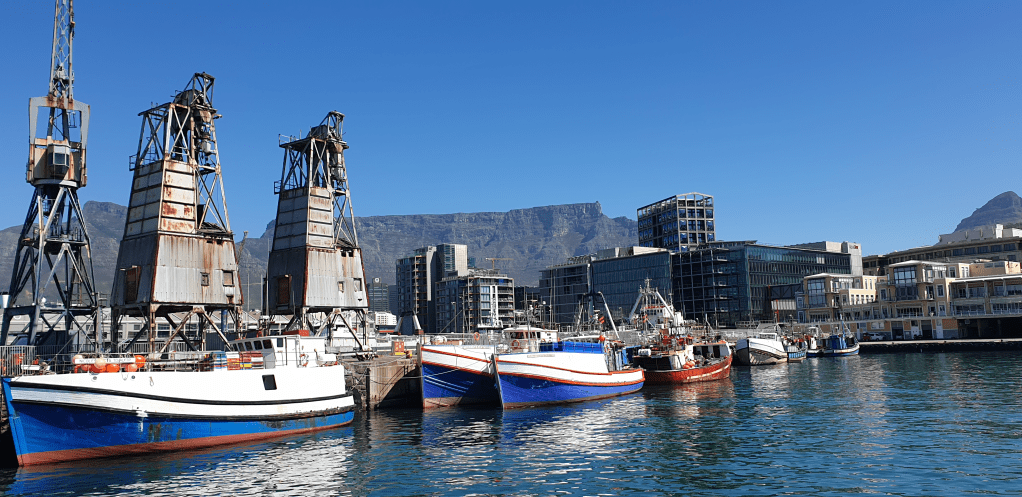
Back from a trip to Botswana and South Africa, with a quick step into Zimbabwe (clearly struggling…) and Zambia to see the Victoria Falls. Lucky to be able to do this.

But with an eye to local politics, it was the opposing trajectories of two very different countries, Botswana and South Africa, which caught my attention, second (obviously!) to the amazing scenery and wildlife.

Starting from almost opposite ends of the spectrum economically, Botswana has, and is, going places with key benefits for southern Africa’s wildlife. More of which below. South Africa, from a hugely higher economic base, is not.

Botswana has developed some of the most innovative policies for conservation and tourism anywhere in the world, with huge benefits for its future success.

In broad terms, learning from the mistakes of other southern African countries, it has introduced ‘medium density, high value’ tourism policies that recognise the value and quality of its wilderness. Therefore, large areas of Botswana’s land is under some form of conservation. 40% of its land is conserved in its natural state whilst 17% of its land is officially under National Park, game reserve or other forms of conservation management.

The private sector plays a major role in helping the country, albeit under the strict eye of the government. Under detailed regulations, vast 15-year land concessions are sold to responsible businesses running safaris. The density and quality of lodges is ruthlessly monitored. Poaching is obviously illegal but hunting of an extended list of protected wild animals by locals is now prohibited and the practices of villages and their relationship with the land is being dramatically changed.

But there is a quid pro quo. The game reserves provide untold local employment opportunities. Schools and clinics are being built in even the remotest villages and land is given by the government for new incomers to build houses. From being one of the poorest African countries on the granting of independence in 1966, it is now becoming one of the most prosperous (also helped by diamond mining, again strictly regulated). It has its problems and no doubt corruption, but Botswana is largely one of Africa’s success stories.

The winner, besides people, is the wildlife. Threatened species from elephants, giraffes, lions, hippos, leopards and cheetahs, to name but a few, can find a relatively safe haven in Botswana and are growing in numbers. Protecting rhinos is still a problem (when will China get its relationship with animals right…). I was particularly struck by the concept of animals such as elephants coming over the border from the chaos of places like Zimbabwe, because they have remembered and learnt to find where the safe havens are. Amazing.

Now to South Africa. A very special country but in danger of giving up much of its economic and geographical advantages in the face of relentless corruption. Speaking to several local workers from a variety of backgrounds, few are optimistic about the future, feeling government incompetence and the growing gap between rich and poor is not sustainable. Most damningly, on the Robben Island tour one of the guides, a former inmate, was asked could he forgive. His reply was yes to his captors but no to what is happening to his country today.

The ANC is riddled with corrupt practices yet entirely dominant as the opposition implodes in infighting. The common refrain is that Zuma has set the country back nine years with his policies of state capture. Claiming ill health, he is currently holed up in Cuba and may not return to face justice. There is a State Capture enquiry going on and the detailed allegations are too lengthy and gruesome to cover here.

Cyril Ramaphosa, the current president, is struggling to exert control. There are rolling power cuts, train services are deteriorating (last Thursday the national power company, Eskom, cut the power to Cape Town’s entire Metrorail system for non payment of bills…!), the national airline is in receivership, water resources are poorly managed and the townships continue to grow as people from the East head for the Western Cape in search of work. Yet unemployment is c30% with youth unemployment over 50%. Crime is rife; one of my taxi drivers carried a knife on him…naturally…

There is a window of opportunity to put things right but it is narrowing rapidly. It should not be like this.

So, two countries heading in opposite directions. Africa is a dynamic and vibrant continent clearly on the rise. It would progress so much faster without the shackles of corruption. Leaders and governments who manifestly put the advancement of their country at the forefront of their actions, rather than gain for themselves and their allies, deserve to be recognised and applauded both at home and internationally. That legacy is worth a fortune and they need to know the effort is worth it.